Description
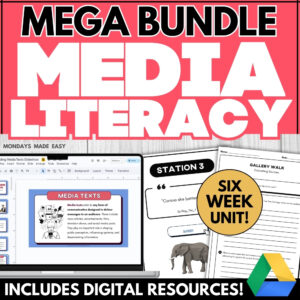
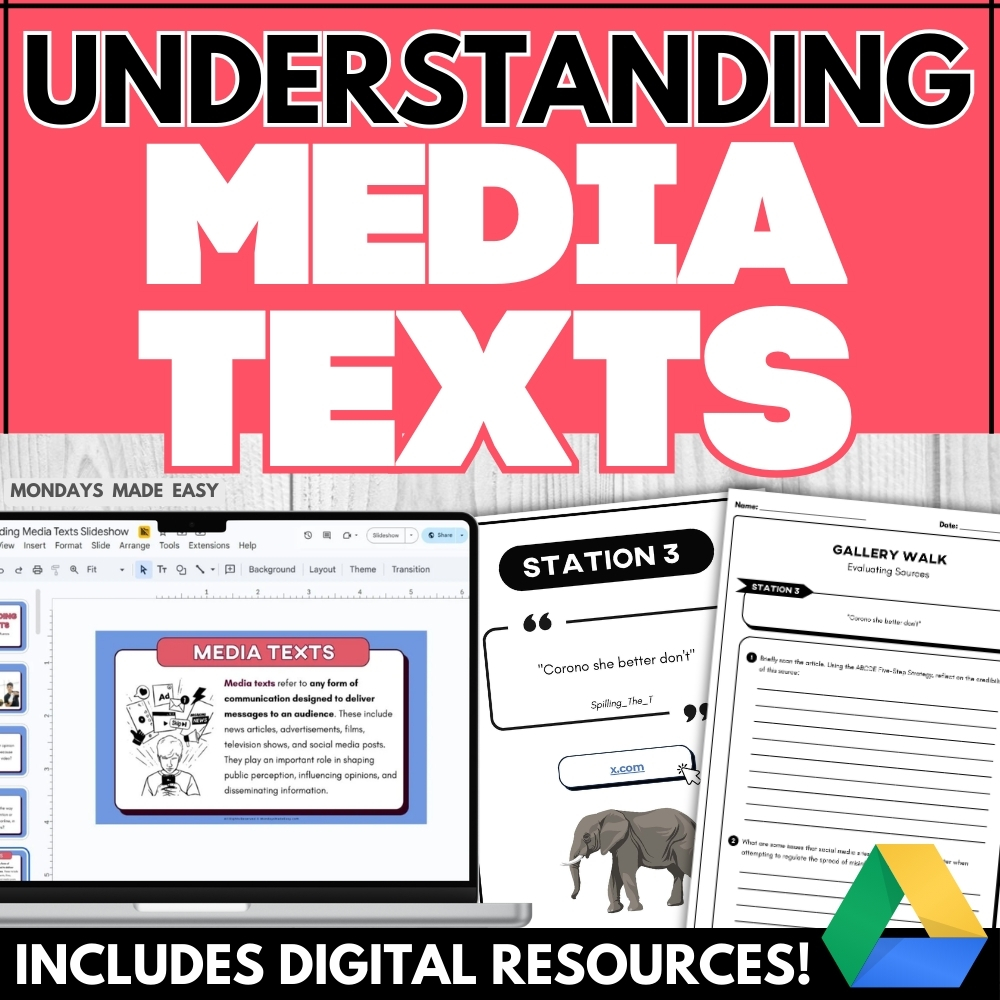
Teach media literacy and challenge students to identify credible sources with this engaging lesson and hands-on gallery walk! Students will evaluate media texts, analyze sources, and explore how to identify credible information with the slideshow lesson and interactive activities provided in this lesson plan. Includes digital resources for Google Classroom®!
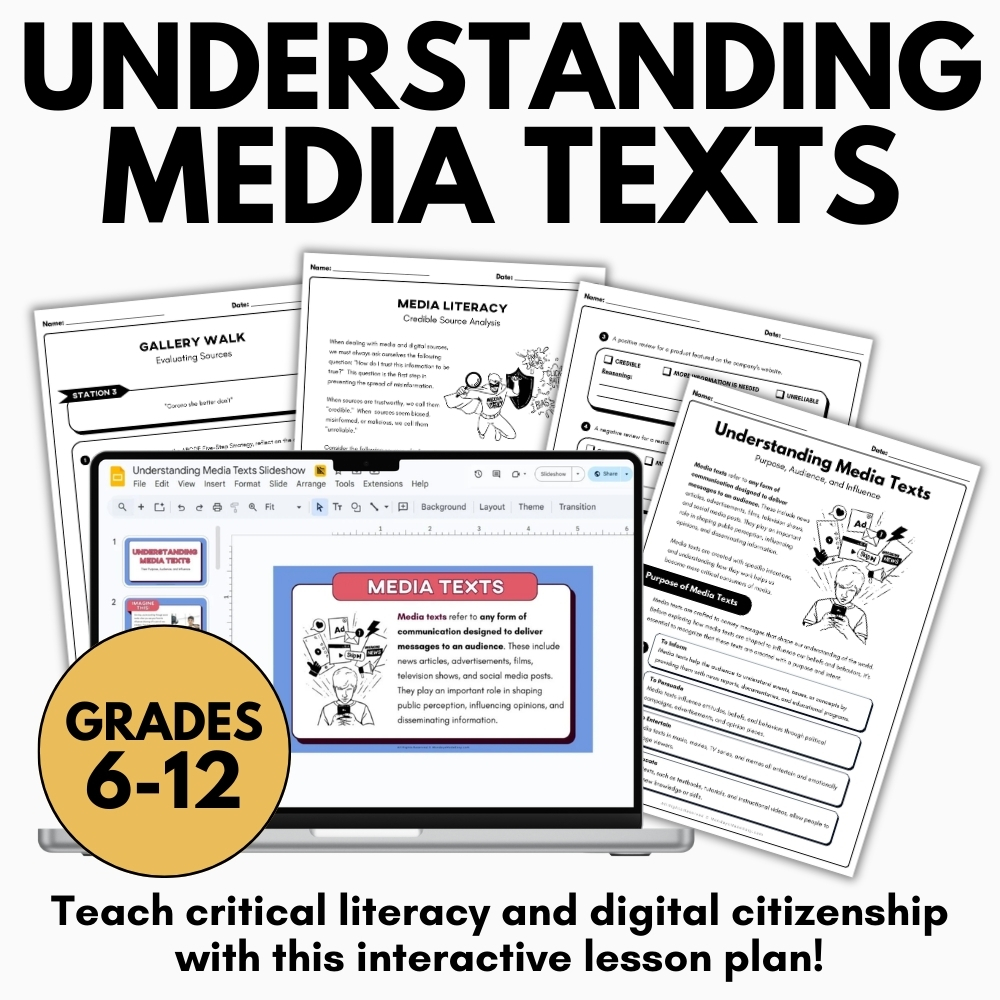
Included with this Understanding Media Texts Lesson:
- Diagnostic Bell-Ringer – Digital & Print
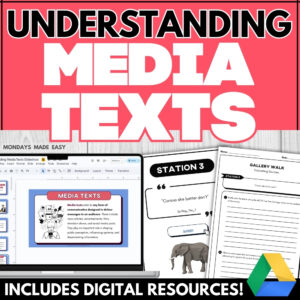
- Understanding Media Texts Slideshow Lesson – Google Slides®, Powerpoint, and PDF
- Understanding Media Texts Informational Handbook
- Credible Source Analysis Worksheet – Digital & Print
- ABCDE Five-Step Strategy Personal Anchor Chart
- 9 Media Literacy Gallery Walk Stations
- Gallery Walk Response Worksheet – Digital & Print
- Detailed Answer Keys
- Teacher Instructions for using these resources
How to Use This Understanding Media Texts Lesson:
You can begin your lesson with the Diagnostic Bell-Ringer: Understanding Media Texts to activate prior knowledge and introduce key concepts. This short activity prepares students to distinguish between different types of media texts and helps them reflect on their daily media consumption through a critical lens.
This opening task establishes an engaging entry point into Understanding Media Texts by encouraging students to think about the media they encounter every day. Many students consume large amounts of digital information through social media, news apps, videos, and advertisements without always recognizing the different purposes and structures behind each message. The diagnostic bell-ringer prompts students to consider questions such as who created a piece of media, why it was produced, and how it might influence an audience. By activating prior knowledge at the start of the lesson, teachers can gauge students’ existing familiarity with media literacy concepts while also introducing the analytical mindset needed for Understanding Media Texts throughout the unit.
Next, use the Understanding Media Texts Slideshow Lesson to guide whole-class instruction. This presentation defines media texts, outlines common media conventions, and emphasizes the importance of evaluating authorship, purpose, and audience. As you progress through the slides, invite students to reflect on familiar examples and identify key media features across formats.
The slideshow serves as the central instructional component for teaching Understanding Media Texts. It provides clear definitions and examples that help students recognize how different forms of media communicate information and influence audiences. Through guided instruction, students learn about common media conventions such as headlines, visuals, sound effects, editing choices, and persuasive language. These elements shape how a message is received and interpreted. Teachers can pause during the presentation to invite discussion, asking students to identify examples from advertisements, news articles, or social media posts they have seen. This interactive approach encourages active participation and helps students apply the principles of Understanding Media Texts to real-world media experiences.
Distribute the Informational Handbook: Understanding Media Texts to deepen understanding. This handbook offers detailed explanations of media conventions, source types, and digital publishing norms. Encourage students to annotate this resource and refer back to it when evaluating media texts throughout the unit.
The informational handbook functions as a reference guide that students can return to as they practice Understanding Media Texts. It expands on the ideas introduced in the slideshow by providing deeper explanations of how media messages are structured and distributed. Topics such as source credibility, publication formats, and editorial choices help students develop a more comprehensive framework for analyzing media. Encouraging annotation allows students to interact actively with the text, highlighting key ideas, writing questions, and noting connections to examples they encounter. Over time, this handbook becomes a valuable tool that supports students as they continue developing skills related to Understanding Media Texts.
To practice application, assign the Credible Source Analysis Worksheet. This activity describes 10 media texts that students might encounter and prompts them to determine whether or not these sources are credible or unreliable. Students must also provide their reasoning for each example.
This worksheet allows students to apply the principles of Understanding Media Texts in a practical and analytical way. By evaluating multiple examples, students practice identifying the characteristics of credible and unreliable sources. Rather than simply labeling sources as trustworthy or untrustworthy, students are encouraged to explain their reasoning, which helps reinforce critical thinking. Teachers may guide students to look for factors such as authorship, supporting evidence, publication context, and tone. This activity strengthens students’ ability to evaluate media independently, which is a central goal of Understanding Media Texts instruction.
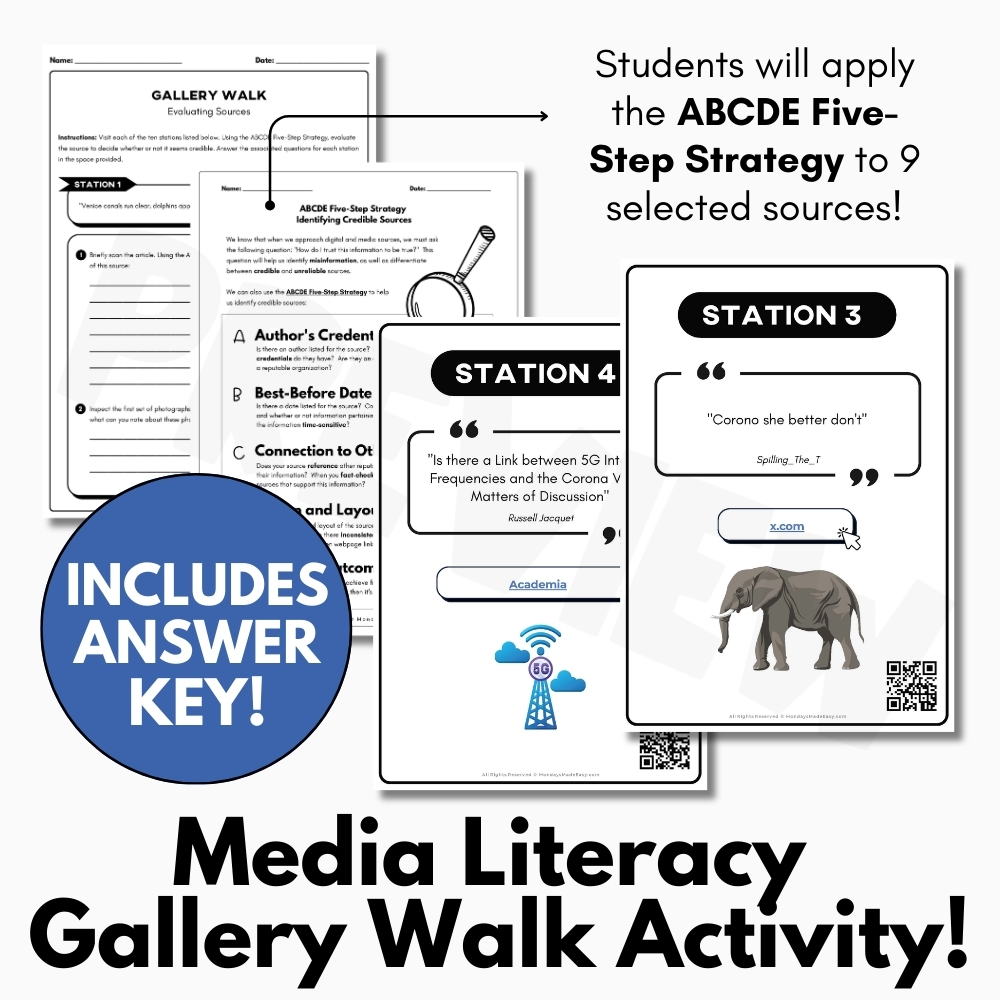
Students will then move through a media literacy gallery walk to strengthen their understanding. To facilitate this activity, set up the Media Literacy Gallery Walk Stations around the room; alternatively, you can divide students into groups and assign a source to each group. Students will apply the ABCDE Five-Step Strategy to assess authorship, best-before date, connections, design, and expected outcome of each source. This strategy builds habits of inquiry and skepticism, essential for navigating online information. Students can record their responses in the Gallery Walk Response Worksheet.
The gallery walk provides an interactive and collaborative approach to practicing Understanding Media Texts. By physically moving through stations or rotating through group tasks, students engage with a variety of media examples in an active learning environment. The ABCDE Five-Step Strategy helps students systematically evaluate key aspects of each media text. For instance, students examine the author’s credibility, consider whether the information is current, evaluate potential connections or conflicts of interest, analyze design choices, and determine the intended outcome for the audience. This structured approach encourages students to slow down and carefully analyze media rather than accepting information at face value. Through repeated practice with this strategy, students develop habits that support deeper Understanding Media Texts.
To consolidate learning, detailed answer keys for each activity are provided. The inclusion of answer keys allows teachers to review and reinforce the concepts introduced in the Understanding Media Texts lesson. After students complete each activity, the answer keys can be used to facilitate class discussions, compare reasoning, and clarify misunderstandings. Teachers may invite students to explain how they arrived at their conclusions, encouraging them to articulate their thought processes. This reflective step strengthens comprehension and helps students internalize the analytical strategies they have practiced.
Overall, this lesson sequence provides a comprehensive approach to teaching Understanding Media Texts. By combining direct instruction, guided reading, analytical exercises, and collaborative learning, the activities support multiple learning styles and encourage active participation. Students gradually build confidence in their ability to evaluate media messages and recognize the techniques used to inform, persuade, or entertain audiences.
As students progress through the lesson, they develop essential media literacy skills that extend beyond the classroom. In today’s digital world, individuals are constantly exposed to a wide range of media content, making the ability to critically evaluate information more important than ever. By strengthening their skills in Understanding Media Texts, students become more thoughtful consumers of information and more responsible participants in digital communities.
Ultimately, the goal of this lesson is to help students approach media with curiosity, skepticism, and awareness. Through repeated practice and reflection, students gain the knowledge and confidence needed to analyze messages thoughtfully and make informed decisions about the media they encounter every day.
✨ Kindly note that due to copyright restrictions, this resource is not editable, except for the files specifically labelled as editable. This is a common practice within the online marketplace in order to protect the clip artists and software providers that have authorized their intellectual property for the development of this resource.
See what other teachers are saying about this Understanding Media Texts Lesson:
“This was straightforward and easy to use. I (and my students) liked that each task was interesting, but without being overwhelming. Much appreciated.” – Emma T.
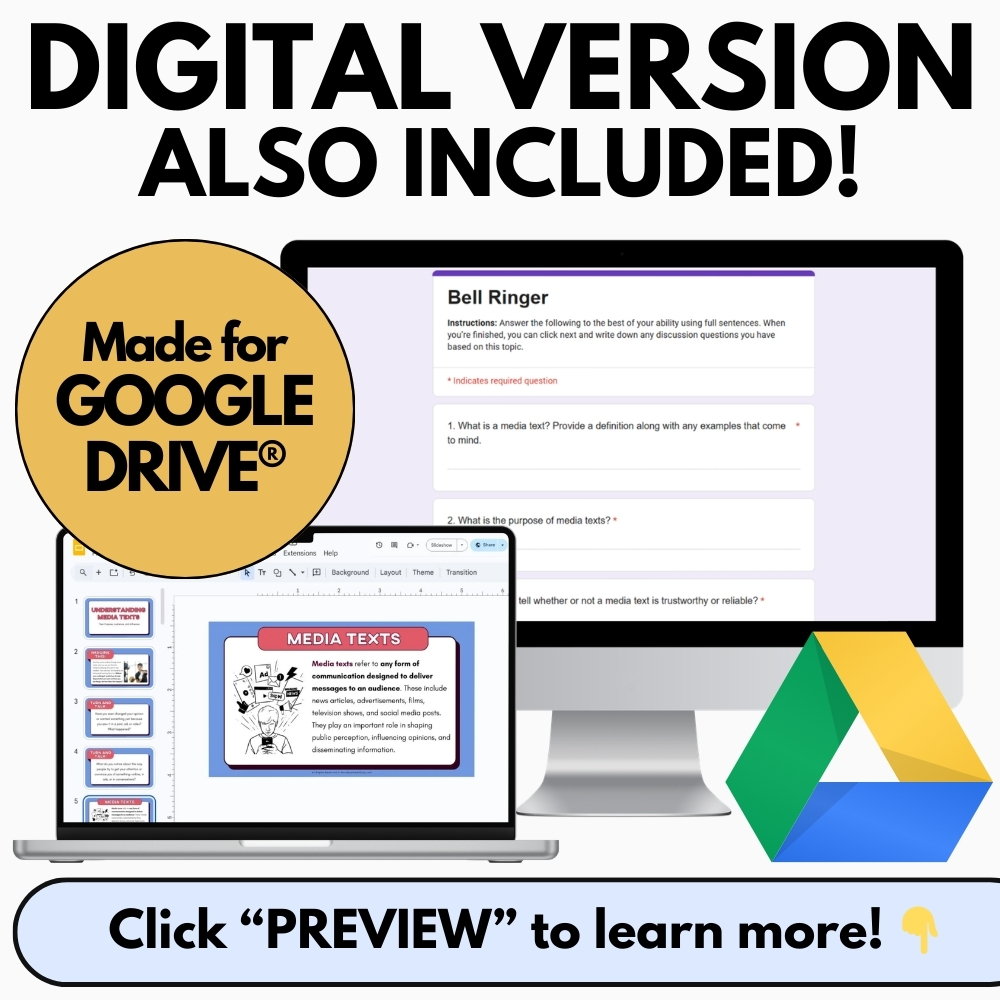
⭒ For classrooms utilizing Google Classroom® ⭒
To access the digital version of these worksheets, simply follow the instructions within the resource to copy the files directly to your Google Drive®.