
Description
This interactive media literacy lesson introduces students to persuasive techniques through a fun sorting game! Students will explore rhetorical strategies and distinguish emotional appeals, logical fallacies, and various persuasive tactics used in advertising, argument, and everyday media.
Included with this Persuasive Techniques Lesson:
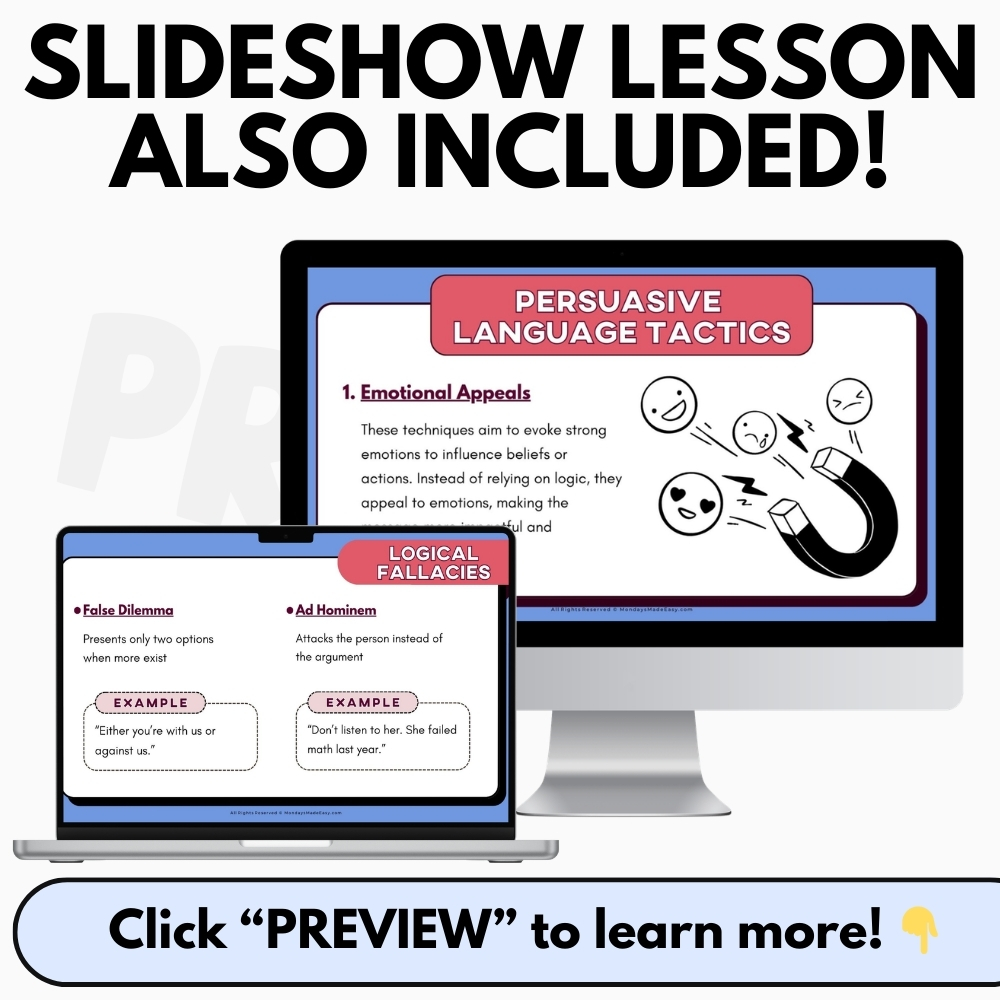
- Persuasive Language Techniques Slideshow Lesson – Google Slides®, Powerpoint, and PDF
- Rhetorical Choice Sorting Game
-
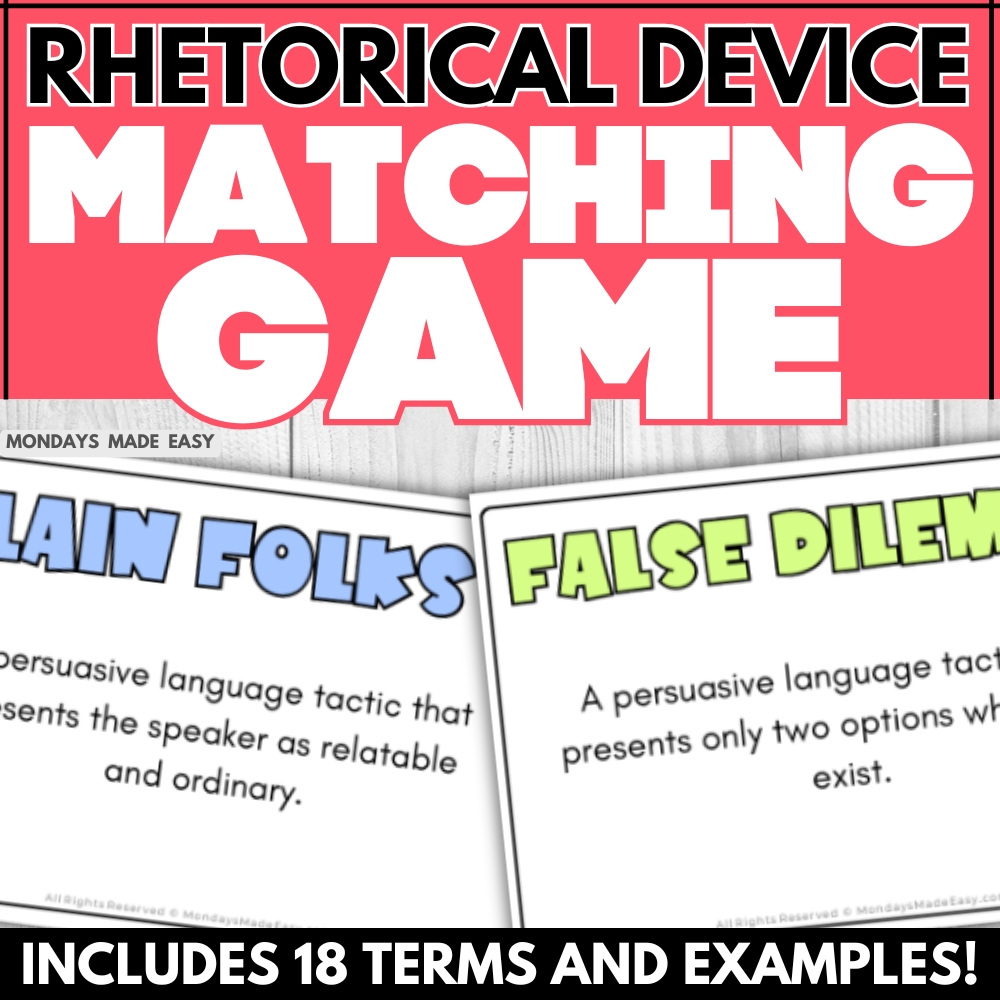
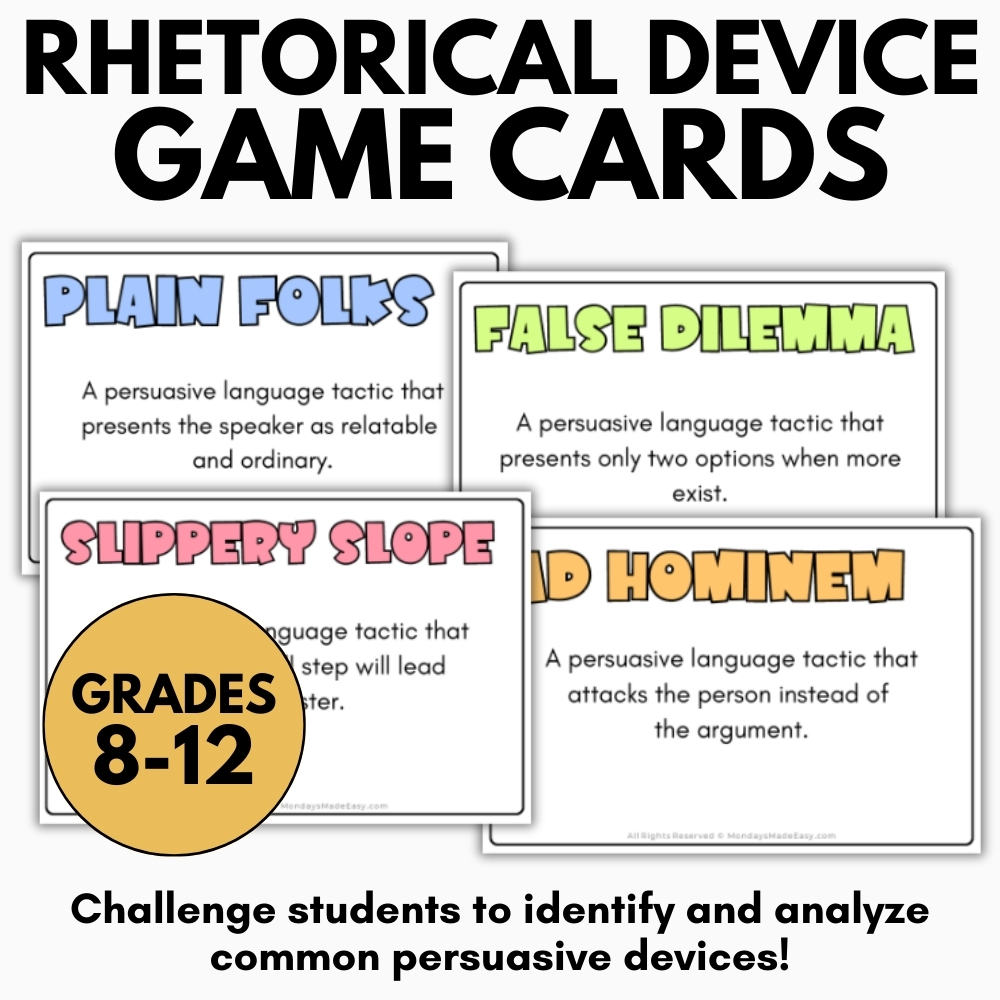
- Includes 36 printable sorting cards: 18 examples of persuasive techniques and 18 corresponding tactic examples
- Techniques include Name Calling, Loaded Language, Band Wagon, False Dilemma, Red Herring, Slippery Slope, Card Stacking, and more!
- Rhetorical Sorting Game Answer Key
- Blank Rhetorical Choice Sorting Game Template
- Teacher Instructions for using these resources
How to Use This Persuasive Techniques Lesson and Sorting Game:
Use this game to reinforce key concepts, build critical thinking skills, and promote collaborative learning!
This interactive activity helps students deepen their understanding of Persuasive Techniques by engaging them in a hands-on learning experience. Rather than simply memorizing definitions, students actively analyze examples and discuss how language influences audience perceptions and decisions. Through collaboration and discussion, students learn that persuasive language appears across many forms of communication, including advertisements, political messaging, social media posts, and everyday conversations. The game format encourages participation while reinforcing the idea that recognizing Persuasive Techniques is an important skill for navigating modern media environments.
Begin the lesson by reviewing the Persuasive Language Techniques Slideshow Lesson, which introduces students to the most common rhetorical strategies. The slideshow provides real-world examples to help students recognize how these techniques are used to influence audience behavior and belief.
The slideshow serves as the instructional foundation for understanding Persuasive Techniques. Through clear explanations and visual examples, students learn how writers and speakers intentionally shape messages to influence audiences. Teachers can guide students through each strategy, discussing how emotional appeals, logical reasoning, and credibility can all be used to strengthen a persuasive argument. By examining real-world examples, students begin to recognize that Persuasive Techniques are not limited to formal speeches or advertisements but appear frequently in everyday communication. This stage of the lesson ensures that students have the vocabulary and conceptual understanding needed to successfully participate in the game activity.
Next, students will play the Rhetorical Choice Sorting Game. Students can work individually, in pairs, or in groups to match persuasive examples to the correct tactic. Encourage students to justify their matches by discussing which features of the language suggest a particular strategy (e.g., emotional language, exaggerated outcomes, appeals to logic or credibility).
The sorting game allows students to actively apply their knowledge of Persuasive Techniques in a collaborative setting. As students examine each example, they must analyze the language carefully and determine which rhetorical strategy is being used. Working in groups encourages discussion and debate, which helps students refine their reasoning and consider multiple perspectives. When students explain their choices, they practice identifying specific language features that signal certain Persuasive Techniques, such as emotionally charged wording or exaggerated claims. This process strengthens both analytical thinking and communication skills.
The rhetorical tactics in this activity include:
- Name Calling
- Loaded Language
- Band Wagon
- False Dilemma
- Red Herring
- Slippery Slope
- Card Stacking
- Plain Folks
- Ad Hominem
- False Analogy
- … and more!
These rhetorical strategies represent some of the most common Persuasive Techniques used in persuasive writing and media messaging. Each tactic demonstrates a different way language can shape audience perception. For example, loaded language appeals to emotions, while bandwagon arguments encourage people to follow popular opinion. By studying a range of Persuasive Techniques, students learn that persuasive messaging can be subtle and multifaceted. Teachers may choose to discuss how these techniques appear in political campaigns, advertisements, debates, and news commentary. This broader context helps students recognize the relevance of rhetorical analysis in everyday life.
This interactive game encourages students to apply their knowledge in a fun and engaging way, improving retention and teamwork skills.
Games can be powerful learning tools because they encourage active participation and collaboration. In this activity, students reinforce their understanding of Persuasive Techniques while working together to analyze examples and reach conclusions. The game format encourages curiosity and discussion, which often leads to deeper understanding than traditional lecture-based instruction. As students interact with their peers, they practice explaining concepts and defending their reasoning, both of which strengthen comprehension of Persuasive Techniques and improve communication skills.
After the game, you can lead a discussion to review correct matches and address any questions, reinforcing learning objectives and promoting a supportive classroom environment. Note that in some cases, there is more than one correct answer for each persuasive technique. These possibilities are noted in the answer key provided.
The discussion phase helps consolidate students’ understanding of Persuasive Techniques by reviewing the reasoning behind each answer. Teachers can guide the conversation by asking students to explain how they identified specific strategies and what clues in the language helped them make their decisions. Highlighting cases where multiple answers may be possible helps students recognize that persuasive communication is often complex and nuanced. This conversation reinforces the idea that identifying Persuasive Techniques requires careful reading and thoughtful interpretation rather than simple memorization.
Extend learning by assigning the Blank Card Template, where students generate their own examples based on current events, advertisements, or classroom debates.
The extension activity encourages students to create their own examples of Persuasive Techniques, helping them move from analysis to application. By designing original examples, students must think carefully about how specific rhetorical strategies function and how they can be used to influence audiences. Teachers may encourage students to draw inspiration from real-world sources such as advertisements, social media posts, or public debates. This creative process reinforces understanding while allowing students to demonstrate mastery of Persuasive Techniques in an engaging and meaningful way.
Overall, this activity provides a comprehensive approach to teaching persuasive language. Students begin by learning key rhetorical concepts, then practice identifying them through interactive gameplay, and finally apply their knowledge by creating their own examples. This progression supports both understanding and retention while encouraging active participation.
As students become more familiar with Persuasive Techniques, they develop stronger critical thinking skills and greater awareness of how language influences opinions and decisions. These skills are essential for navigating media environments where persuasive messaging appears frequently. By learning to recognize and analyze Persuasive Techniques, students become more thoughtful readers, listeners, and communicators.
Ultimately, this lesson helps students move beyond passive consumption of persuasive messages and toward a more analytical perspective. Through discussion, collaboration, and creative application, learners gain the tools needed to recognize Persuasive Techniques in a variety of contexts and evaluate them thoughtfully.
✨ Kindly note that due to copyright restrictions, this resource is not editable, except for the files specifically labelled as editable. This is a common practice within the online marketplace in order to protect the clip artists and software providers that have authorized their intellectual property for the development of this resource.
⭒ For classrooms utilizing Google Classroom® ⭒
To access the digital version of these worksheets, simply follow the instructions within the resource to copy the files directly to your Google Drive®.