
Description
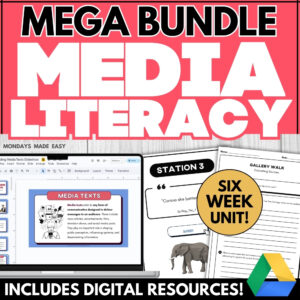
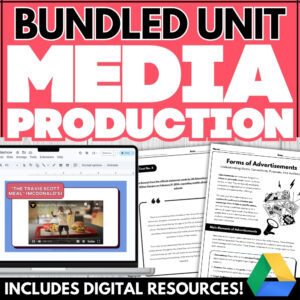
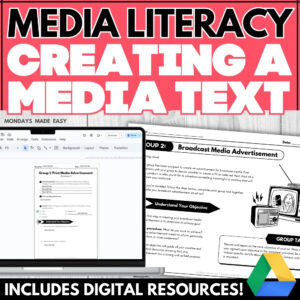
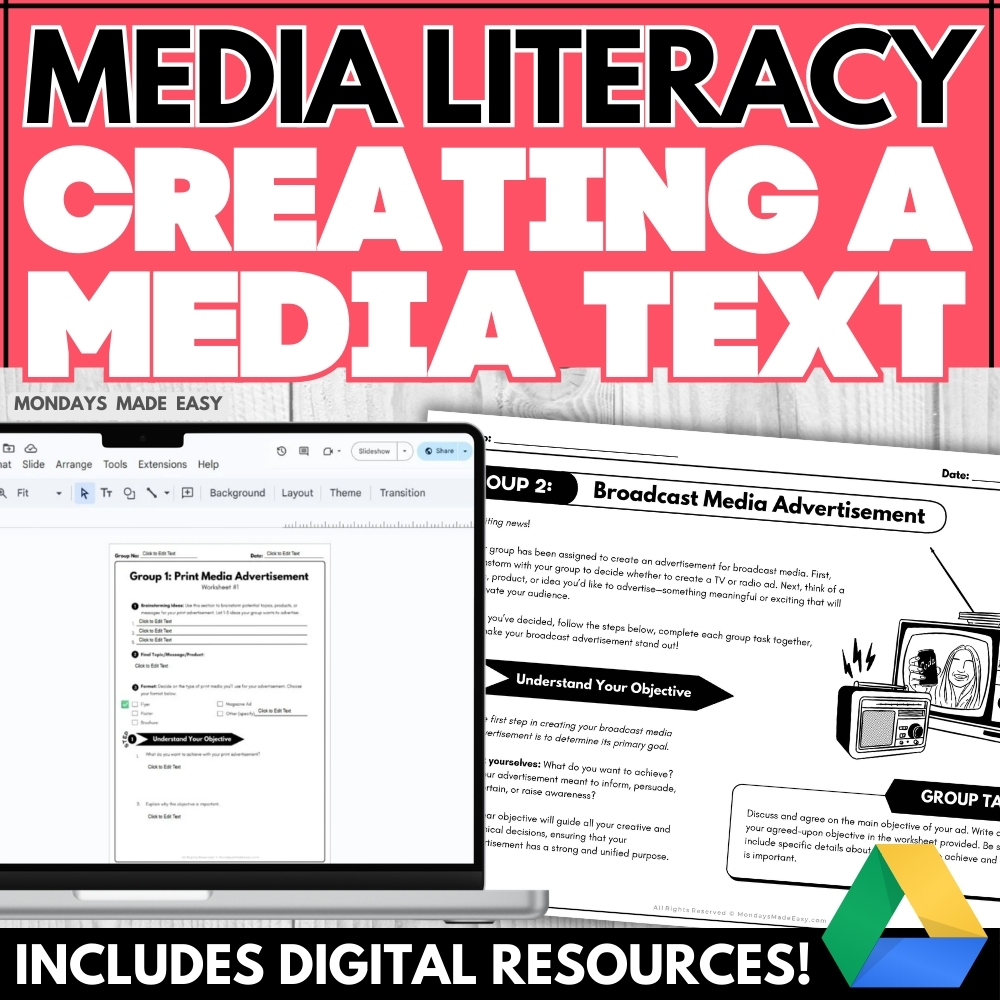
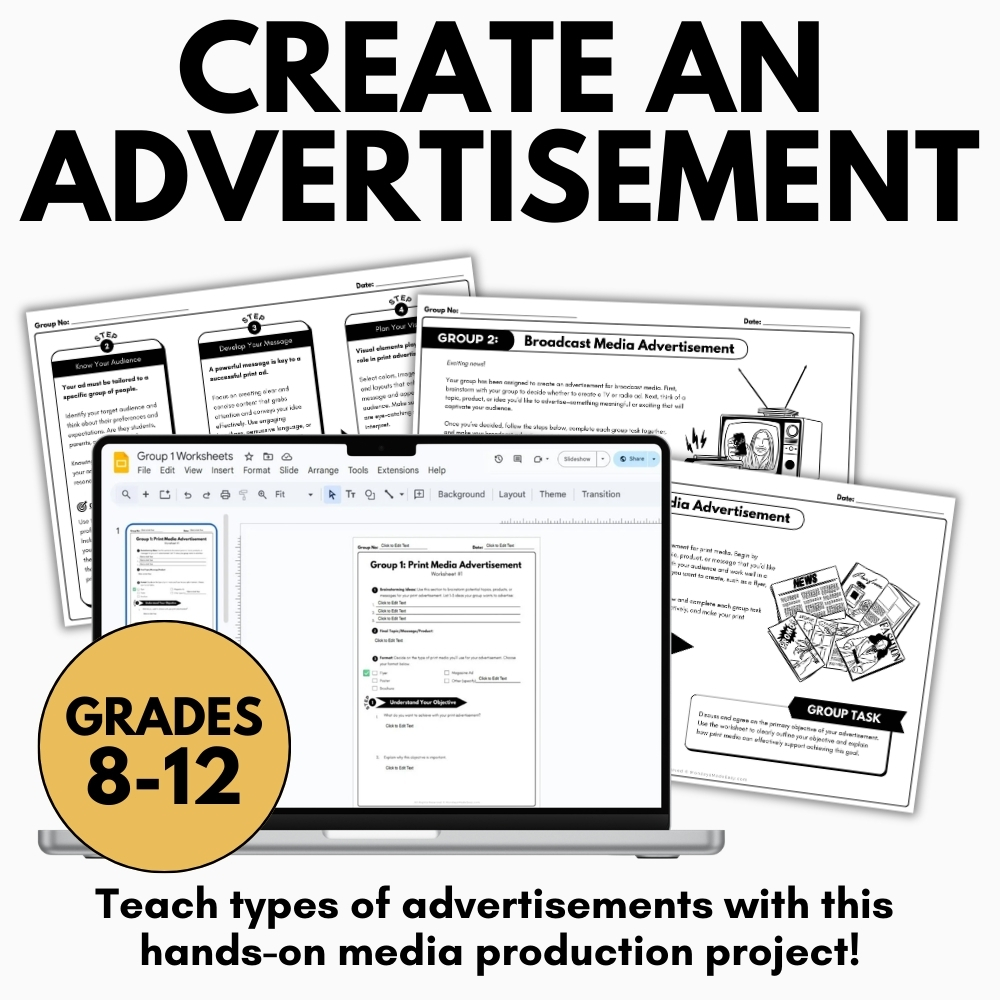
Teach types of advertisements with this hands-on media production project! Students will create an advertisement while exploring target audience, persuasive strategies, and real-world media literacy skills. Includes digital resources for Google Classroom®!
Included with this Creating an Advertisement Project:
- Advertisement Project Guidebook
- Group Planning Worksheets and Graphic Organizers – Digital & Print
- Assessment Checklists – Digital & Print
- Peer Feedback Forms – Digital & Print
- Teacher Feedback Form – Digital & Print
- Group Reflection Prompts – Digital & Print
- 4-Level Rubric – Editable & Ready-to-Print
- Teacher Instructions for using this resource
How to Use This Creating an Advertisement Project:
This media production project challenges students to apply their understanding of Types of Advertisements by designing and producing their own original advertising campaign. Students will explore target audience, central message, persuasive techniques, and ethical media considerations while creating an advertisement aligned with real-world media conventions.
This project centers on Creating an Advertisement as both a creative and analytical process. Instead of only studying advertisements from the perspective of an audience member, students take on the role of media creators and explore the strategic thinking behind persuasive communication. By designing their own campaign, students must carefully consider how a message is crafted, how visuals and language influence perception, and how advertisements are structured to reach a specific audience. Through Creating an Advertisement, learners begin to see how advertising strategies operate in real-world media environments and gain a deeper appreciation for the planning and design decisions involved in effective communication.
You can begin this project with the Project Guidebook, which introduces the assignment expectations, outlines the different forms of advertisements students may create, and provides step-by-step instructions for planning and production. This guide ensures students understand both the creative and analytical goals of the assignment.
The Project Guidebook serves as the foundational resource for Creating an Advertisement, clearly outlining the objectives and expectations of the project. Students are introduced to the various advertisement formats they may choose from, such as print ads, digital campaigns, broadcast commercials, outdoor advertisements, or informational media pieces. The guidebook helps students understand how each format functions differently and what design elements are typically associated with each type. By reviewing the guidebook before beginning the creative process, students gain a clear understanding of how Creating an Advertisement requires both imaginative thinking and thoughtful planning.
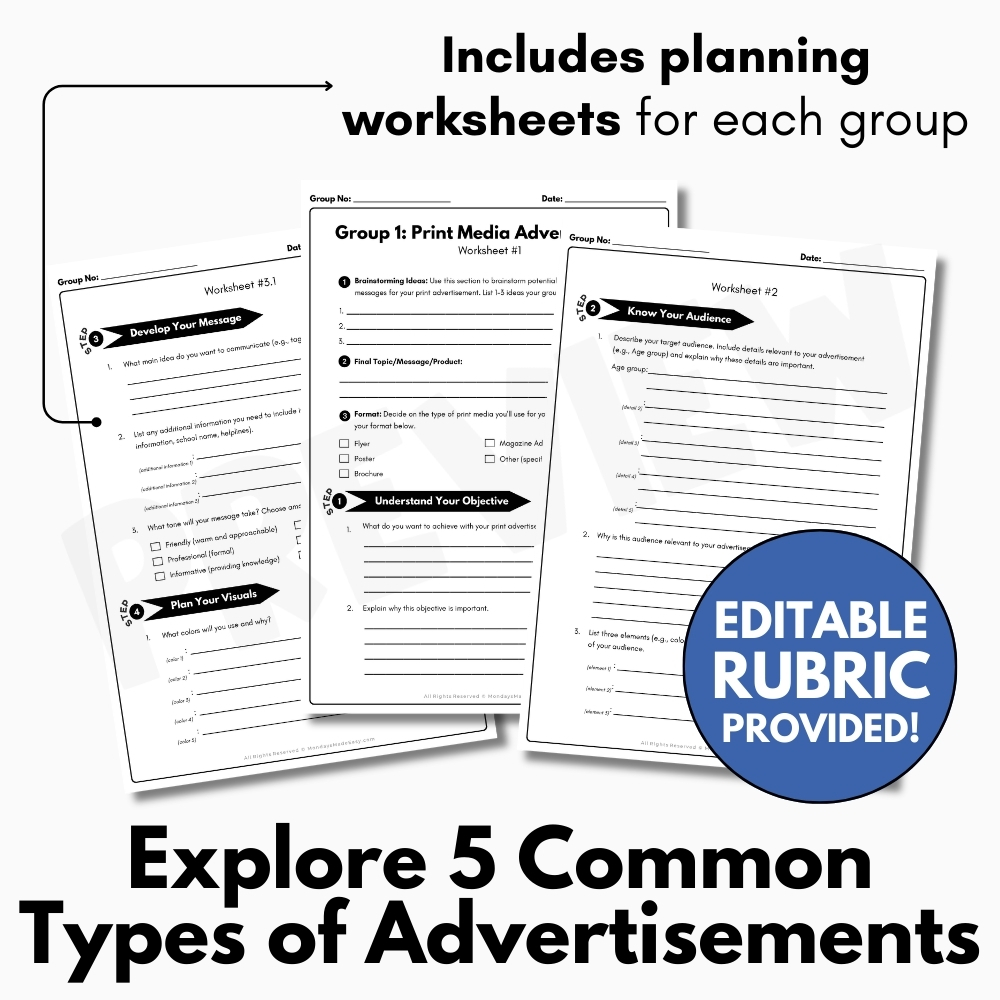
Students will then complete the Group Planning Worksheets to develop their advertisement concept. These worksheets guide students through identifying their target audience, defining their central message, selecting persuasive strategies, and determining which advertising format best suits their campaign. This stage encourages collaboration and strategic thinking before production begins.
The planning phase is a critical step in Creating an Advertisement, as it helps students transform broad ideas into a structured campaign concept. Through the worksheets, students work collaboratively to determine who their advertisement is intended to reach and what message they want to communicate. They also consider which persuasive techniques will be most effective for their audience and how different media formats can influence the impact of their message. By carefully planning before production begins, students learn that Creating an Advertisement involves strategic decision-making rather than spontaneous creativity alone.
Once advertisements are completed, students receive feedback using the Peer Feedback Form and Teacher Feedback Form. These tools guide students and educators in assessing message clarity, audience alignment, persuasive techniques, visual design, ethical considerations, and overall effectiveness, supporting constructive critique and revision.
The feedback stage plays an important role in the process of Creating an Advertisement, as it encourages students to reflect on how their work is perceived by others. Peer feedback allows students to evaluate each other’s advertisements and provide constructive suggestions for improvement. At the same time, teacher feedback offers guidance on how effectively the advertisement communicates its intended message and aligns with media conventions. Through this process, students learn that Creating an Advertisement often involves revision and refinement based on audience response and critical evaluation.
To support assessment, this resource includes Assessment Checklists for each advertisement format – print, broadcast, digital, outdoor, and informational media. These checklists help maintain consistent expectations across different media types.
The assessment checklists provide clear criteria for evaluating the outcomes of Creating an Advertisement across multiple formats. Because students may choose different types of media for their campaigns, the checklists ensure that all projects are assessed according to relevant expectations for that format. For example, a broadcast advertisement might be evaluated for its use of audio and visual storytelling, while a print advertisement might focus more heavily on layout and imagery. By using these checklists, teachers can provide consistent feedback while recognizing the unique features involved in Creating an Advertisement within different media environments.
Throughout the project, students can reflect on their progress using the Group Reflection Forms, helping them evaluate decision-making, collaboration skills, and creative direction. These reflections support metacognitive awareness and reinforce media literacy learning goals.
Reflection is an important component of Creating an Advertisement, as it encourages students to think critically about the choices they made during the project. Through the reflection forms, students analyze how their group collaborated, how they selected persuasive strategies, and how effectively their final product communicates its message. This reflective process helps students recognize both the strengths and challenges of their work. By engaging in thoughtful reflection, students deepen their understanding of the creative and analytical skills involved in Creating an Advertisement.
Finally, evaluate student work using the included 4-Level Rubric, which assesses knowledge, inquiry, communication, and application skills related to media production, persuasive messaging, and audience awareness. This rubric is provided in both editable and ready-to-print formats.
The rubric provides a structured method for evaluating the learning outcomes of Creating an Advertisement. It measures students’ ability to apply media literacy concepts, demonstrate persuasive communication, and produce a coherent and effective advertisement. By assessing areas such as message clarity, audience awareness, and creativity, the rubric ensures that both analytical and creative skills are recognized. Providing the rubric to students in advance also helps them understand what is expected throughout the process of Creating an Advertisement, allowing them to plan their work more effectively.
Overall, this project offers a comprehensive learning experience that blends media literacy, creative expression, and collaborative problem-solving. Students move through multiple stages of the creative process, from planning and design to feedback and reflection, gaining valuable insight into how advertising campaigns are developed. Through the process of Creating an Advertisement, students learn to analyze media messages more critically while also developing the skills needed to produce persuasive content themselves.
As students complete this project, they develop a stronger understanding of how advertising influences audiences and shapes consumer behavior. They also gain practical experience in communication, teamwork, and strategic thinking. Ultimately, Creating an Advertisement allows students to apply their knowledge of media literacy in a meaningful and engaging way while preparing them to navigate and interpret the complex advertising landscape they encounter every day.
✨ Kindly note that due to copyright restrictions, this resource is not editable, except for the files specifically labelled as editable. This is a common practice within the online marketplace in order to protect the clip artists and software providers that have authorized their intellectual property for the development of this resource.
⭒ For classrooms utilizing Google Classroom® ⭒
To access the digital version of these worksheets, simply follow the instructions within the resource to copy the files directly to your Google Drive®.