
Description
How do stories about family, pride, and heritage reflect different understandings of identity? This compare and contrast activity uses the short stories “Borders” by Thomas King and “Everyday Use” by Alice Walker to help students explore personal and cultural identity through literary analysis. This resource includes author background, comparative tools, and reflection prompts to guide students through a rich analysis of both stories.
Included with this Compare & Contrast Activity:
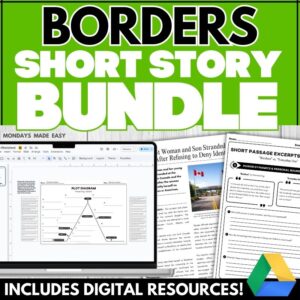
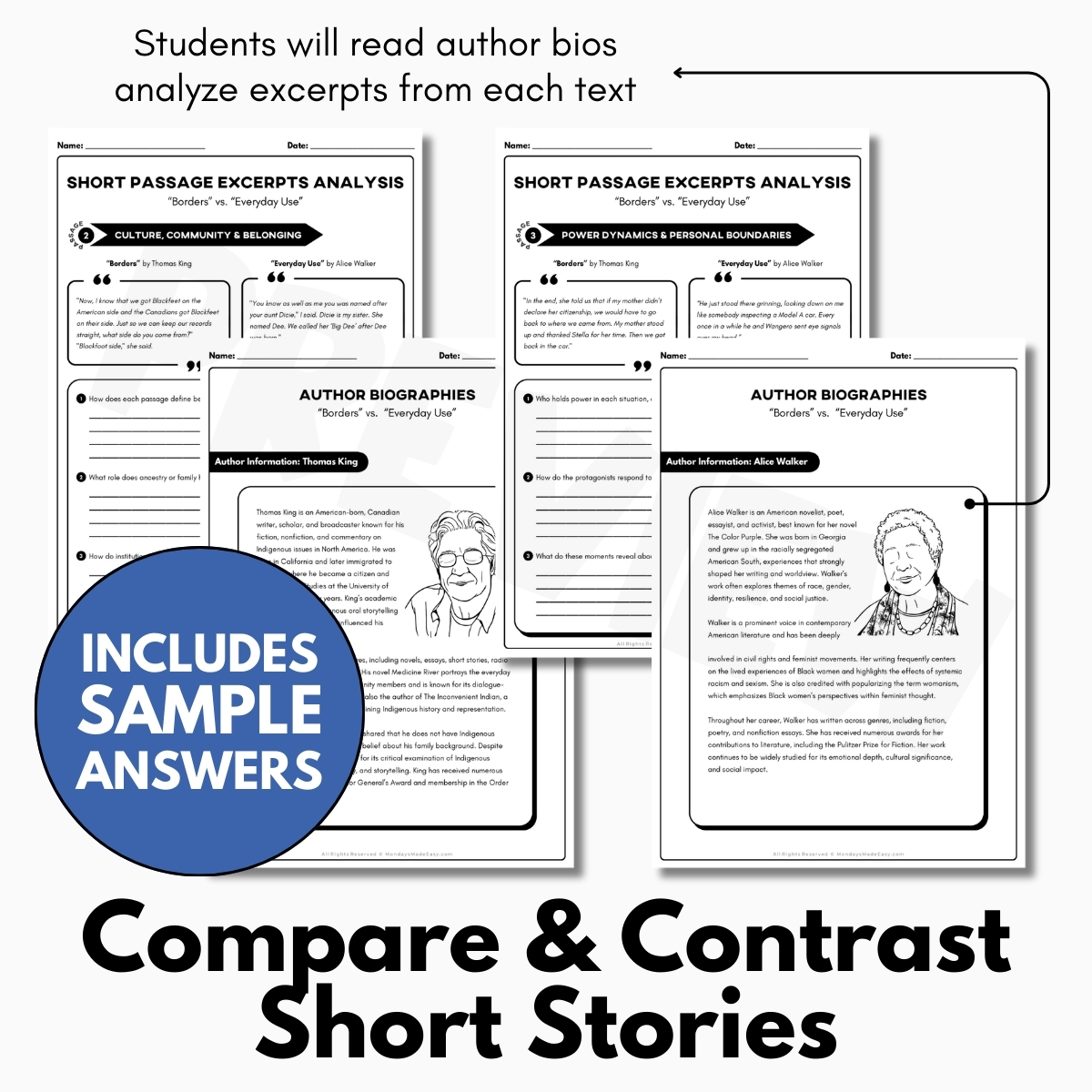
- Author Biographies – Alice Walker and Thomas King
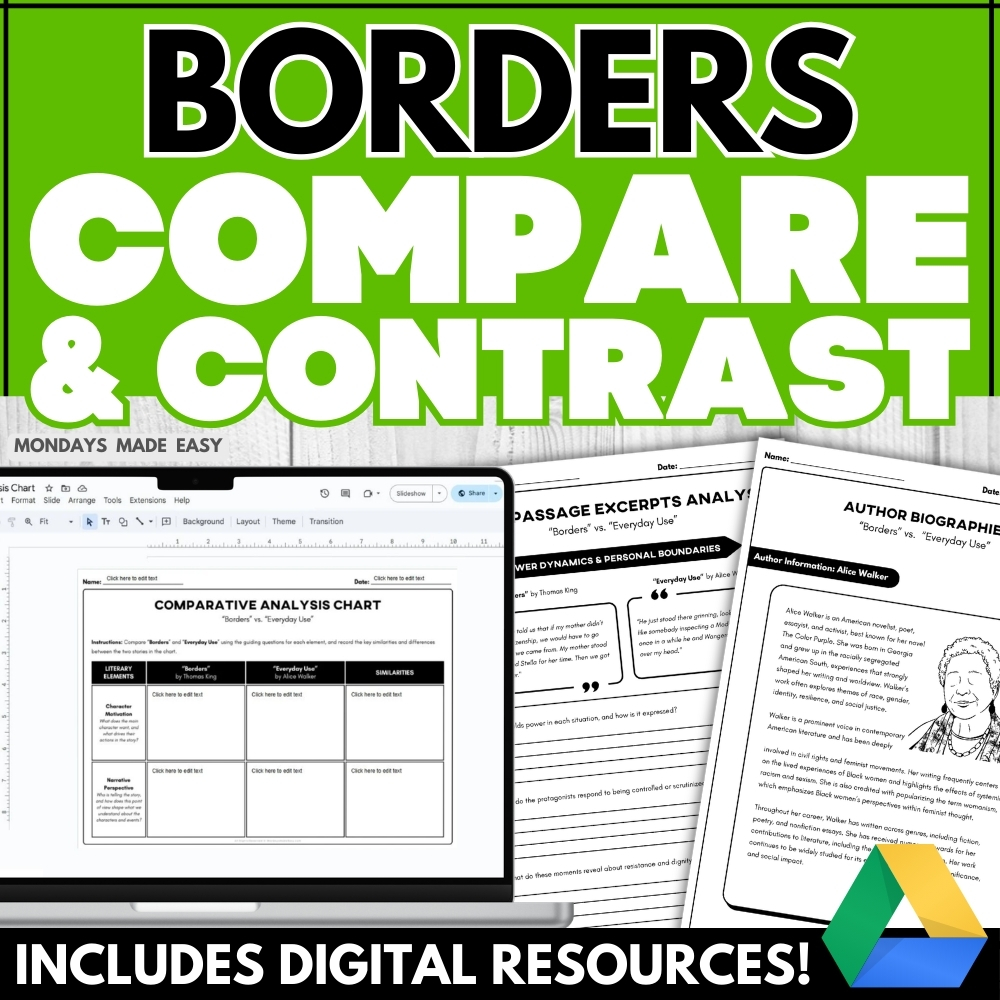
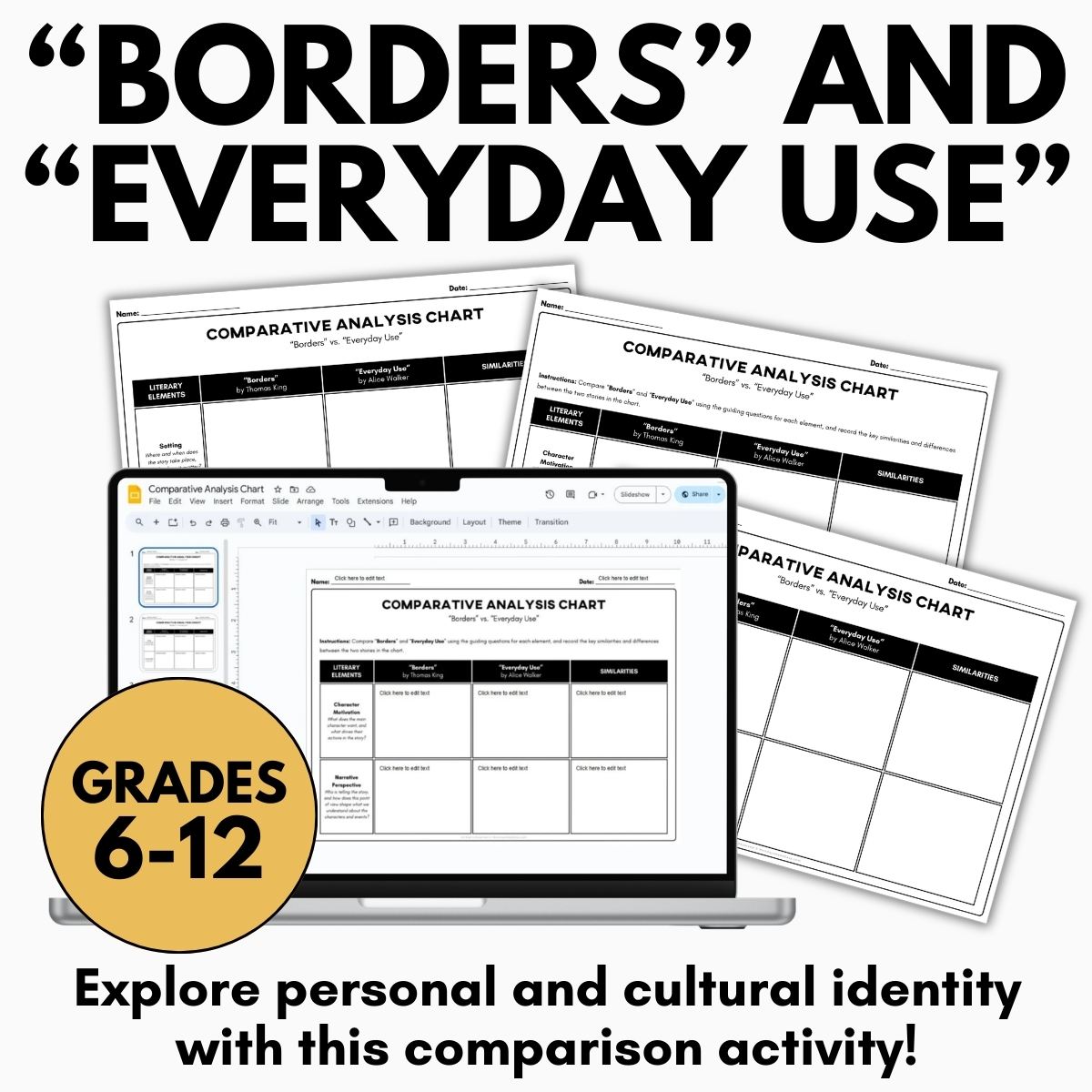
- Comparative Analysis Graphic Organizer – Digital & Print
- Short Passage Excerpts Analysis Worksheet – Digital & Print
- Story vs. Author Reflection Worksheet – Digital & Print
- Student Examples to Model Expectations
- Teacher instructions for using this resource
How to Use This Compare & Contrast Activity:
This activity is perfect for guiding students through a comparative literary analysis and encouraging thoughtful discussion about identity, culture, and perspective using two popular short stories for teens.
This lesson is intentionally structured to strengthen students’ analytical thinking by asking them to examine how similar ideas are explored across different texts. Through a Compare & Contrast approach, students move beyond simple comprehension and into higher-order thinking, where they must evaluate perspectives, cultural contexts, and authorial choices. By pairing two accessible yet thematically rich short stories, the activity supports engagement while still challenging students to think critically about identity and belonging. The discussion-based design also promotes collaborative learning, allowing students to hear diverse interpretations and refine their own ideas through dialogue.
Begin by introducing students to the lives of Thomas King and Alice Walker using the Author Biography handouts. These short bios provide relevant context about the authors’ cultural and historical backgrounds, which students can reference when comparing how personal identity and heritage are represented in each story.
This introductory step provides essential background knowledge that enriches students’ understanding of the texts before analysis begins. Learning about each author’s lived experiences helps students recognize that literature is often shaped by cultural history, social context, and personal identity. Within a Compare & Contrast framework, these biographies give students a foundation for examining how differing backgrounds influence narrative voice, character development, and thematic focus. Teachers may facilitate brief discussions or annotations of the biographies to help students identify details that may later inform their interpretations of the stories.
Next, assign the Comparative Analysis Graphic Organizer to guide students through a side-by-side comparison of key elements in “Borders” and “Everyday Use.” Students will examine similarities and differences in character motivations, conflicts, and the ways each story presents cultural belonging and identity.
This organizer serves as the central analytical tool for the lesson, allowing students to visually map their thinking as they Compare & Contrast the two texts. By breaking the analysis into clear categories—such as characters, conflicts, and themes—students are better able to organize their ideas and avoid superficial comparisons. The side-by-side structure also encourages balance, ensuring that students give equal attention to both stories rather than focusing on one. Teachers can model how to complete one section together before releasing students to work independently or in pairs.
Students will then complete the Short Passage Excerpts Analysis Worksheets. This close-reading activity asks them to interpret selected excerpts from both stories and analyze how literary elements like characterization and theme contribute to the authors’ messages about identity.
This phase deepens the Compare & Contrast process by shifting students’ attention to specific language choices and literary techniques. Close reading of carefully chosen excerpts helps students see how meaning is constructed at the sentence and paragraph level. By analyzing passages from both texts, students practice identifying patterns and contrasts in tone, symbolism, and character portrayal. This step reinforces the importance of textual evidence while helping students understand that broader themes are developed through deliberate craft decisions made by each author.
Finally, use the Story vs. Author Reflection Worksheet to prompt deeper thinking. Students will reflect on how the authors’ personal backgrounds may (or may not) influence the meaning of the texts. This component fosters critical thinking about the role of authorial context while encouraging students to synthesize their understanding of both texts.
The reflection component brings the Compare & Contrast activity full circle by asking students to evaluate the relationship between author and text. Rather than assuming that biography always dictates meaning, students are encouraged to think critically about when authorial context is useful and when the text should stand on its own. This synthesis task requires students to integrate insights from the biographies, graphic organizer, and close-reading activities into a coherent explanation of how perspective shapes interpretation. Written reflection also provides teachers with valuable insight into students’ depth of understanding.
Together, these steps create a cohesive learning experience that supports skill development across reading, writing, and critical thinking. The Compare & Contrast structure helps students see literature as a conversation between texts rather than isolated works. By engaging with Borders and Everyday Use side by side, students gain a richer understanding of how identity and culture can be explored in distinct yet interconnected ways. This approach not only strengthens literary analysis skills but also encourages empathy and cultural awareness—key competencies for adolescent learners.
✨ Kindly note that due to copyright restrictions, this resource is not editable, except for the files specifically labelled as editable. This is a common practice within the online marketplace in order to protect the clip artists and software providers that have authorized their intellectual property for the development of this resource.
⭒ For classrooms utilizing Google Classroom® ⭒
To access the digital version of these worksheets, simply follow the instructions within the resource to copy the files directly to your Google Drive®.