Description
Updated for 2026 to reflect current scholarship on Thomas King’s identity. Explore the life and experiences of Thomas King, author of the short story “Borders.” This resource includes an author biography and comprehension questions to support students’ independent reading and understanding of the text. Includes digital worksheets for Google Classroom®!
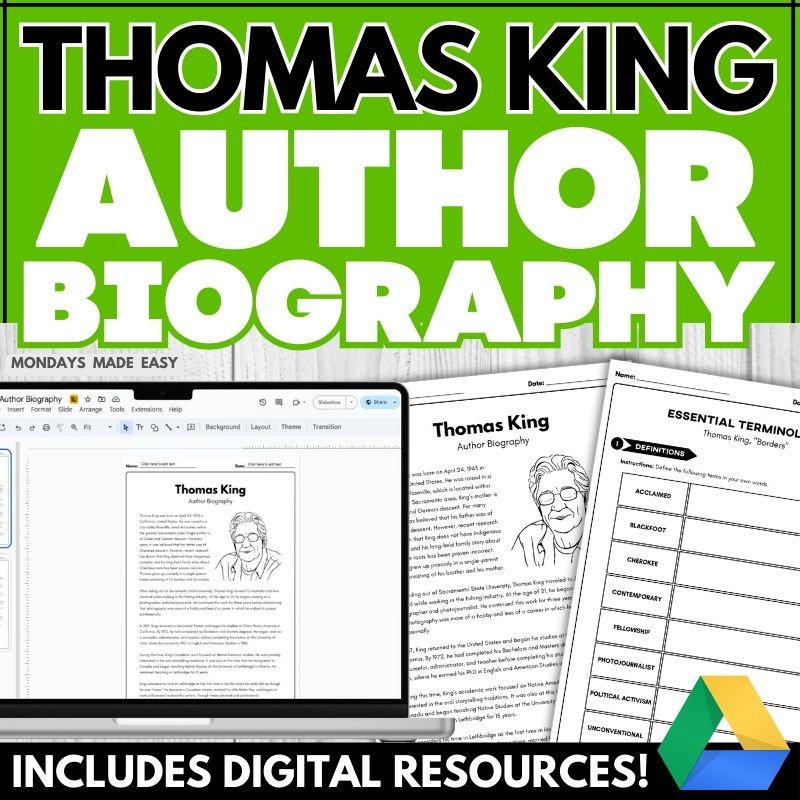
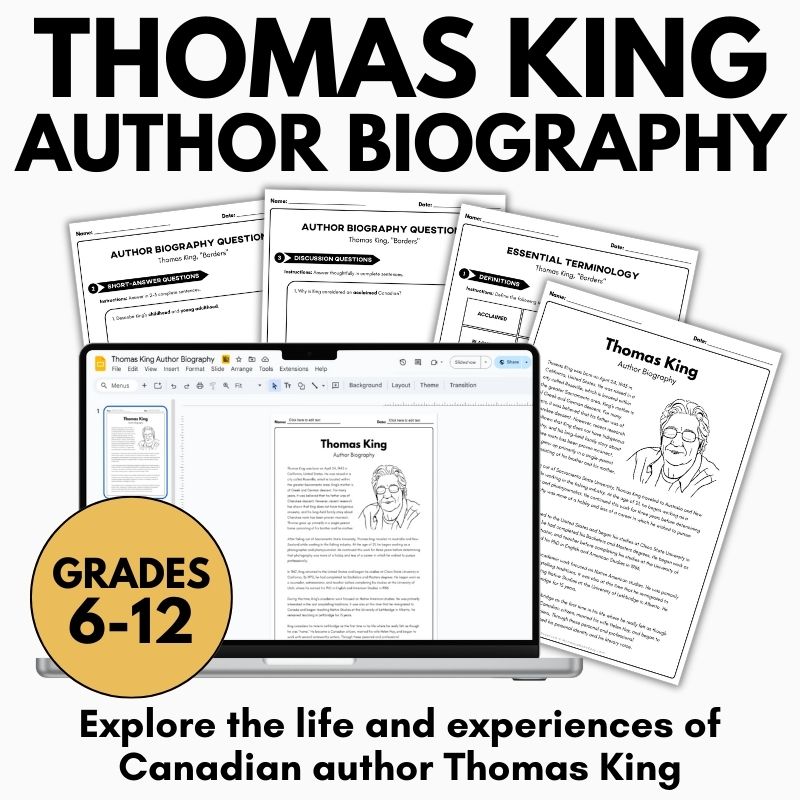
Included with this Author Biography for “Borders” by Thomas King:
- Thomas King Author Biography Informational Handout – Digital & Print
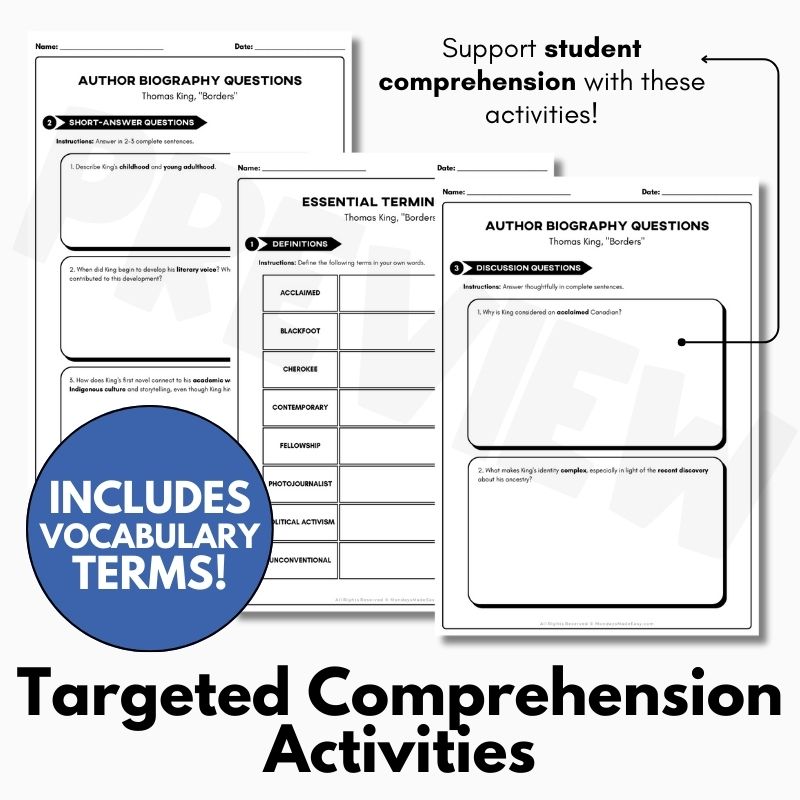
- Author Biography Vocabulary Worksheet – Digital & Print
- Author Biography Short-Answer Comprehension Questions – Digital & Print
- Answer Key for Comprehension Questions
- Teacher Instructions for using this resource
How to use this Author Biography Activity for “Borders” by Thomas King:
“Borders” by Thomas King is a short story that examines Indigenous resilience, identity and citizenship, generational differences, and policing of First Nations people. Explore the life experiences of author Thomas King using this author biography pre-reading activity.
This opening activity situates students within the complex social and political ideas explored in the text before they begin reading. By engaging with an Author Biography first, students are better prepared to recognize how lived experience, national borders, and questions of belonging intersect in the narrative. This context-building step supports deeper comprehension and more thoughtful classroom discussion, especially when students are asked to analyze sensitive topics such as identity, authority, and cultural representation. Using an Author Biography as a pre-reading strategy also reinforces the importance of understanding authorship as a critical lens in literary studies rather than treating texts as isolated works.
This author biography shares about King’s childhood and upbringing, his travels abroad as a photojournalist, and his education at Sacramento State University, Chico State University, and the University of Utah. It also explores King’s development as a writer, his immigration to Canada, and his political activism. This resource was updated in 2026 to reflect current scholarship identifying Thomas King as non-Indigenous.
These details provide students with a nuanced understanding of how Thomas King’s life experiences shaped his worldview and writing career. The Author Biography emphasizes the ways mobility, education, and political engagement influenced King’s perspectives on borders—both literal and symbolic. By addressing the 2026 scholarly update directly, this resource models responsible, up-to-date literary instruction and encourages critical conversations about authorship, identity, and authority. Including this clarification ensures transparency and helps students think critically about how stories are framed, taught, and interpreted in educational contexts.
Begin by reading the Author Biography Handout, which provides a concise overview of Thomas King’s life, career, and cultural contributions. This passage helps students examine how questions of Indigenous identity and authorship shape the way “Borders” is taught and understood in Canadian literature.
The handout is written in accessible, student-friendly language, making it appropriate for a wide range of grade levels while still maintaining academic rigor. As students engage with the Author Biography, they are prompted to reflect on how author background can influence narrative voice, thematic focus, and reader interpretation. Teachers can use this handout as a whole-class reading, a guided small-group activity, or an independent literacy task. This flexibility allows the Author Biography to fit seamlessly into different instructional settings and pacing needs.
Next, students complete the Author Biography Questions. This handout reinforces close reading and nonfiction literacy skills, guiding students through key vocabulary, facts, and ideas presented in the biography. Questions encourage students to consider how King’s identity and experience influence his writing.
The questions are designed to move beyond surface-level recall and toward analytical thinking. Students are asked to synthesize information, draw connections between life experiences and literary themes, and articulate their understanding using evidence from the text. By pairing the reading with structured questions, the Author Biography activity supports skill development in nonfiction comprehension, annotation, and academic discussion. These questions can also serve as discussion starters or written response prompts, helping teachers assess student understanding before moving into the short story itself.
To consolidate learning, an answer key is included to support discussion and assessment. This resource provides a foundational introduction to King’s work and is ideal for use before, during, or after reading “Borders.”
The inclusion of an answer key allows for efficient feedback and ensures instructional consistency, particularly when the Author Biography is used across multiple sections or grade levels. Teachers can use the answer key to guide class discussions, clarify misconceptions, or support independent learners. As a foundational resource, the Author Biography strengthens students’ readiness for literary analysis by grounding interpretation in context, authorial background, and critical inquiry. Whether used as a pre-reading scaffold, a mid-unit reference, or a post-reading reflection tool, this Author Biography supports thoughtful, informed engagement with “Borders” and promotes deeper understanding of how literature and lived experience intersect.
✨ Kindly note that due to copyright restrictions, this resource is not editable, except for the files specifically labelled as editable. This is a common practice within the online marketplace in order to protect the clip artists and software providers that have authorized their intellectual property for the development of this resource.
⭒ For classrooms utilizing Google Classroom® ⭒
To access the digital version of these worksheets, simply follow the instructions within the resource to copy the files directly to your Google Drive®.