


Description
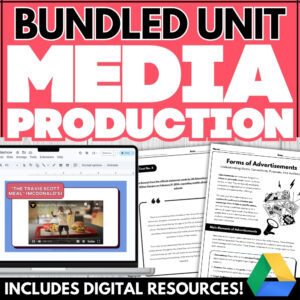
Engage your students in a hands-on media literacy project that challenges them to compare, analyze, and present competing ad campaigns! This real-world activity builds critical thinking as students examine rhetorical strategies, target audiences, and central messaging used in advertising. Includes digital worksheets for Google Classroom®!
Included with this Advertisement Techniques Assignment:
- Ad Campaign Showdown Slideshow – Google Slides®, Powerpoint, and PDF
-
- Introduce persuasive techniques, media conventions, and advertising strategies
- Includes YouTube links to ads from two famous rival corporations
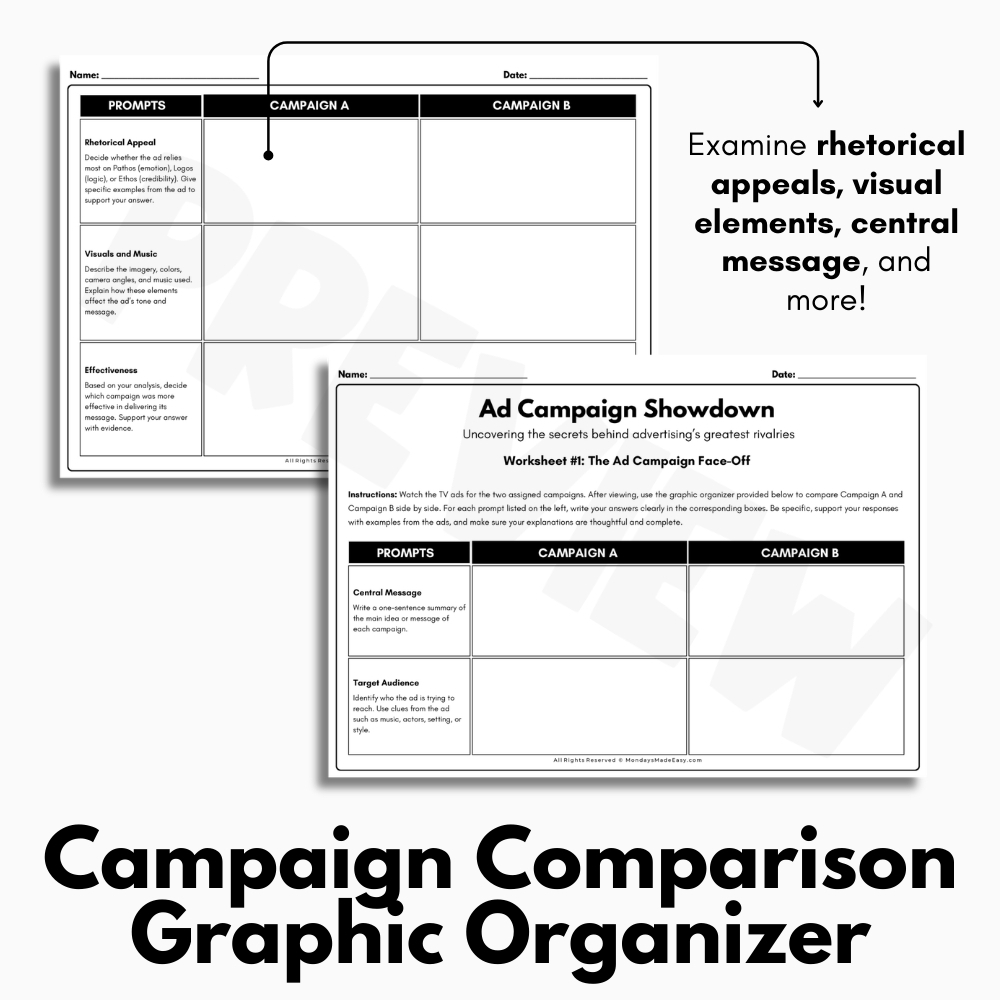
- Ad Campaign Showdown Graphic Organizer – Digital & Print
-
- Guide students in analyzing the central message, emotional appeal, and audience of each ad
- Presentation Assignment Outline and Rubric – Editable & Ready-to-Print
- Teacher Instructions for using these resources
How to Use This Advertisement Techniques Assignment:
This assignment works well in media studies, English Language Arts, and digital citizenship units. It encourages critical thinking about persuasive messages in students’ everyday media and helps them become more thoughtful, analytical consumers and creators.
This activity is designed to help students recognize and evaluate the Advertisement Techniques that shape the media they encounter daily. Advertisements appear across many platforms—including television, social media, streaming services, and websites—and students often interact with these messages without fully considering how they are constructed to influence behavior. By analyzing advertisements through a critical lens, students begin to see how language, imagery, and emotional appeals work together to persuade audiences. The assignment encourages learners not only to identify Advertisement Techniques, but also to reflect on how those techniques influence their perceptions and decision-making.
Begin by using the Ad Campaign Showdown Slideshow to introduce key advertising concepts. This slideshow reviews common persuasive techniques and explains how advertisers tailor messages to influence different audiences. It also introduces the idea of an “ad showdown,” which compares two real-world campaigns on similar themes or products.
The slideshow provides a clear introduction to Advertisement Techniques, giving students the vocabulary and conceptual framework needed for deeper analysis. Through examples and visual explanations, students learn about strategies such as emotional appeals, celebrity endorsements, repetition, and symbolic imagery. These techniques demonstrate how advertisers craft messages to resonate with particular audiences based on interests, values, or demographics. By presenting two competing campaigns within the slideshow, the lesson also introduces students to the concept of comparative analysis. This approach helps students see that Advertisement Techniques can vary significantly depending on the goals of the advertiser and the audience they are trying to reach.
Next, watch the advertisements provided within the slideshow. You will need access to YouTube to watch these ads. Students will use their Ad Campaign Showdown Graphic Organizer to break down each ad. They will identify the central message, analyze how the message is constructed, and reflect on the techniques used to persuade viewers. These worksheets guide students to think about tone, visual elements, and what may be implied or left out of the ad.
This viewing stage allows students to actively apply their understanding of Advertisement Techniques. As they watch the ads, students move beyond passive viewing and begin examining the specific strategies used to capture attention and influence viewers. The graphic organizer helps students focus on important elements such as imagery, music, pacing, and rhetorical appeals. By identifying both what is included in the advertisement and what may be intentionally omitted, students gain insight into how advertisers shape narratives to highlight certain values or emotions. This analytical process strengthens students’ ability to recognize Advertisement Techniques in real-world media.
After analyzing the two campaigns, students move into the presentation phase. Using the Presentation Assignment Handout, students will create a 5–7 minute presentation that introduces both ads, compares them in depth, and provides a final judgment on which is more persuasive and why. They are encouraged to include visuals, cite specific evidence from their worksheets, and use rhetorical vocabulary introduced in the slideshow.
The presentation component encourages students to synthesize their analysis of Advertisement Techniques into a coherent argument. By comparing two advertisements directly, students must evaluate how different strategies influence the effectiveness of each campaign. They may consider factors such as emotional appeal, storytelling structure, audience targeting, and visual design. The requirement to support their conclusions with evidence from the graphic organizer reinforces academic skills such as reasoning, explanation, and evidence-based analysis. This stage also helps students develop communication skills as they articulate their understanding of Advertisement Techniques in a structured presentation format.
To evaluate this assignment, a 4-level rubric has been provided. This rubric is provided in both editable and ready-to-print formats; you can modify the success criteria in order to meet the needs of your unique classroom and curriculum expectations.
The rubric supports fair and consistent assessment of students’ understanding of Advertisement Techniques. By clearly outlining expectations for analysis, presentation structure, and use of evidence, the rubric helps students understand what constitutes strong media analysis. Teachers may adapt the rubric to align with specific curriculum goals, such as emphasizing rhetorical vocabulary, visual analysis, or oral presentation skills. Providing the rubric in advance also helps students plan their work more effectively and ensures that they focus on demonstrating their understanding of Advertisement Techniques throughout the assignment.
Overall, this assignment creates a comprehensive learning experience that combines media analysis, critical thinking, and communication skills. Through guided instruction, hands-on analysis, and presentation practice, students gain a deeper understanding of how advertisements influence audiences. The lesson helps students move from passive media consumption to active interpretation by recognizing the strategies behind persuasive messaging.
As students explore the various Advertisement Techniques used in real campaigns, they begin to recognize patterns in how brands communicate with audiences. They may notice recurring elements such as emotional storytelling, aspirational imagery, or humor used to make products more memorable. Understanding these strategies empowers students to question persuasive messages and evaluate them more critically.
In addition to strengthening analytical skills, the assignment also supports media literacy and digital citizenship goals. By learning to identify Advertisement Techniques, students develop greater awareness of how commercial messages influence consumer culture and personal choices. This awareness encourages responsible engagement with media and helps students become more informed participants in the digital world.
Ultimately, this assignment helps students understand that advertisements are carefully constructed messages rather than neutral pieces of information. Through comparison, analysis, and presentation, learners gain the tools needed to recognize Advertisement Techniques across a wide range of media formats. These skills will remain valuable as students continue to navigate advertising in both academic contexts and everyday life.
✨ Kindly note that due to copyright restrictions, this resource is not editable, except for the files specifically labelled as editable. This is a common practice within the online marketplace in order to protect the clip artists and software providers that have authorized their intellectual property for the development of this resource.
⭒ For classrooms utilizing Google Classroom® ⭒
To access the digital version of these worksheets, simply follow the instructions within the resource to copy the files directly to your Google Drive®.