
Description
Teach digital citizenship through social media literacy! This engaging lesson explores how algorithms influence online experiences. Students examine bias, credibility, and curated digital content. Includes digital resources for Google Drive®!
Included with this Social Media Literacy Lesson:
- Social Media and Its Algorithm Informational Handout
- Social Media Profiles Activity – Digital & Print
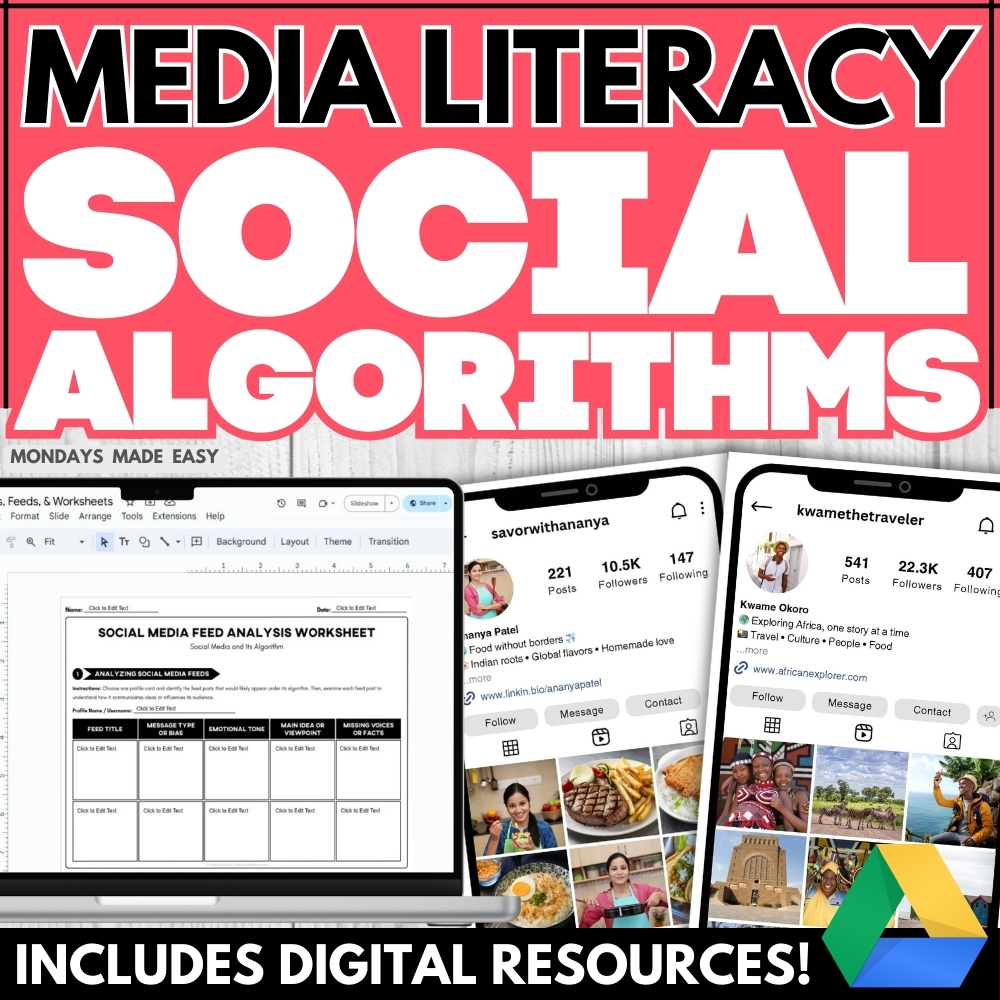
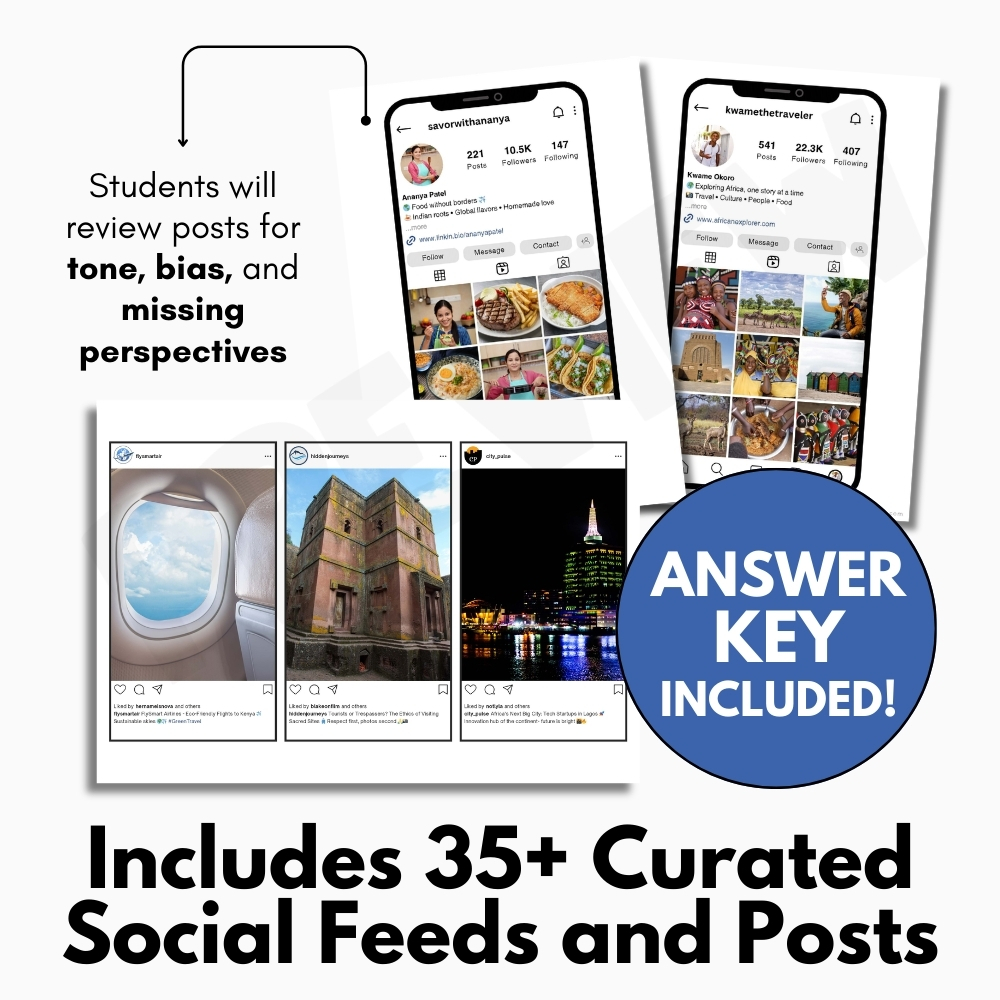
- 6 Fictional Social Media Profiles – Digital & Print
- 30 Social Media Feed Cards – Digital & Print
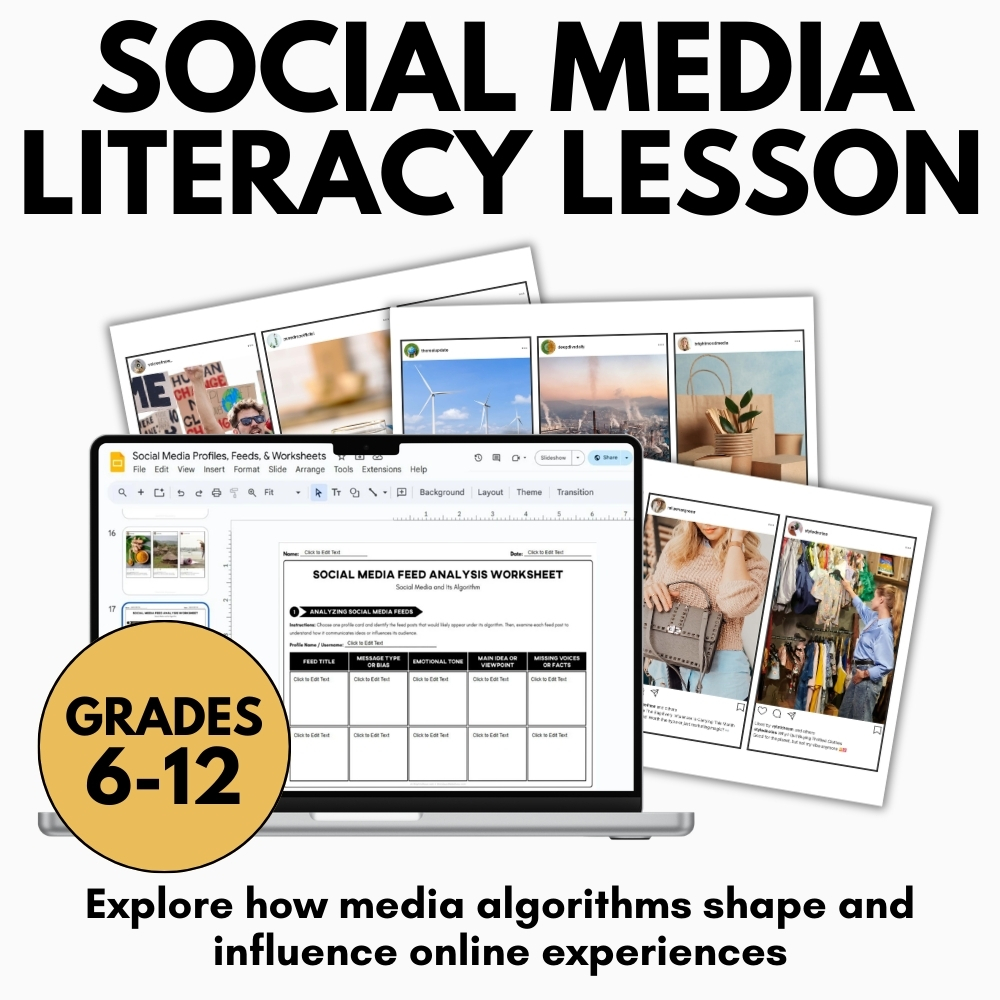
- Social Media Feed Analysis Graphic Organizer – Digital & Print
- Sample Student Answers to Model Responses
- Teacher Instructions for using these resources
How to Use This Social Media Literacy Lesson:
This lesson deepens understanding of bias, misinformation, and the mechanics behind digital media consumption.
At its foundation, this lesson is designed to strengthen Social Media Literacy by helping students move beyond passive scrolling and toward intentional, critical engagement with online content. Students are encouraged to examine not only what they see on social platforms, but why they see it and how it influences their beliefs, attitudes, and sense of identity. By addressing bias and misinformation within the broader context of digital systems, the lesson frames media consumption as an active process shaped by technology, design, and user behavior. This approach helps students recognize that understanding social media requires both analytical skills and self-awareness.
You can begin with the Social Media and Its Algorithm Informational Handout to introduce key concepts such as algorithmic filtering, curated feeds, and digital influence. This mini-lesson provides foundational vocabulary and context for students to understand how their online experiences are shaped.
This introductory handout establishes the conceptual backbone of Social Media Literacy by explaining how algorithms function behind the scenes. Many students assume their social media feeds are neutral or chronological, so explicitly teaching concepts like algorithmic filtering helps challenge those assumptions. The handout gives students shared language to discuss abstract systems that are often invisible to users. Teachers can pause throughout the mini-lesson to ask reflective questions, such as how students’ interests or interactions might influence what content appears on their feeds. This discussion helps students begin connecting personal experience with systemic design.
Next, distribute the Social Media Profiles Activity, which includes six fictional profiles and the Social Media Feed Analysis Graphic Organizer. Students will analyze each curated digital identity by reviewing posts for tone, bias, and missing perspectives. Using the organizer, they will evaluate each post’s message type, emotional tone, and point of view, while identifying any omitted facts or voices. The activity concludes with a pattern summary and reflection section that encourages students to consider how algorithms may shape beliefs and identity.
This activity is a central application of Social Media Literacy, as it allows students to practice analysis in a low-stakes, fictional context. By working with fictional profiles, students can critically examine digital identities without the pressure of evaluating real classmates or influencers. The graphic organizer supports structured thinking, prompting students to slow down and analyze posts systematically rather than relying on instinctive reactions. Identifying missing perspectives is especially important, as it reinforces the idea that what is not shown can be just as influential as what is visible. The concluding reflection encourages students to synthesize patterns across profiles and recognize how repeated exposure to similar messages can shape worldview and self-concept over time.
Then, distribute the 30 Social Media Feed Cards. After completing their profile analyses, students will determine which posts each profile is most likely to encounter based on their digital footprint and interests. This activity encourages critical thinking about how algorithms shape what we see (and don’t see) online.
This hands-on sorting activity deepens Social Media Literacy by making algorithmic decision-making tangible. As students match feed cards to profiles, they must justify why certain content would be prioritized while other posts are excluded. This process highlights how engagement history, interests, and perceived preferences influence content exposure. Students begin to see that algorithms do not show a balanced range of viewpoints, but rather reinforce patterns based on prior behavior. The activity also opens space for discussion about filter bubbles and echo chambers, helping students understand how personalization can limit perspective and contribute to polarization.
Finally, share the Student Sample Responses to model thoughtful analysis and effective reflection. Use these examples to support classroom discussion, peer review, or as exemplars for students to revise their own work.
Modeling is an essential instructional strategy when developing Social Media Literacy, particularly because analysis of digital content can feel subjective to students. The sample responses clarify expectations by showing what strong evidence-based analysis and reflection look like in practice. Teachers can use these exemplars to highlight effective reasoning, clear identification of bias, and meaningful connections between algorithms and identity. Reviewing samples together also supports peer learning and helps students build confidence as they refine their own responses.
Taken together, these lesson components create a cohesive learning sequence that moves students from awareness to analysis and synthesis. By repeatedly engaging with Social Media Literacy concepts across handouts, activities, and reflections, students develop a more nuanced understanding of how social platforms influence information access and belief formation. The lesson emphasizes that media literacy is not just about spotting misinformation, but about understanding systems, incentives, and patterns.
This resource also supports broader educational goals such as critical thinking, ethical reasoning, and self-regulation. Students learn that Social Media Literacy involves recognizing personal biases, questioning emotional responses, and reflecting on how digital environments shape identity and behavior. These skills are especially important for adolescents, who are in a key stage of identity development and are highly engaged with social media.
Teachers may choose to extend this lesson by having students analyze their own feeds, reflect on recent algorithm-driven recommendations, or discuss how changes in engagement might alter content exposure. Such extensions further reinforce Social Media Literacy by connecting classroom learning to real-world experiences. The lesson can also be adapted across grade levels by adjusting the complexity of analysis or depth of reflection required.
Ultimately, this lesson empowers students to become more intentional and informed participants in digital spaces. By strengthening Social Media Literacy, students gain tools to navigate bias, resist manipulation, and seek out diverse perspectives. Rather than viewing social media as something that simply happens to them, students learn to understand, question, and engage with digital systems thoughtfully and responsibly.
✨ Kindly note that due to copyright restrictions, this resource is not editable, except for the files specifically labelled as editable. This is a common practice within the online marketplace in order to protect the clip artists and software providers that have authorized their intellectual property for the development of this resource.
⭒ For classrooms utilizing Google Classroom® ⭒
To access the digital version of these worksheets, simply follow the instructions within the resource to copy the files directly to your Google Drive®.