Description
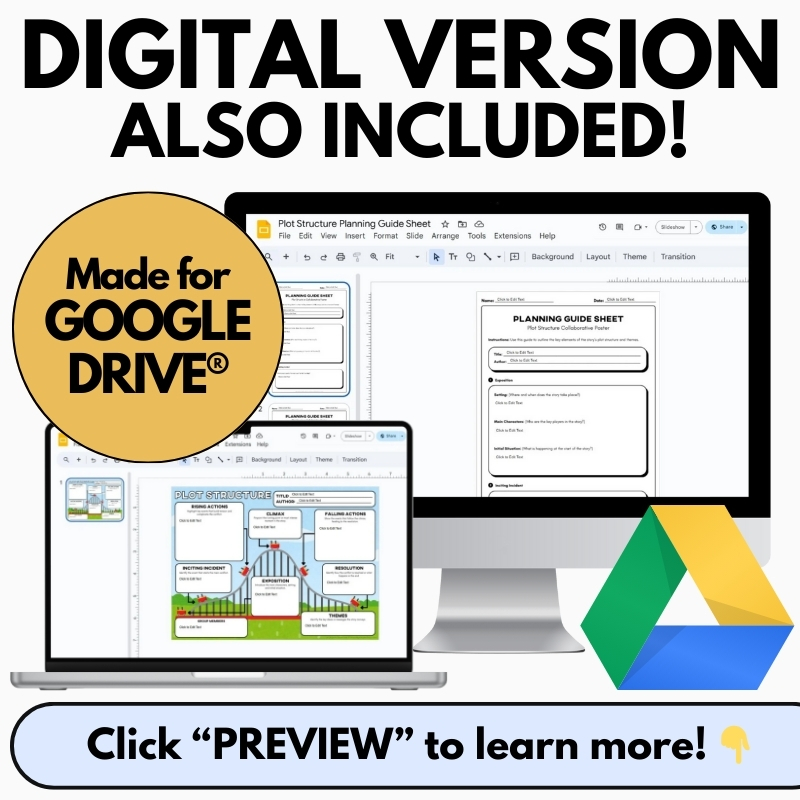
Teach plot diagrams with this plot structure collaborative poster! Perfect for reinforcing key elements of narrative structure, this hands-on activity will inspire creativity, teamwork, and critical thinking. Suitable for online learning with digital worksheets for Google Classroom®.
Included with this Plot Diagram Collaborative Poster Activity:
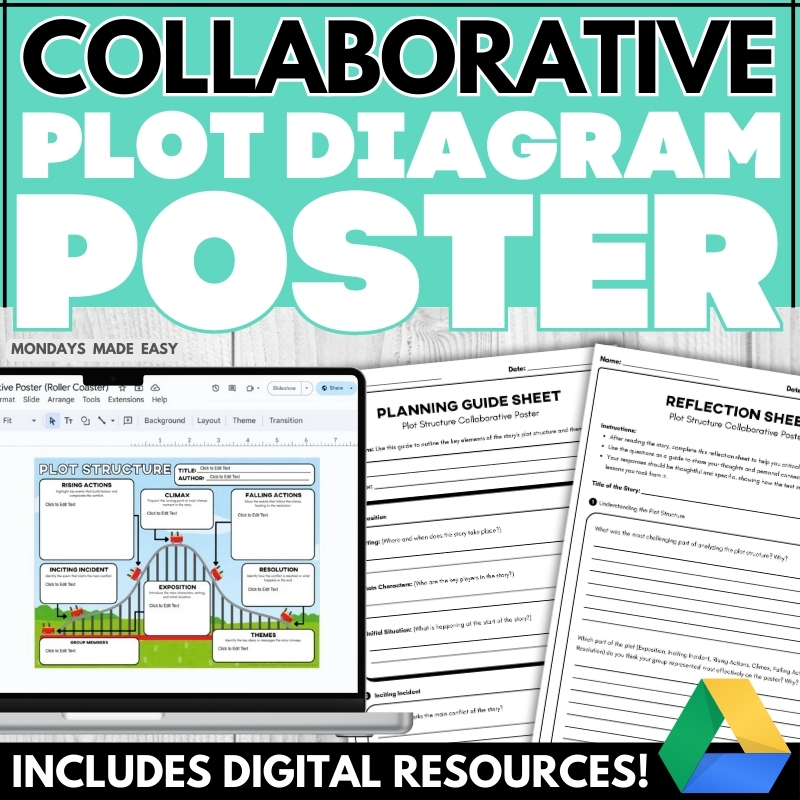
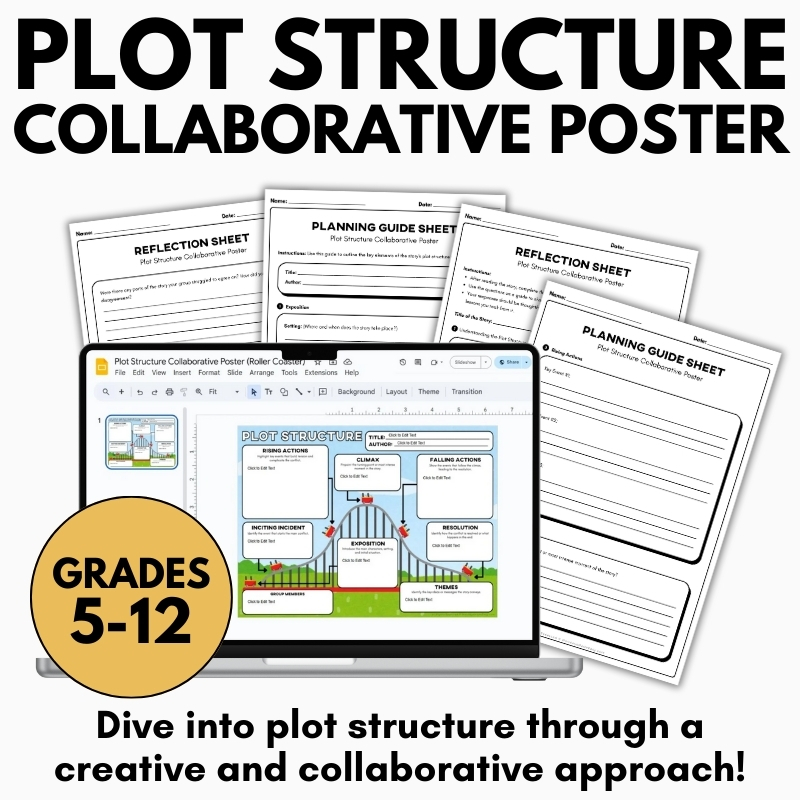
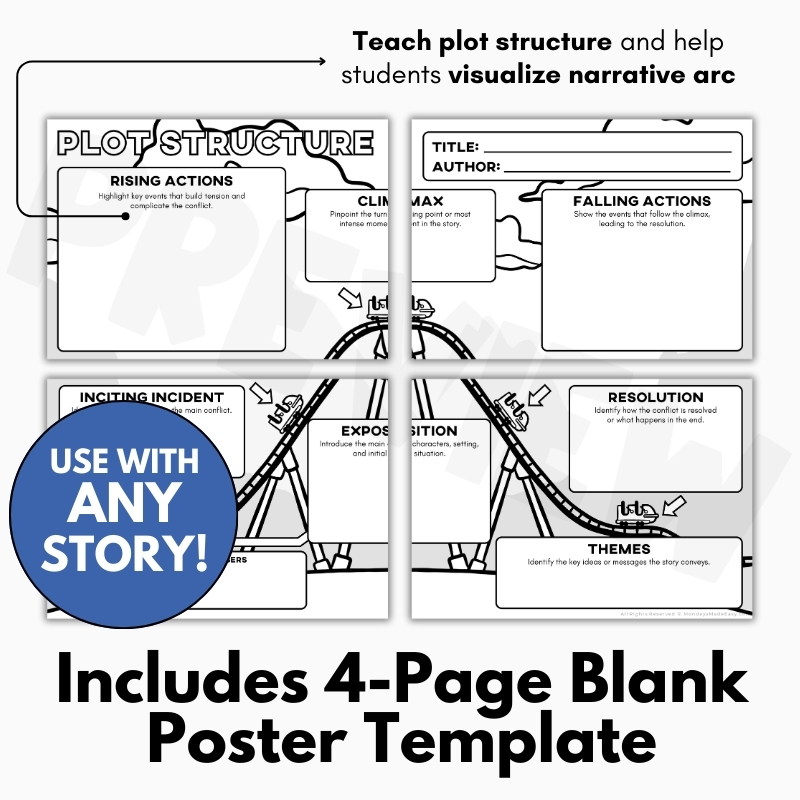
- Plot Diagram Poster – Digital & Print
-
- Single page poster format and 4-page poster format
- 2 Plot Structure Poster Options – Rollercoaster & Mountain
- Plot Structure Planning Graphic Organizer – Digital & Print
-
- Provide a guide for students to plan their collaborative poster
- Plot Structure Reflection Sheet – Digital & Print
-
- Evaluate students’ contributions, teamwork, and insights from the activity
- 4-Level Rubric – Editable & Ready-to-Print
- Teacher Instructions for using these resources
How to Use This Plot Diagram Collaborative Poster Activity:
This resource helps students dive into plot structure through an engaging and collaborative approach. Ideal for any novel or short story, this versatile activity will turn your classroom into an interactive space for analyzing and creatively exploring the key components of storytelling.
By shifting plot analysis from an independent worksheet to a hands-on group experience, students become active participants in their learning rather than passive recipients of information. The collaborative nature of this activity encourages discussion, negotiation, and shared problem-solving as students work together to determine how a story unfolds. Using a Plot Diagram Collaborative Poster allows learners to visualize abstract narrative concepts, making it easier for them to understand how events connect and build upon one another within a text. This approach supports a wide range of learning styles and helps students retain key literary concepts more effectively.
Start by handing out the Plot Structure Planning Graphic Organizer to each group to help them outline the key elements of a story’s plot before creating their posters. This guide serves as a scaffold for the activity, ensuring students identify and analyze the exposition, inciting incident, rising action, climax, falling action, resolution, and themes of the story.
The planning organizer provides essential structure, particularly for students who may feel overwhelmed by open-ended tasks. By breaking the plot into clearly defined components, students are guided through a logical thinking process that strengthens comprehension and analytical skills. This step also encourages groups to reference the text directly, supporting evidence-based discussions and reducing guesswork. When paired with the Plot Diagram Collaborative Poster, the organizer ensures that creative design choices are grounded in accurate literary analysis rather than surface-level understanding.
Next, provide each group with their Blank Poster Template. You can choose between two options for the activity: the larger 4-page format poster, or the single-page format. This resource also includes two engaging designs – a rollercoaster and a mountain – to help students visualize their plot diagram. After finalizing their answers, students can assemble the pages and color the visuals to create a polished, eye-catching final product.
Offering multiple poster formats allows teachers to differentiate based on time constraints, classroom space, or student needs. The visual metaphors of the rollercoaster and mountain help students conceptualize rising and falling tension in a concrete way, reinforcing the emotional pacing of a narrative. As students assemble and decorate their posters, they take ownership of their work, which increases motivation and pride in the final product. The Plot Diagram Collaborative Poster becomes both an academic tool and a display-worthy artifact that can be used for review, discussion, or classroom decor.
To consolidate this activity, a Reflection Sheet has also been provided. Ask students to discuss their contributions, evaluate their teamwork, and reflect on what they learned from this collaborative task. Encourage them to assess their collaboration and offer suggestions for improving future projects. This group reflection promotes accountability and supports understanding through discussion.
Reflection is a critical component of meaningful learning, as it helps students internalize both content knowledge and collaborative skills. By thinking about how they contributed to the group and what they learned from others, students develop greater self-awareness and responsibility. This step also provides valuable insight into group dynamics and individual engagement. When used alongside the Plot Diagram Collaborative Poster, reflection helps students recognize that strong literary analysis is both a cognitive and social process.
To evaluate this assignment, an editable and ready-to-print 4-Level Rubric has been provided.
The rubric offers clear criteria for assessing both the analytical and collaborative elements of the project, making expectations transparent for students. Teachers can evaluate accuracy, depth of analysis, visual clarity, and participation while maintaining consistency across groups. The editable format allows for alignment with specific curriculum standards or classroom priorities. Assessing student work through the Plot Diagram Collaborative Poster ensures that evaluation reflects the learning process as well as the final product, supporting fair and meaningful assessment.
Overall, this activity provides a comprehensive and engaging way to teach plot structure while building essential collaboration and communication skills. The Plot Diagram Collaborative Poster encourages students to move beyond memorization and into deeper analysis, making plot development a concept they can see, discuss, and truly understand.
✨ Kindly note that due to copyright restrictions, this resource is not editable, except for the files specifically labelled as editable. This is a common practice within the online marketplace in order to protect the clip artists and software providers that have authorized their intellectual property for the development of this resource.
⭒ For classrooms utilizing Google Classroom® ⭒
To access the digital version of these worksheets, simply follow the instructions within the resource to copy the files directly to your Google Drive®.