
Description
Build poetry comprehension skills with this modern poetry playlist mini-unit! Students select, annotate, and compare two poems from modern poets using the graphic organizers, comparison writing framework, and reflection questions provided. Includes digital resources for Google Classroom®!
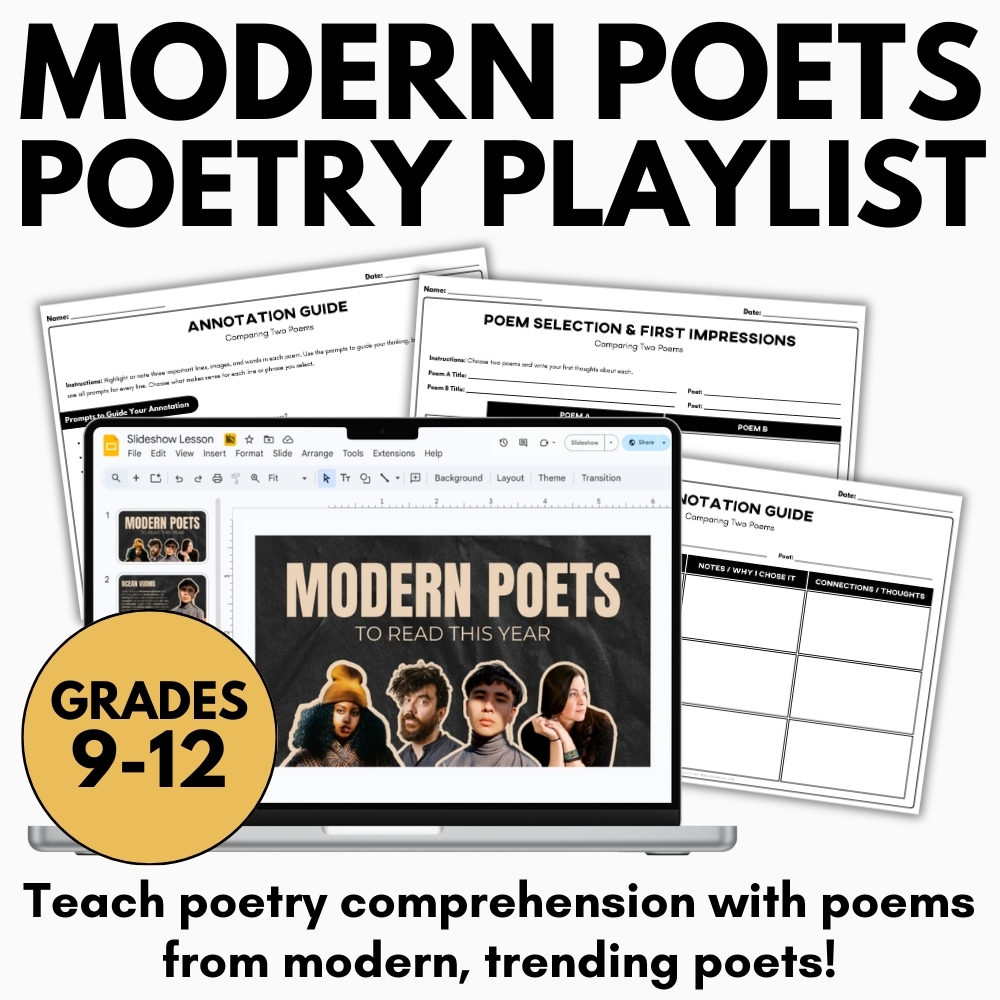
Included with this Modern Poetry Comprehension Mini-Unit:
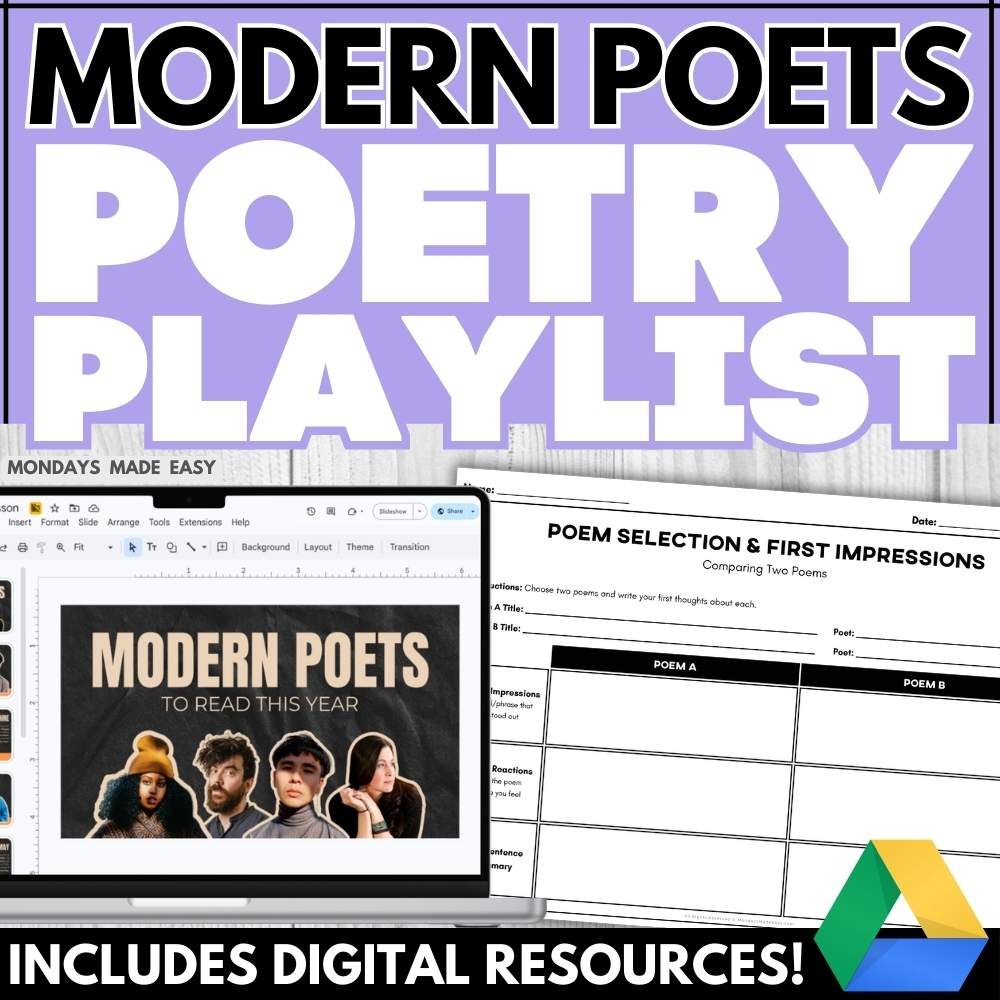
- Modern Poets Slideshow Lesson – Google Slides®, Powerpoint, and PDF
- Poem Selection & First Impressions Worksheet
- Annotation Guide with Prompts
- Comparison Graphic Organizer
-
- Explore topic, theme, mood, imagery, speaker’s experience & message
- Poem Comparison Writing Framework
- Reflection Questions
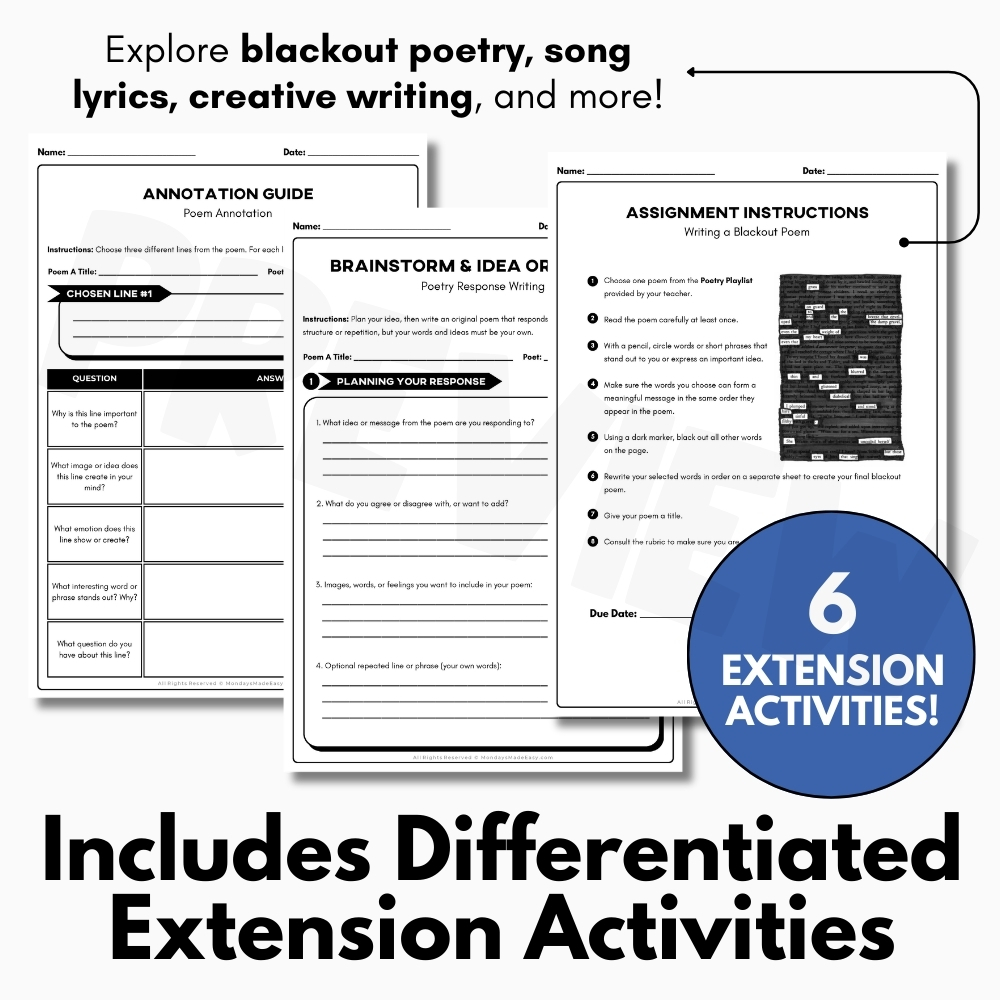
- 6 Differentiated Extension Activities
-
- Blackout Poetry, Poem and Song Comparison, Guided Poem Annotation, Poem-Inspired Short Story Writing Activity, Poetry Art Response, and Analytical Poetry Response Writing
- Student Examples to Model Expectations
- Teacher Instructions for using these resources
How to Use This Modern Poetry Mini-Unit:
Begin with the Modern Poets Slideshow to introduce students to contemporary poets such as Ocean Vuong, Warsan Shire, Billy-Ray Belcourt, Ilya Kaminsky, and others. This overview provides accessible background information and introduces recurring themes such as identity, migration, memory, belonging, and responsibility.
This introductory slideshow provides students with a foundational understanding of Modern Poetry and the voices that shape the contemporary poetic landscape. By learning about the lives and experiences of modern poets, students begin to see how personal history, culture, and social context influence poetic expression. The slideshow also helps students recognize that Modern Poetry often explores complex social and emotional topics in ways that are both personal and universal. Teachers can use the presentation to spark discussion about why these themes appear frequently in modern poems and how they connect to global issues such as migration, identity, and cultural belonging. This step sets the stage for deeper literary analysis by helping students see poetry as a living art form that reflects real-world experiences.
Next, distribute the Poem Selection & First Impressions worksheet. Students choose two poems from the curated playlist and record their initial reactions, powerful lines, and early interpretations.
This activity encourages students to engage with Modern Poetry on a personal level before moving into formal analysis. By allowing students to choose poems that resonate with them, the lesson promotes curiosity and ownership of the learning process. Recording first impressions helps students recognize that their emotional responses and initial interpretations are valid starting points for deeper exploration. This stage also encourages students to identify lines or images that stand out to them, which often become key pieces of textual evidence later in the analysis process. The focus on first impressions reinforces the idea that reading Modern Poetry is an interactive experience where meaning develops gradually through reflection and discussion.
Use the Annotation Guide to scaffold close reading. Students examine imagery, tone, figurative language, and theme while practicing textual evidence collection.
The annotation process helps students move from personal response to structured analysis of Modern Poetry. Through guided close reading, students learn to identify literary devices and stylistic choices that contribute to the poem’s meaning. The Annotation Guide provides clear prompts to help students look closely at imagery, symbolism, tone shifts, and figurative language such as metaphor and simile. As students annotate the poems, they practice gathering textual evidence that supports their interpretations. This stage is particularly important because Modern Poetry often relies on condensed language and layered meaning, requiring careful attention to word choice and structure. Teachers can model annotation strategies before students work independently or in small groups.
Then, have students complete the Comparison Graphic Organizer to analyze similarities and differences in theme, structure, mood, and message. Transition into formal writing using the Comparison Writing Frame Worksheet, which supports students in composing a clear comparative paragraph.
This step deepens students’ understanding of Modern Poetry by encouraging them to analyze how two poems approach similar ideas in different ways. The graphic organizer helps students systematically compare elements such as theme, tone, imagery, and structure, allowing them to identify both patterns and contrasts. By organizing their ideas visually, students can more easily see how poetic choices shape meaning. The transition to the writing frame worksheet helps students transform their observations into coherent analytical writing. This structured approach supports learners who may be new to literary comparison while reinforcing key analytical skills used when studying Modern Poetry.
Conclude with the Reflection Questions to deepen comprehension and encourage personal connections.
Reflection is an important component of engaging with Modern Poetry, as it allows students to consider how the poems relate to their own experiences and perspectives. The reflection questions invite students to think about how themes such as identity, belonging, or memory connect to broader social or personal contexts. Through this process, students recognize that poetry is not only something to analyze academically but also something that can resonate emotionally and intellectually. Reflective discussion also encourages students to articulate their ideas clearly and respectfully while listening to the insights of their peers.
For extended learning, select any of the creative and analytical extension activities provided with this resource. These include:
- Blackout Poetry
- Poem and Song Comparison
- Guided Poem Annotation
- Poem-Inspired Short Story Writing Activity
- Poetry Art Response
- Analytical Poetry Response Writing
These options make this mini-unit adaptable for varied pacing, project-based learning, or assessment.
These extension activities expand students’ exploration of Modern Poetry by offering both creative and analytical opportunities. Activities such as blackout poetry and poetry art responses allow students to experiment with poetic expression themselves, helping them appreciate the craft behind poetic language. Analytical tasks like poem and song comparisons encourage students to examine how themes and emotions are conveyed across different forms of media. By including multiple activity options, the mini-unit supports differentiated instruction and allows teachers to tailor the learning experience to the needs of their classroom. These extensions also reinforce the idea that Modern Poetry can be explored through many different creative and intellectual approaches.
Student samples are included to model expectations and support differentiation.
Providing sample responses helps students better understand what strong analysis of Modern Poetry looks like in practice. These examples demonstrate how to support interpretations with textual evidence and how to organize ideas clearly when discussing poetic elements. Teachers can use the samples to model annotation techniques, highlight effective comparisons, or guide peer review activities. For students who may struggle with poetry analysis, these models offer reassurance and practical examples they can use as references during their own work.
Please note: Some poems, song lyrics, and optional extension activities address mature themes such as war, displacement, identity, addiction, and social responsibility. Teachers are encouraged to review materials carefully and use professional discretion to determine what is most appropriate for their classroom.
✨ Kindly note that due to copyright restrictions, this resource is not editable, except for the files specifically labelled as editable. This is a common practice within the online marketplace in order to protect the clip artists and software providers that have authorized their intellectual property for the development of this resource.
⭒ For classrooms utilizing Google Classroom® ⭒
To access the digital version of these worksheets, simply follow the instructions within the resource to copy the files directly to your Google Drive®.