
Description
Practice literary analysis with this collaborative poster project! This literature circle activity works great for book clubs in both high school and middle school by fostering critical thinking, teamwork, and creativity. Suitable for online learning with digital worksheets for Google Classroom®.
Included with this Literary Analysis Poster Activity:
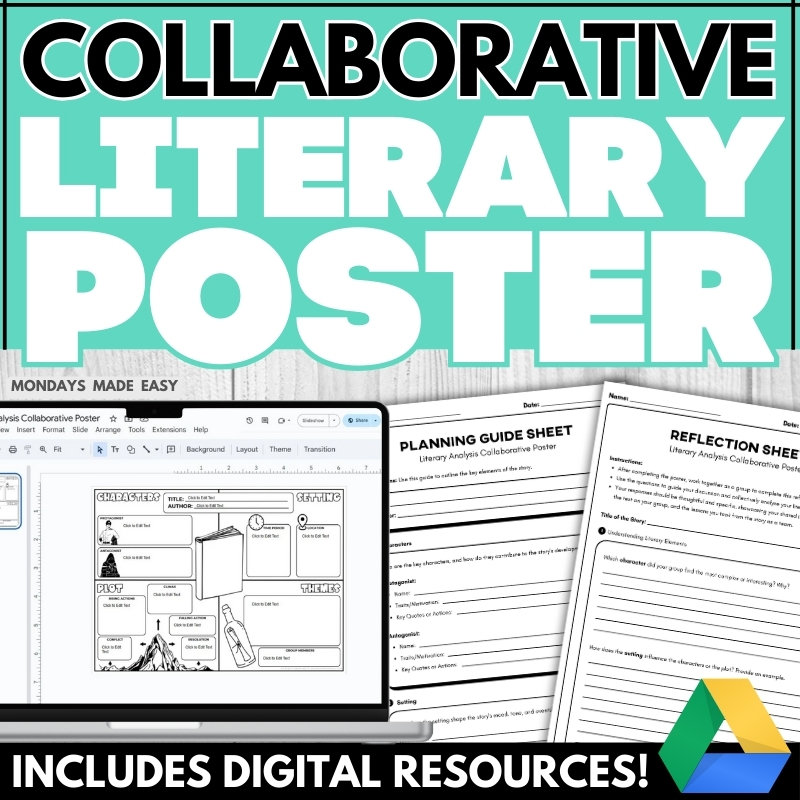
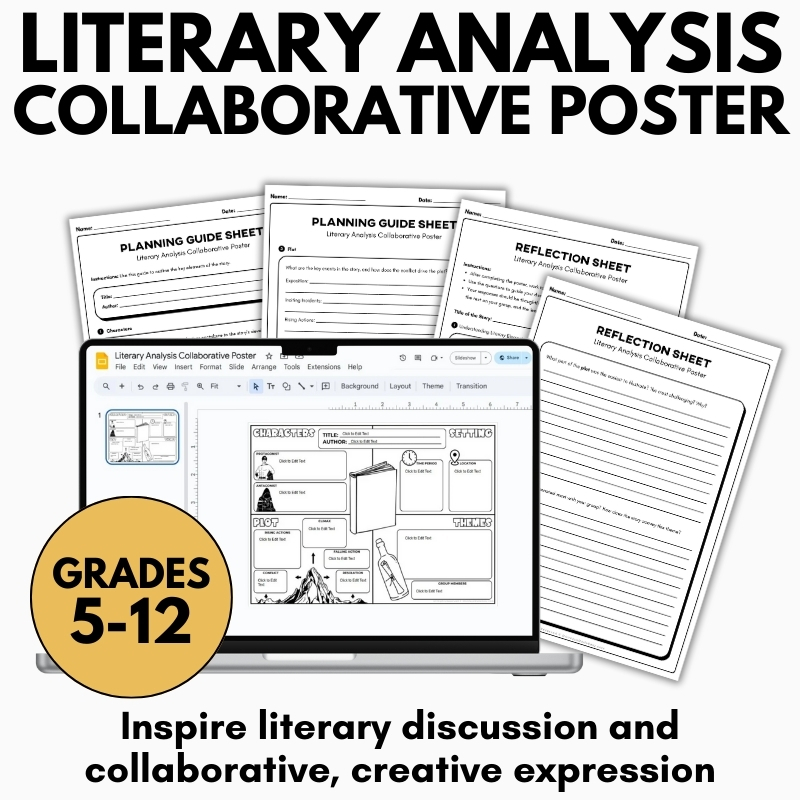
- Literary Analysis Poster – Digital & Print
-
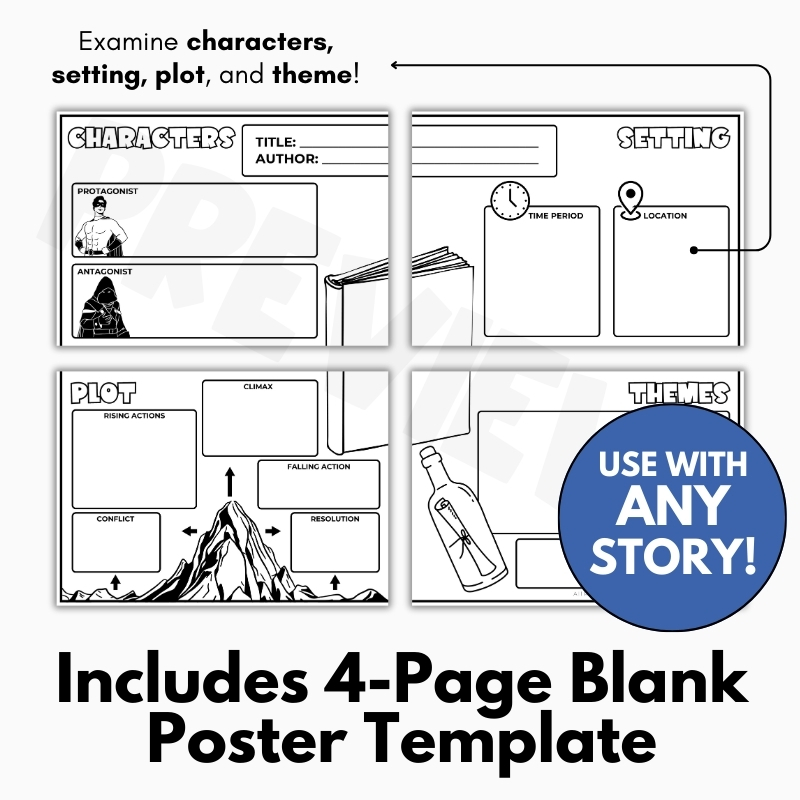
- Single page poster format and 4-page poster format
- Examine characters, setting, plot, and theme
- Literary Analysis Planning Graphic Organizer – Digital & Print
-
- Provide a guide for students to plan their collaborative poster
- Collaborative Poster Reflection Sheet – Digital & Print
-
- Evaluate students’ contributions, teamwork, and insights from the activity
- 4-Level Rubric – Editable & Ready-to-Print
- Teacher Instructions for using these resources
How to Use This Literary Analysis Poster Activity:
This resource is designed to help students dive into literary analysis in an engaging and collaborative way. Perfect for any novel or short story, this versatile activity will inspire literary discussion and creative expression.
By shifting literary analysis from a traditional worksheet or essay format to a hands-on group task, this resource encourages students to actively engage with the text and with one another. Collaboration allows students to share interpretations, clarify misunderstandings, and build deeper comprehension through discussion. Using a Literary Analysis Poster helps make abstract literary concepts more concrete, supporting visual learners while also strengthening communication and critical thinking skills. This activity works well as an introduction to a text, a mid-unit check-in, or a culminating project that synthesizes learning.
Begin by distributing the Literary Analysis Planning Graphic Organizer to each group to complete each section step-by-step. Students will use this guide to identify key characters and their traits, analyze the setting’s impact on the story, outline the plot structure with major events, and highlight central themes. Finally, they will brainstorm a book cover that captures the story’s essence, using symbols, colors, and patterns that reflect its mood and themes.
The planning organizer serves as an essential scaffold that guides students through complex analytical tasks in a manageable and structured way. By breaking down literary elements into clear sections, students are less likely to feel overwhelmed and more likely to engage deeply with the text. Group discussions during this stage encourage students to justify their ideas using evidence, strengthening analytical reasoning. When paired with the Literary Analysis Poster, the organizer ensures that creativity is grounded in thoughtful interpretation rather than surface-level responses.
Next, provide each group with their Blank Poster Template. You can choose between two options for the activity: the larger 4-page format poster, or the single-page format. Each group will collaborate to complete their analysis of literary elements. Once their answers are finalized, they can assemble the pages and color the visual elements to create a polished and visually engaging final project.
Offering multiple poster formats allows teachers to differentiate based on classroom needs, time constraints, or student preferences. The larger format supports extended collaboration and detailed responses, while the single-page option works well for shorter units or limited class periods. As students design and assemble their Literary Analysis Poster, they practice transforming written analysis into visual representation, reinforcing comprehension and retention. The finished posters can be displayed for gallery walks, peer feedback, or review activities, extending the learning beyond the initial task.
To consolidate this activity, a Reflection Sheet has also been provided. Ask students to discuss their contributions, evaluate their teamwork, and reflect on what they learned from this collaborative task. Encourage them to assess their collaboration and offer suggestions for improving future projects. This group reflection promotes accountability and supports understanding through discussion.
Reflection plays a vital role in helping students internalize both academic content and collaborative skills. By evaluating their own participation and listening to group members’ perspectives, students develop greater self-awareness and responsibility. This reflective process reinforces the idea that strong analysis is developed through discussion, revision, and shared thinking. When connected to the Literary Analysis Poster, reflection helps students recognize how collaboration enhances understanding and leads to stronger final products.
To evaluate this assignment, an editable and ready-to-print 4-Level Rubric has been provided.
The rubric offers clear criteria for assessing literary understanding, collaboration, and presentation, making expectations transparent for students. Teachers can evaluate depth of analysis, accuracy of literary elements, clarity of visual organization, and group participation. The editable format allows for alignment with specific curriculum standards or classroom goals. Assessing student work through the Literary Analysis Poster ensures that evaluation reflects both the analytical process and the final visual product.
Overall, this resource provides a balanced approach to literary study by blending analysis, creativity, and collaboration. The Literary Analysis Poster encourages students to move beyond simple comprehension and engage in meaningful interpretation of texts. By discussing, planning, creating, and reflecting together, students develop a deeper appreciation for literature and stronger academic discussion skills that extend well beyond a single assignment.
✨ Kindly note that due to copyright restrictions, this resource is not editable, except for the files specifically labelled as editable. This is a common practice within the online marketplace in order to protect the clip artists and software providers that have authorized their intellectual property for the development of this resource.
⭒ For classrooms utilizing Google Classroom® ⭒
To access the digital version of these worksheets, simply follow the instructions within the resource to copy the files directly to your Google Drive®.