

Description
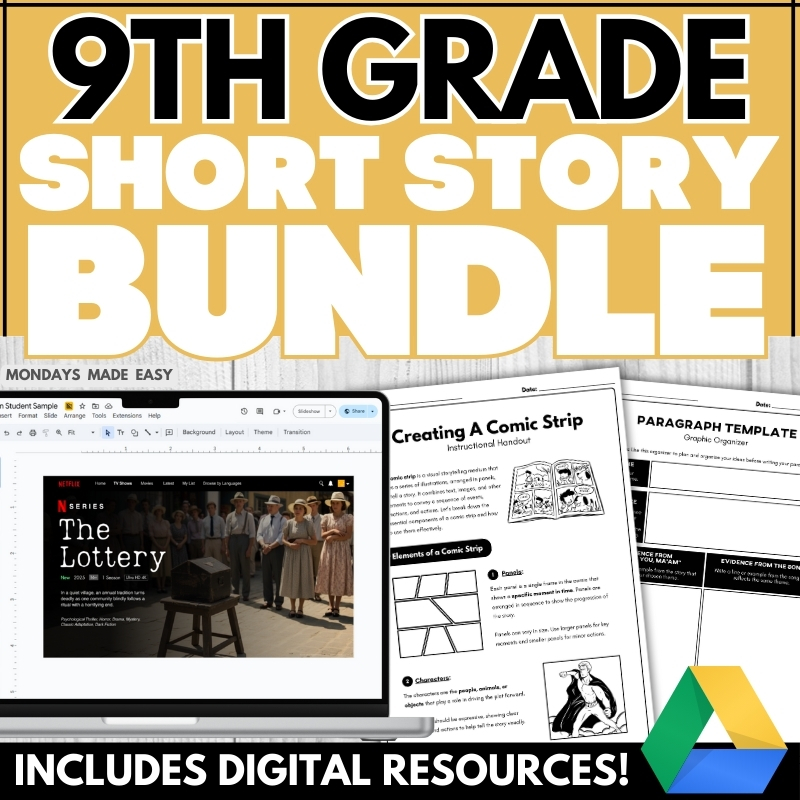
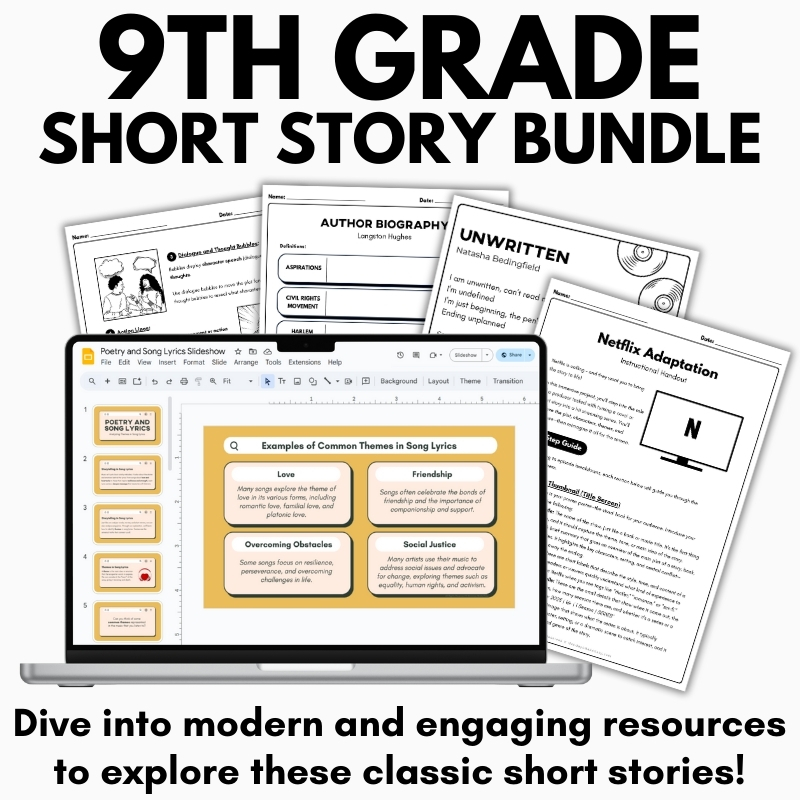
Explore dystopia, analyze characterization, and teach argumentative writing with this short story bundle for Grade 9 English! Includes 3 modern and engaging short story units for Langston Hughes’ “Thank You, Ma’am,” Shirley Jackson’s “The Lottery,” and Roald Dahl’s “Lamb to the Slaughter.” Suitable for online learning with digital resources for Google Classroom®!
Resources included with this Grade 9 Short Story Bundle for English Language Arts:
- Literary Analysis Short Story Unit for “Lamb to the Slaughter” by Roald Dahl- Digital & Print
-
- Pre-Reading Vocabulary Terms for “Lamb to the Slaughter”
- Character Analysis Graphic Organizers
- Types of Irony Graphic Organizer
- Making Inferences Activity
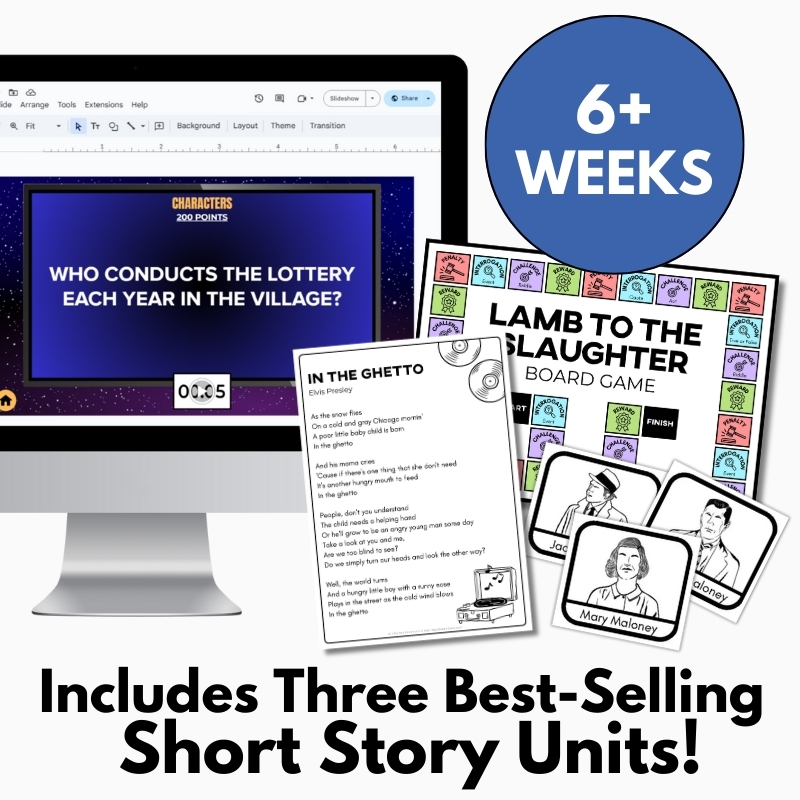
- Review Board Game
- Essay Writing Prompts and Rubric
- Comic Strip Assessment and Rubric
- Dystopian Short Story Unit for “The Lottery” by Shirley Jackson – Digital & Print
-
- Bell Ringer Questions for “The Lottery”
- Guided Reading Questions for “The Lottery”
- Character Analysis Graphic Organizers
- Global Rituals Comparison Activity
- Hunger Games vs. “The Lottery” Comparison Assignment and Rubric
- Netflix Adaptation Project and Rubric
- Jeopardy Review Game
- “The Lottery” Editable Test Question Bank
- Argumentative Short Story Unit for “Thank You, Ma’am” by Langston Hughes – Digital & Print
-
- Author Biography for Langston Hughes
- Guided Reading Questions for “Thank You, Ma’am”
- Symbolism Analysis Graphic Organizers
- Analyzing Themes Lesson
- Text-to-Text Analysis Activity
- Essay Writing Prompts and Rubric
- Teacher Instructions for using these resources
Units included in this Grade 9 Short Story Bundle for Language Arts:
1. “Lamb to the Slaughter” by Roald Dahl
A classic thriller and a student favorite! This short story unit for Roald Dahl’s “Lamb to the Slaughter” teaches reading strategies including making inferences and differentiating between direct and indirect characterization. Designed with the Grade 9 Short Story classroom in mind, this unit captures student interest immediately through suspense, dark humor, and unexpected twists. Students are challenged to read closely, paying attention to subtle details in dialogue and description that reveal character motivation and internal conflict. The activities guide students to move beyond surface-level comprehension and into deeper analytical thinking, helping them justify their interpretations with textual evidence. This makes the unit ideal for reinforcing foundational literary analysis skills while keeping engagement high.
Students will also learn about dramatic irony, puns, foreshadowing, and the different types of irony. Review key concepts with an engaging board game review, and evaluate understanding with a creative comic strip assessment! These interactive elements are especially effective in a Grade 9 Short Story unit because they balance rigorous analysis with creativity and collaboration. The board game review encourages discussion, repetition of key terms, and peer learning, while the comic strip assessment allows students to demonstrate comprehension visually and narratively. By retelling or reimagining scenes, students solidify their understanding of irony and plot development in a memorable way. This variety of assessment options ensures that different learning styles are supported while maintaining clear academic expectations.
2. “The Lottery” by Shirley Jackson
Examine conformity, superstition, and blind tradition in Shirley Jackson’s “The Lottery” using this dystopian short story bundle! This engaging unit teaches students how to make predictions and how to write a comparison paragraph; it also explores literary devices including imagery, mood, and symbolism. As a cornerstone Grade 9 Short Story text, “The Lottery” provides rich opportunities for discussion around societal norms and moral responsibility. The unit encourages students to question characters’ actions and reflect on how traditions can persist without critical thought. Through guided prediction activities, students learn to track clues and analyze how Jackson builds tension and unease. Explicit instruction on imagery and symbolism helps students uncover deeper meanings and understand how setting and tone contribute to the story’s impact.
Students will also compare and contrast global traditions and literary parallels with the activities provided in this unit. Review key concepts with an engaging game of Jeopardy, and evaluate understanding with both a final test and creative Netflix adaptation project! These activities elevate the Grade 9 Short Story experience by connecting literature to real-world contexts and modern media. Comparing global traditions fosters cultural awareness and critical thinking, while the Jeopardy-style review reinforces vocabulary and concepts in a low-pressure, high-engagement format. The Netflix adaptation project gives students an opportunity to modernize the story, demonstrating comprehension of theme, conflict, and symbolism in a creative medium. This blend of traditional and innovative assessments keeps students motivated while ensuring mastery of key learning outcomes.
3. “Thank You, Ma’am” by Langston Hughes
The perfect literary pairing for both Valentine’s Day and Black History Month! Explore compassion, generosity, dignity, and shame with this unit for Langston Hughes’ short story, “Thank You, Ma’am.” This text is an excellent choice for a Grade 9 Short Story unit because of its accessibility, emotional depth, and strong character development. Students connect easily to the characters while examining universal themes related to empathy and moral growth. The unit supports close reading through targeted questions that highlight tone, dialogue, and character relationships. Discussions encourage students to consider how small acts of kindness can have lasting impacts, making the story both academically rich and personally meaningful.
Students will identify tone, analyze themes, and make text-to-text connections with three famous poems by Langston Hughes. They will also have the option to write an argumentative essay or narrative piece using the essay writing prompts provided. These extensions deepen the Grade 9 Short Story experience by introducing students to Hughes’ broader body of work and reinforcing intertextual analysis skills. Comparing poetry and prose helps students recognize recurring themes and stylistic choices, strengthening their analytical confidence. The flexible writing options allow students to choose how they demonstrate their understanding, whether through structured argumentation or creative narrative writing. This balance of choice and rigor ensures that students remain engaged while developing essential reading and writing skills aligned with curriculum expectations.
✨ Kindly note that due to copyright restrictions, this resource is not editable, except for the files specifically labelled as editable. This is a common practice within the online marketplace in order to protect the clip artists and software providers that have authorized their intellectual property for the development of this resource.
⭒ For classrooms utilizing Google Classroom® ⭒
To access the digital version of these worksheets, simply follow the instructions within the resource to copy the files directly to your Google Drive®.


