
Description
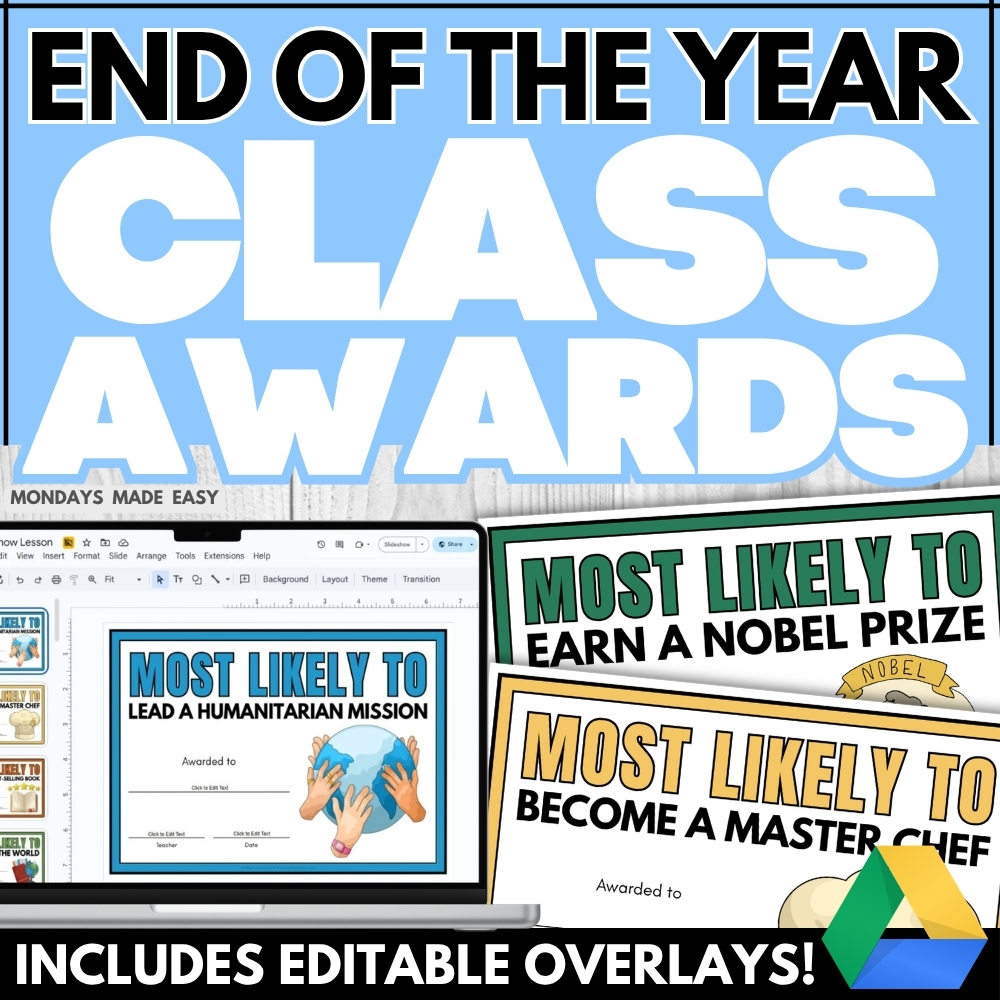
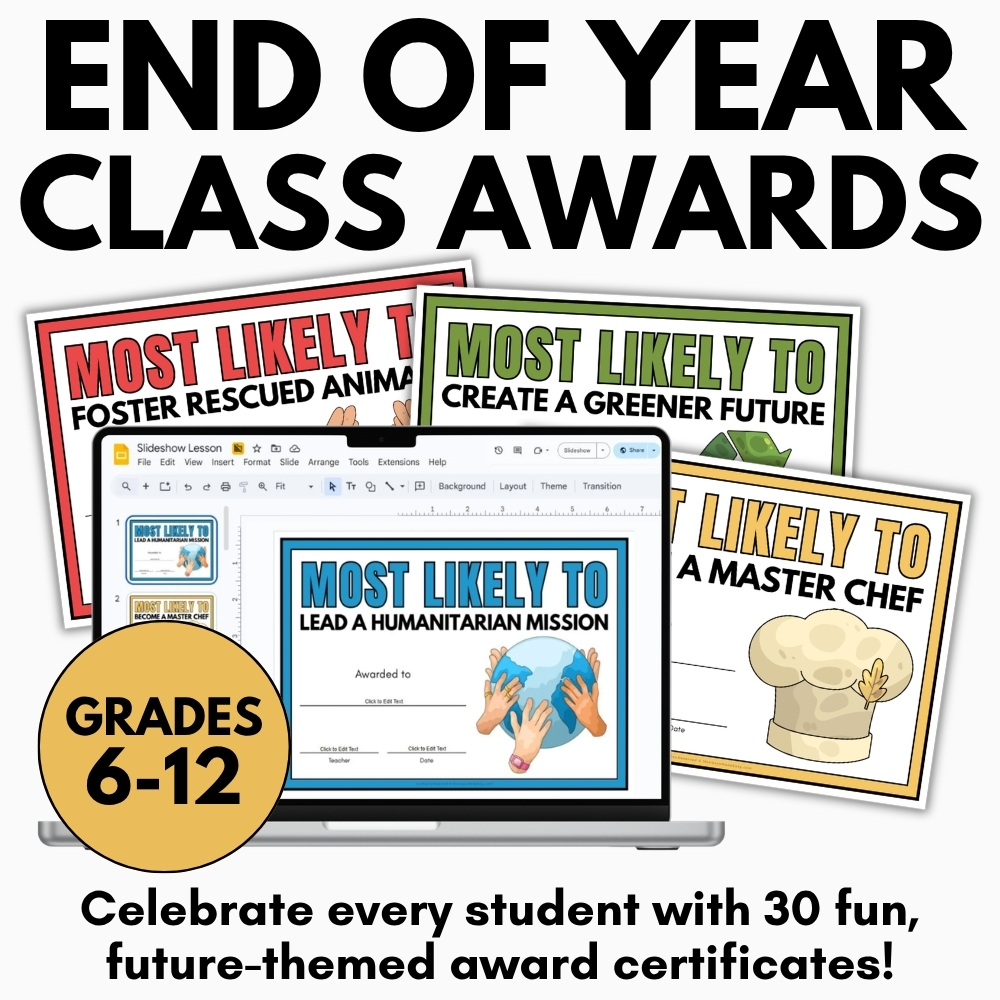
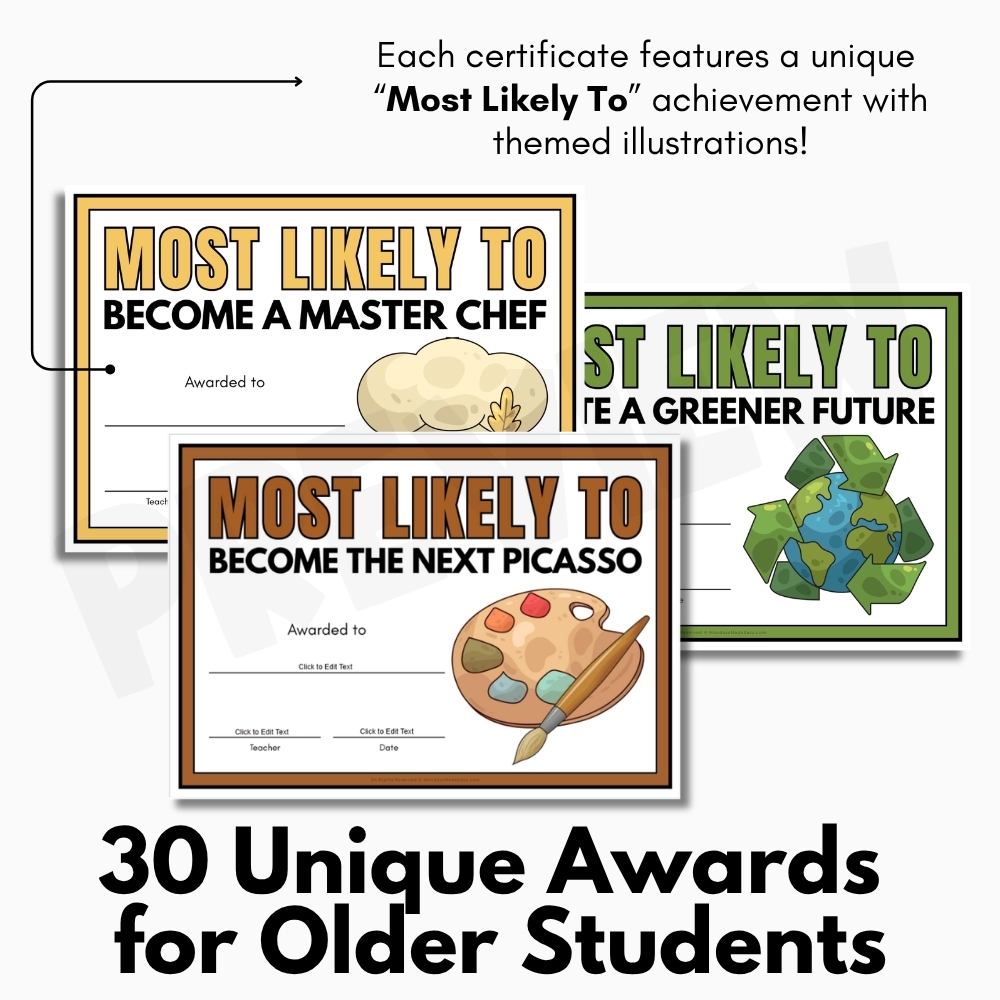
End-of-year awards hit differently when the recognition acknowledges who your student actually is — not just what their GPA says! These 30 “Most Likely To” classroom awards are aspirational by design, with categories ranging from Most Likely to Earn a Nobel Prize to Most Likely to Become a Content Creator to Most Likely to Survive in the Wilderness. Available in both ready-to-print and editable Google Slides® formats!
Included with these End of the Year Student Awards:
- 30 End of the Year Awards – Ready-to-Print PDF
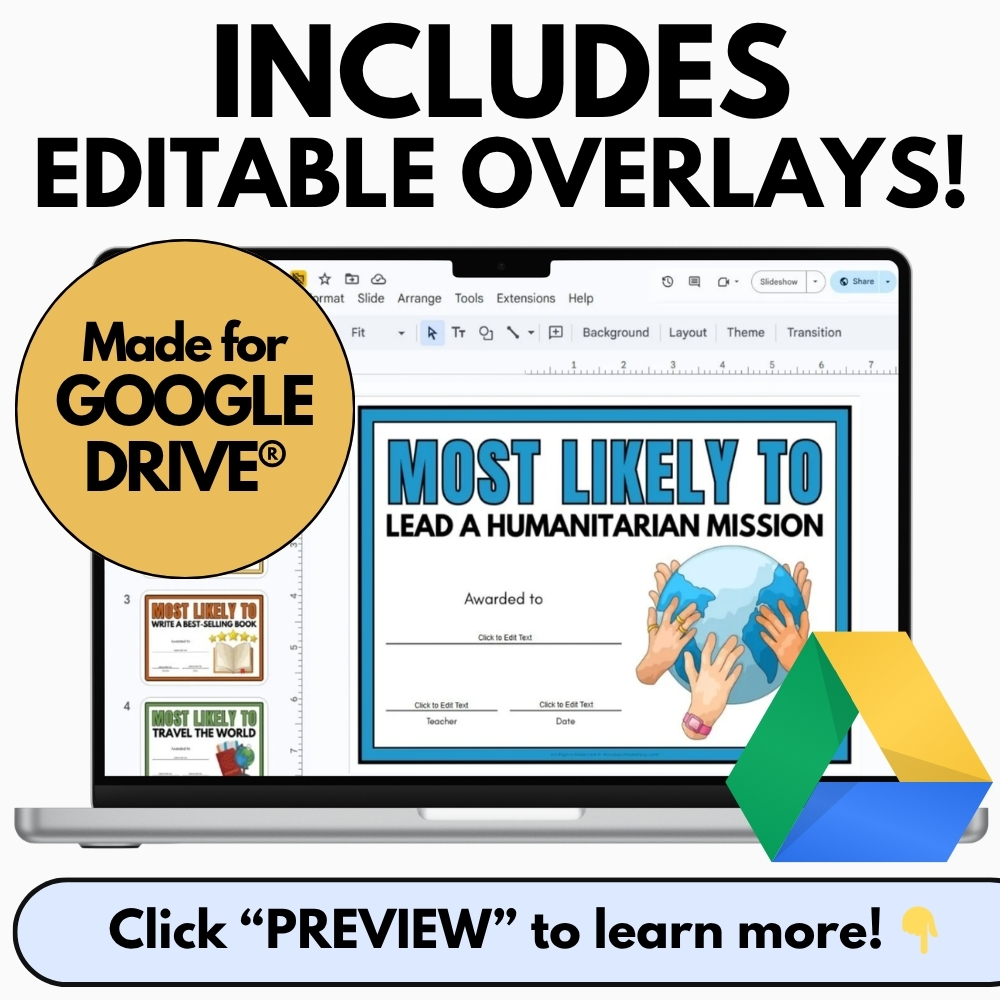
- Editable Overlays for End of the Year Awards – Google Slides® & PDF
- Teacher Instructions for Using This Resource
How to Use These End of the Year Student Awards:
The “Most Likely To” format included with these End of the Year Awards works perfectly for secondary students because it sidesteps the comparison trap of traditional academic awards and goes straight to something more interesting: who this person might actually become. Instead of focusing only on grades or conventional achievements, these Student Awards highlight personality, potential, and the unique qualities each student brings to the classroom community. This approach helps create a positive and inclusive environment where every student can feel recognized in a meaningful way. Traditional awards often celebrate only a small group of students, but Student Awards based on future potential open the door for a much wider range of recognition. By emphasizing creativity, leadership, humor, or compassion, these Student Awards allow teachers to celebrate the traits that make students memorable long after the school year ends. The format also encourages students to reflect on the qualities they see in one another, reinforcing the sense of community built throughout the year. As a result, these Student Awards serve as both a celebration and a reflection of the relationships formed in the classroom.
With 30 categories spanning creative, entrepreneurial, scientific, athletic, humanitarian, and entertainment futures, there’s enough range that most classes can match every student to an award that genuinely fits. This resource is for any secondary grade level, in any subject area, and requires no advance prep beyond a few minutes of thoughtful matching. Because the categories cover such a broad range of interests and talents, these Student Awards can work equally well in English, science, social studies, art, or elective classrooms. Teachers can easily adapt the Student Awards to suit the personality of their class, whether students are highly academic, creatively driven, or socially engaged. The wide variety of categories ensures that the Student Awards celebrate different types of strengths rather than prioritizing one specific type of achievement. This flexibility also makes the resource particularly valuable for diverse classrooms where students demonstrate success in many different ways. Ultimately, the variety within these Student Awards helps ensure that every student can receive a recognition that feels authentic and personal.
First, work through the full list of 30 awards and decide which one belongs to which student. The categories cover a wide range, from Most Likely to Lead a Humanitarian Mission and Most Likely to Stand for Justice, to Most Likely to Become a Stand-Up Comedian and Most Likely to Start a Band. If you want to make it a class activity, you can run a short nomination or voting round where students weigh in on who belongs in each category before you finalize the selections; this works especially well with advisory groups or homeroom classes that know each other well. Involving students in this process can make the Student Awards feel even more meaningful because it gives them a voice in recognizing the strengths of their classmates. Teachers may choose to keep the final decisions private, or they may allow the nominations to guide the final list of Student Awards presented at the end of the year. Either approach can create excitement and anticipation as students speculate about who might receive each recognition. The collaborative element also reinforces the positive classroom culture that these Student Awards are designed to celebrate.
Next, open the Editable Classroom Awards in Google Slides® to type each student’s name into the “Awarded to” field on their certificate. Each of the 30 certificates is its own individual slide, color-coded to match its theme and ready for you to click into and type. The digital format makes customizing the Student Awards simple and efficient, even for teachers with large classes. Because the slides are editable, educators can also adjust wording, change categories, or personalize the Student Awards if they want to better reflect their specific group of students. The clear design of each certificate ensures that the final Student Awards look polished and professional while still maintaining a fun, celebratory tone. Teachers can complete this step quickly, allowing them to focus more on the thoughtful selection process rather than on formatting or design.
Then, print the completed Classroom Awards directly from Google Slides® or export to PDF and print from there, then sign and date each certificate before the presentation. Printing on cardstock gives each certificate more weight (literally and otherwise) but standard paper works fine if you’re keeping it low-key. The landscape orientation is print-ready at standard 8.5” x 11” sizing with no adjustments needed. Preparing the physical certificates adds an extra sense of occasion to the Student Awards, turning them into keepsakes that students can hold onto after the school year ends. Signing each certificate personally also adds a meaningful touch, reinforcing that the Student Awards were thoughtfully chosen rather than automatically generated. Some teachers may even choose to place the Student Awards in envelopes or folders to make the presentation feel even more special. Regardless of how they are printed, the finished certificates become a tangible reminder of the positive contributions each student made during the year.
Finally, present the awards to your students during a closing class activity, an end-of-year celebration, or your last day together. Reading each award aloud before handing it over generates exactly the kind of energy a secondary classroom can appreciate without tipping into anything that feels forced or childish. If a public ceremony isn’t the right fit for your class, the awards work just as well presented individually and quietly; the certificate does the talking either way! The presentation of the Student Awards often becomes a highlight of the final days of school, creating a memorable moment for both students and teachers. Hearing the description of each award read aloud can spark laughter, appreciation, and sometimes even surprise as classmates recognize the qualities being celebrated. Whether delivered in a lively group setting or through quiet one-on-one moments, the Student Awards provide a meaningful way to close the year on a positive and affirming note. By the time the final Student Awards are handed out, students leave with not only a certificate but also the feeling that their individuality and potential were truly seen and appreciated.
✨ Kindly note that due to copyright restrictions, these resources are not editable, except for the files specifically labelled as editable. This is a common practice within the online marketplace in order to protect the clip artists and software providers that have authorized their intellectual property for the development of this resource.
⭒ For classrooms utilizing Google Classroom® ⭒
To access the digital version of these worksheets, simply follow the instructions within the resource to copy the files directly to your Google Drive®.