Description
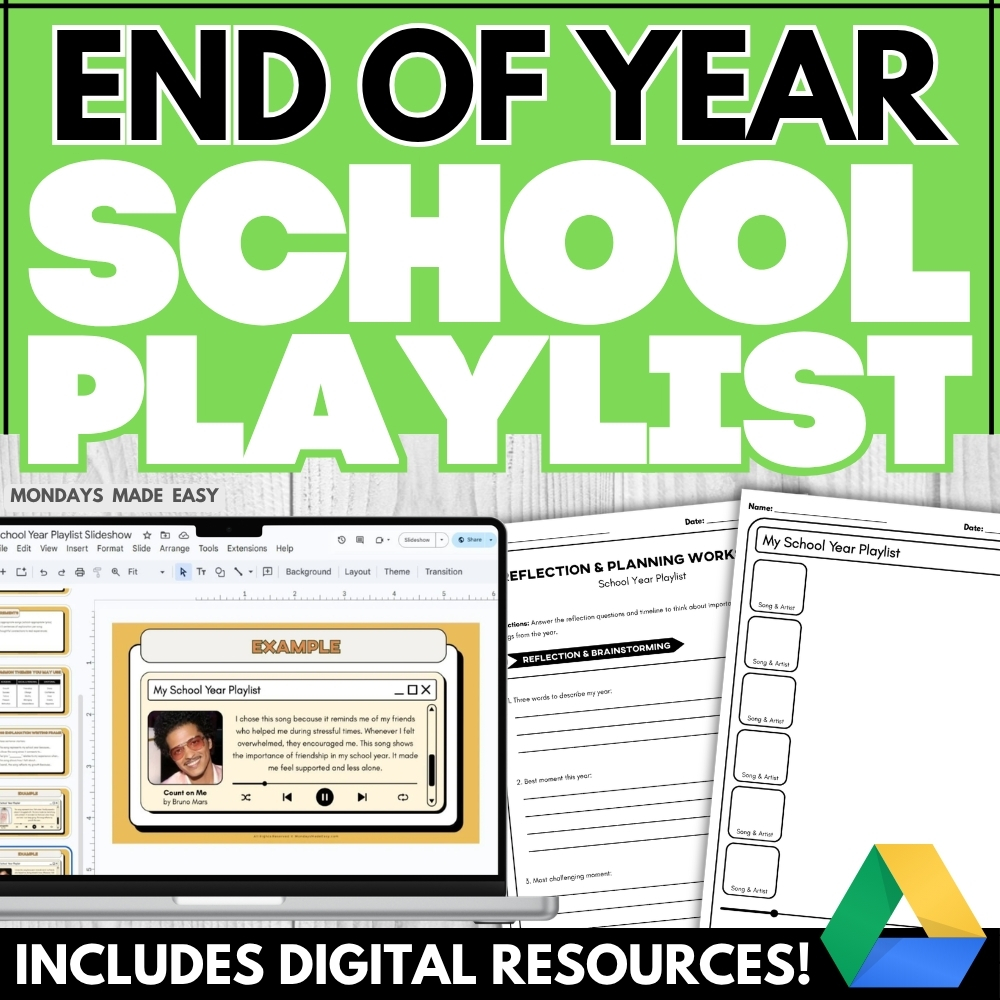
This end of year playlist activity gives them the scaffolding to reflect on their real experiences, emotions, and growth, then curate 6 songs that tell the thematic story of their year. From the nervous first-day feeling to the late-semester grind to the pride of making it through, students identify the moments that mattered – and find the music that fits! This SEL lesson makes a genuinely memorable end of year activity that students actually want to do. Includes digital resources for Google Classroom®!
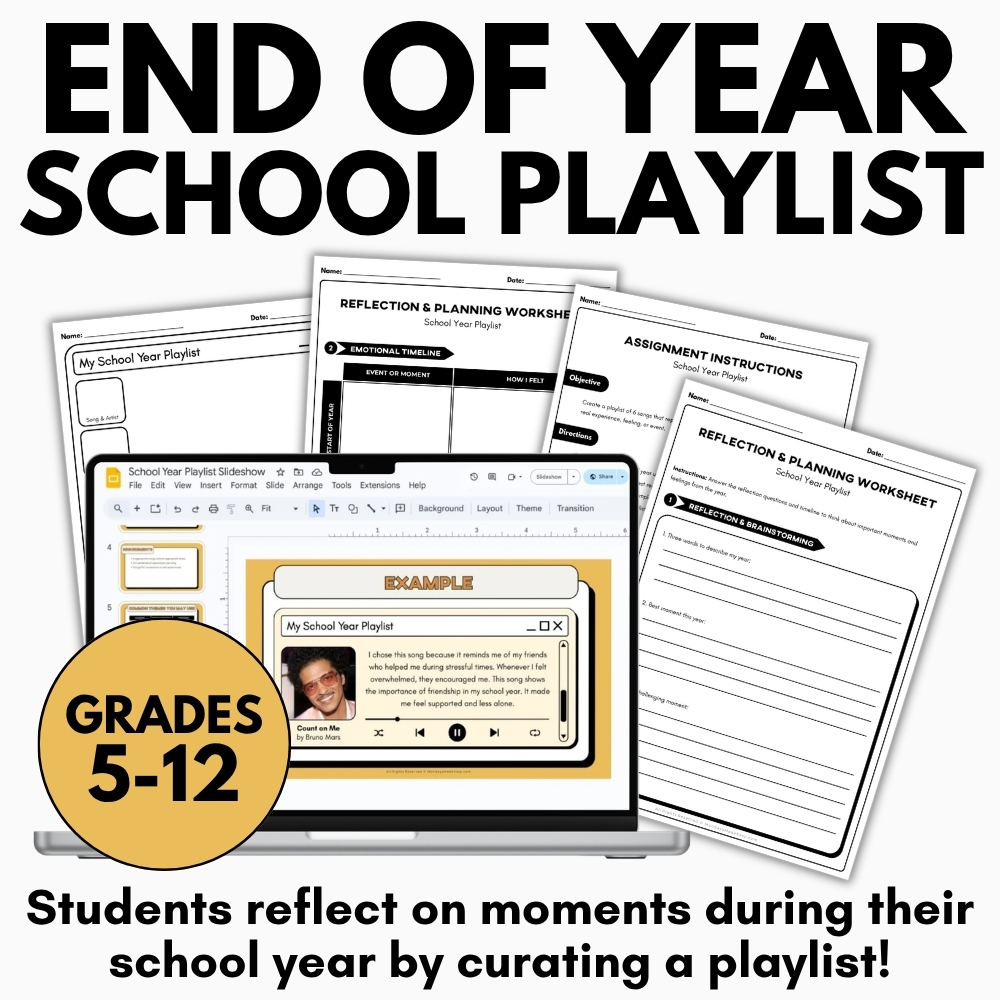
Included with this End of the Year Playlist Activity:
- School Year Playlist Slideshow Lesson – Google Slides®, Microsoft PowerPoint®, & PDF
- School Year Playlist Assignment Instructions – Digital & Print
- Reflection & Planning Worksheet – Digital & Print
- Song Playlist Graphic Organizer – Digital & Print
- Song Playlist Template – Digital & Print
- Student Examples
- Teacher Instructions for Using These Resources
How to Use This End of the Year Playlist Activity:
This activity works because it asks students to do something they already know how to do: connect music to their experiences! Students will identify the specific moments, emotions, and shifts that defined their year. Every component is scaffolded so that the final playlist isn’t just a list of current favorites but a genuine reflection artifact grounded in real thinking. The Playlist Activity encourages students to pause and reflect on the emotional journey they experienced throughout the school year. By connecting songs to meaningful memories, the Playlist Activity helps students see how music can capture feelings that are sometimes difficult to express in words alone. This process also reinforces important reflection skills, prompting students to analyze events, challenges, and accomplishments that shaped their personal growth. Because the Playlist Activity blends creativity with reflection, students often become highly engaged in the process. Rather than completing a traditional written reflection, they explore their experiences through music, storytelling, and personal interpretation. Ultimately, the Playlist Activity transforms something familiar—listening to music—into a thoughtful and structured learning experience that celebrates the year students have shared together.
First, open with the School Year Playlist Slideshow Lesson to introduce the concept and build buy-in before students begin any of the handouts. The slideshow walks students through the premise: their year has a soundtrack, and this activity is about figuring out what it is. It also establishes the connection between music, memory, and emotional experience that the rest of the project builds on. Beginning the Playlist Activity with a slideshow helps students clearly understand the purpose of the assignment before they start selecting songs. Teachers can use this moment to discuss how certain songs can instantly bring back memories of specific places, people, or events. This conversation helps students realize that the Playlist Activity is more than a fun music task—it is a reflective process designed to capture the story of their school year. By framing the assignment in this way, the Playlist Activity becomes a meaningful exercise in storytelling and memory rather than simply choosing popular songs. The slideshow also models the kind of thinking students will need to use throughout the Playlist Activity, helping them understand how emotions, experiences, and music can intersect.
After the slideshow, distribute the School Year Playlist Assignment Instructions to set clear expectations from the start: the 6-song requirement, the 3–5 sentence written explanation each song needs, and the song explanation writing frame students can use if they’re unsure how to structure their thinking. An editable Canva® template is included so you can adjust due dates, modify requirements, or tailor the language before printing or sharing digitally. Clear instructions ensure that students understand exactly what the Playlist Activity requires before they begin their work. The structured explanation component encourages students to go beyond simply naming songs; instead, they must explain why each choice reflects a meaningful moment or emotion from their year. This written component adds depth to the Playlist Activity, transforming it into a reflective writing task as well as a creative one. Teachers may also use this stage to discuss examples of strong explanations, showing how specific experiences or turning points can be connected to song lyrics, mood, or tone. Providing a writing frame helps students feel confident about completing the Playlist Activity, especially those who may struggle with reflective writing. With clear expectations in place, students can approach the Playlist Activity with a clear sense of purpose.
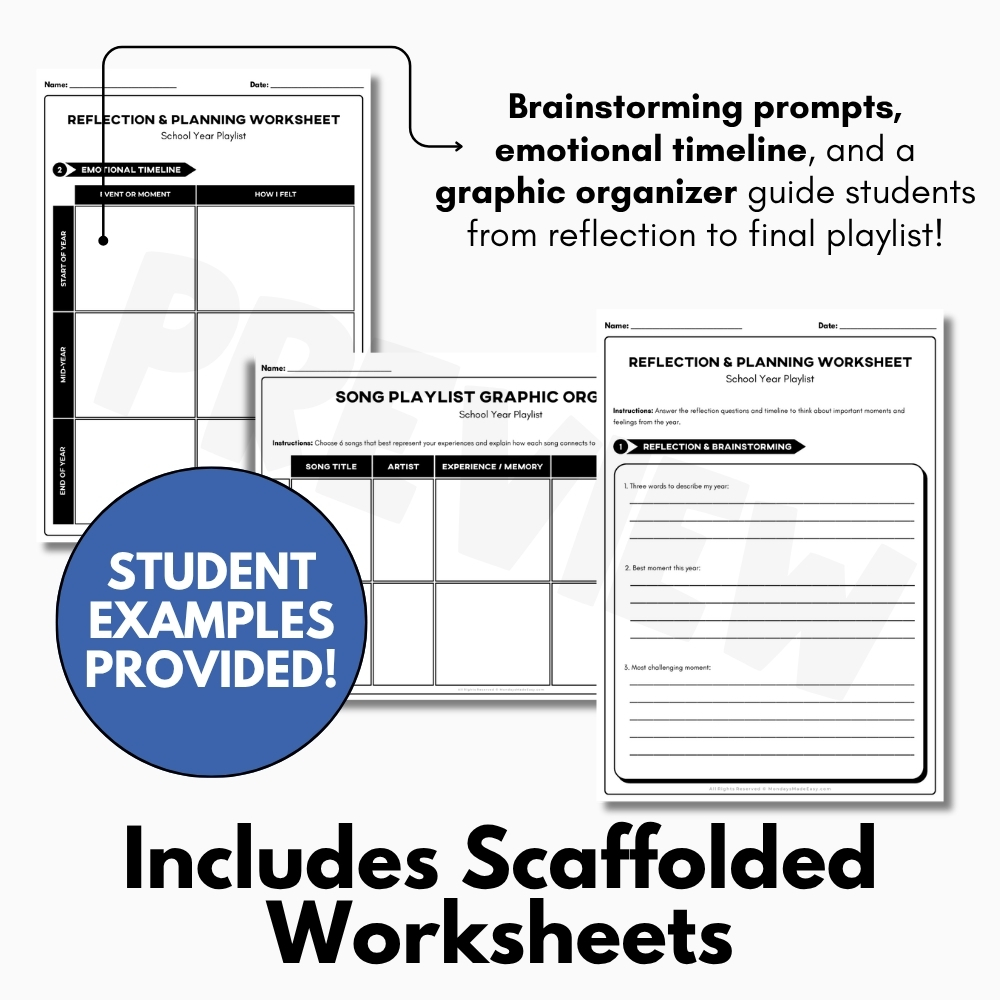
Next, assign the Reflection & Planning Worksheet before students begin selecting songs. The worksheet opens with five brainstorming prompts that guide students to think carefully about what their year actually looked like (the challenges, the turning points, the things they’re proud of), followed by an emotional timeline table where students map how their feelings shifted from the first day of school to now. This is the step that separates a meaningful playlist from a random assortment of songs students happen to like right now; students who work through this worksheet arrive at the song selection phase with a much clearer sense of which moments they want to represent and why. Use it as a formative check or collect it for a quick completion grade before students move on to planning. This stage is essential to the success of the Playlist Activity because it encourages students to slow down and reflect before making any creative decisions. The emotional timeline helps students visualize how their experiences evolved over the course of the year, giving them a clearer framework for choosing songs that represent those shifts. Through this process, the Playlist Activity becomes an opportunity for deeper self-awareness as students recognize how different events shaped their emotional journey. The planning worksheet also ensures that the final product reflects thoughtful decision-making rather than random song choices. By the time students complete this stage of the Playlist Activity, they are ready to select songs that truly represent the story of their year.
Then, have students complete the Song Playlist Graphic Organizer to plan each of their 6 song choices before drafting their final written explanations. The table format walks students through the key information for each song: title, artist, the specific experience or memory it connects to, and a written explanation of that connection. This organizer acts as the bridge between reflection and the final creative product in the Playlist Activity. By structuring each song choice within a table, students can clearly see how each selection contributes to the overall narrative of their playlist. The Playlist Activity becomes more organized and manageable when students can plan their ideas before creating the final design. Teachers can also use this stage to check for thoughtful connections between songs and experiences, ensuring that students remain focused on reflection. Because each row requires both a memory and an explanation, the Playlist Activity continues to reinforce analytical thinking alongside creative expression.
Finally, students transfer their work to the Song Playlist Template to create their finished product. The media player–style visual includes 6 slots, each with designated space for album art, song title, artist name, and written explanation, giving every student’s playlist a polished, consistent look regardless of the songs they chose. The final design stage allows students to bring together all the thinking and planning they completed throughout the Playlist Activity. The visual layout mirrors a music streaming interface, which makes the final product feel familiar and engaging for students. Because every playlist follows the same format, teachers can easily review and assess each Playlist Activity while still celebrating the unique song selections and stories behind them. The visual component also encourages creativity, as students can carefully select album art that reflects the mood or meaning of their chosen songs. By the end of the Playlist Activity, students have created a personalized artifact that represents their memories, emotions, and growth throughout the school year.
Use the Student Examples to model expectations before students begin or to walk through a strong example together as a class. The samples show what it looks like when song choices are anchored to specific, named experiences and emotions rather than general preferences, which helps students understand the depth of thinking the activity is actually asking for. Reviewing examples helps students better understand how to approach the Playlist Activity with thoughtful reflection rather than surface-level responses. Teachers can highlight how each song in the examples connects to a meaningful moment or emotional shift in the student’s year. This modeling helps clarify the expectations of the Playlist Activity, especially for students who may be unsure how personal or detailed their explanations should be. By examining strong examples, students gain confidence in their ability to complete the Playlist Activity successfully. Ultimately, these examples demonstrate that the Playlist Activity is not only creative and enjoyable but also a meaningful opportunity for students to reflect on their experiences and celebrate the memories they created throughout the year.
✨ Kindly note that due to copyright restrictions, these resources are not editable, except for the files specifically labelled as editable. This is a common practice within the online marketplace in order to protect the clip artists and software providers that have authorized their intellectual property for the development of this resource.
⭒ For classrooms utilizing Google Classroom® ⭒
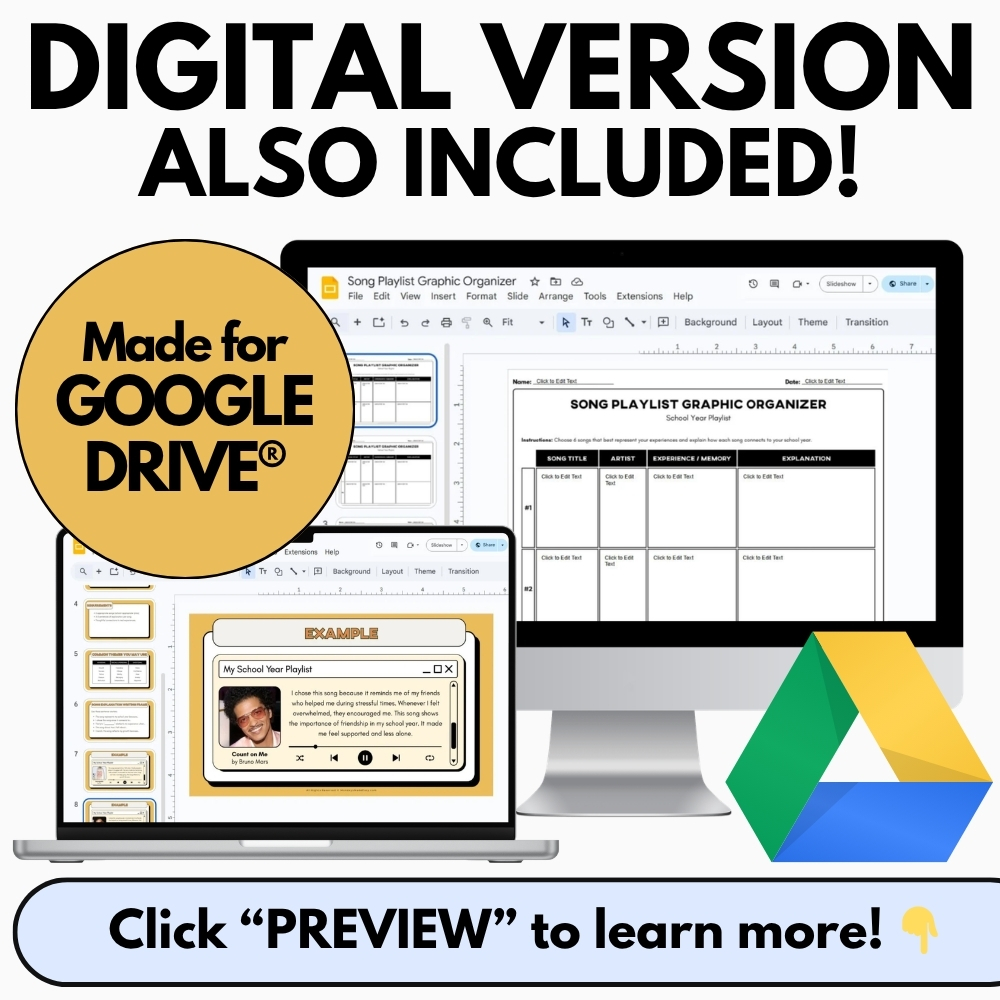
To access the digital version of these worksheets, simply follow the instructions within the resource to copy the files directly to your Google Drive®.