
Description
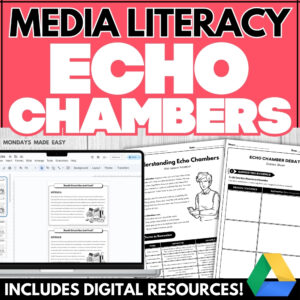
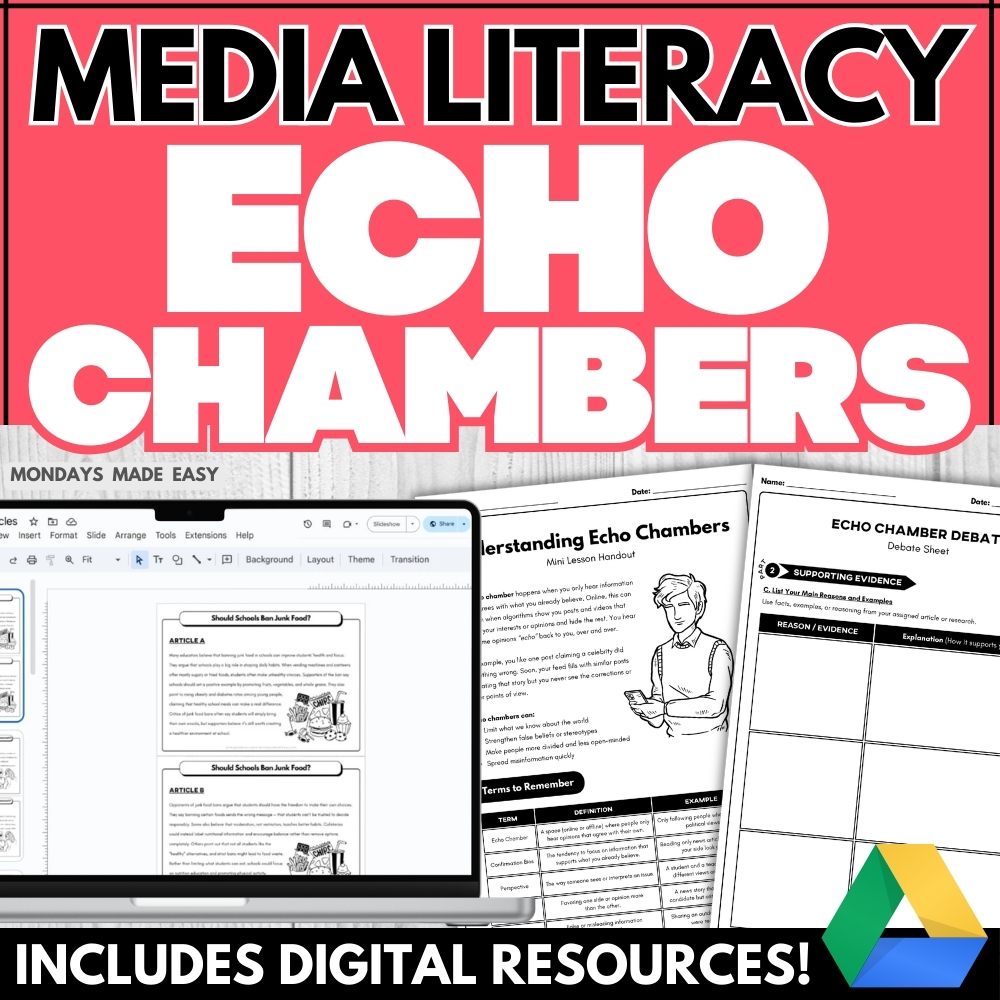
Explore how confirmation bias and echo chambers influence online behavior with this engaging media literacy lesson. Students will examine digital citizenship through debate, critical thinking, example articles, and collaborative discussion. Includes digital worksheets for Google Classroom®!
Included with this Echo Chambers Lesson:
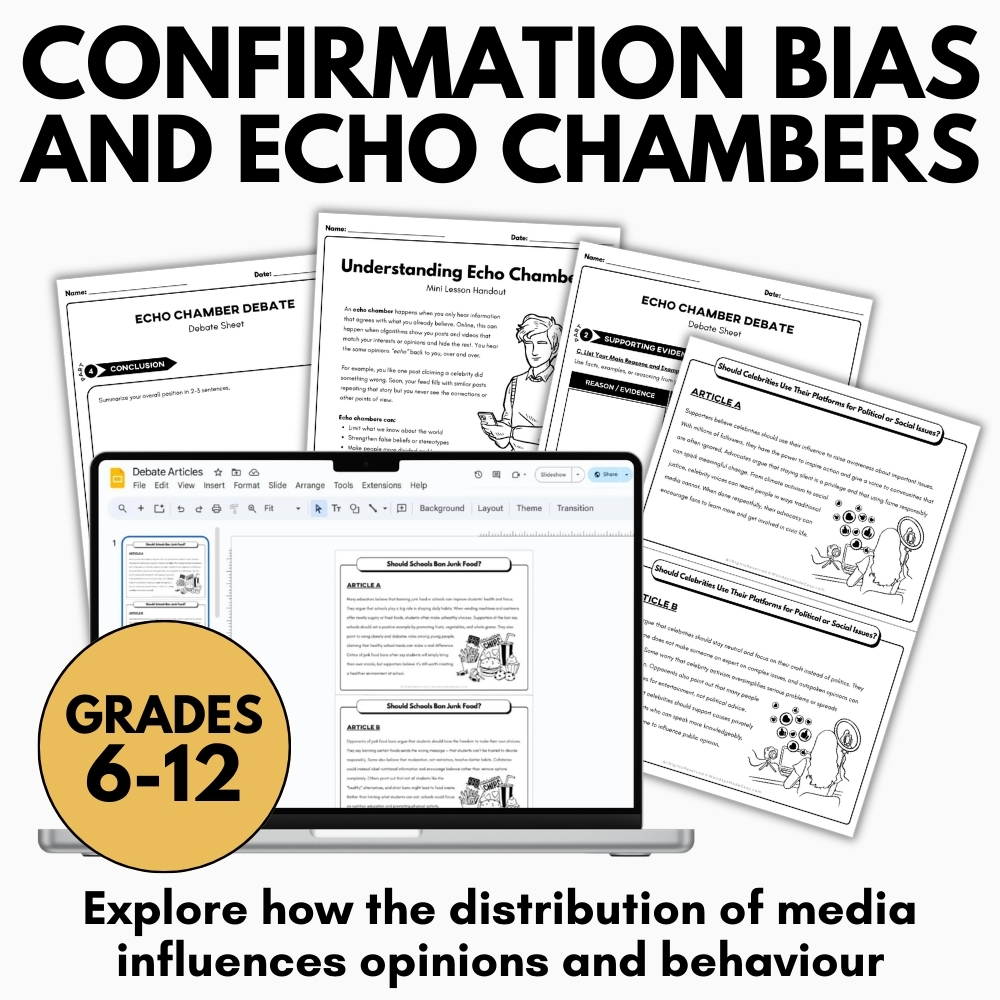
- Echo Chamber Mini-Lesson Informational Handout
- Teacher Debate Reference Sheet
- Student Debate Reference Sheet
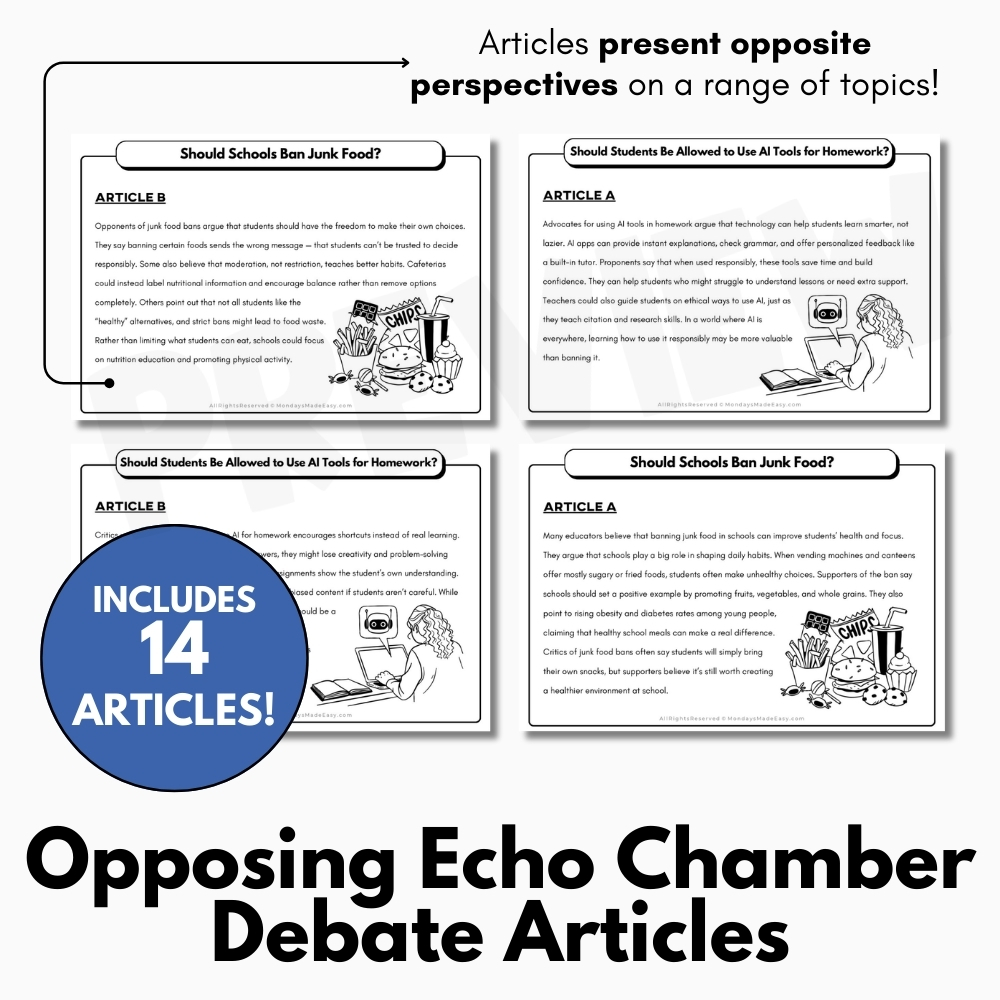
- 14 Echo Chamber Debate Articles – Digital & Print
- Echo Chamber Debate Worksheets – Digital & Print
- Teacher Instructions for using these resources
How to Use This Echo Chambers Lesson:
This activity reinforces media literacy skills through research, reasoning, and respectful dialogue.
At its core, this learning experience is designed to help students move beyond surface-level consumption of information and toward deeper critical engagement with ideas. By centering inquiry, discussion, and evidence-based reasoning, the activity encourages students to slow down and examine how opinions are formed and reinforced in digital spaces. The emphasis on Echo Chambers helps students understand that media literacy is not only about identifying false information, but also about recognizing patterns of exposure that shape beliefs over time. Through respectful dialogue, students practice listening to others, questioning assumptions, and engaging with differing perspectives in a structured and supportive environment.
You can begin this lesson with the Echo Chamber Mini-Lesson Informational Handout to introduce the concept of confirmation bias and how it shapes digital information consumption. This handout offers concise explanations and clear examples to help students understand how algorithms and social behavior contribute to online echo chambers.
This mini-lesson provides the conceptual foundation students need to engage meaningfully with the rest of the activity. By defining confirmation bias in clear, accessible language, the handout helps students recognize a tendency that affects everyone, not just people with extreme viewpoints. Introducing Echo Chambers at this stage allows students to see how personal preferences, combined with algorithmic filtering, can limit exposure to diverse ideas. Teachers can use the examples in the handout to prompt reflection, asking students to consider how often they encounter opinions that challenge their own. This discussion helps normalize the concept and frames it as a shared human experience rather than a personal flaw.
Next, distribute the Student Debate Reference Sheet and assign one of the curated articles from the Echo Chamber Debate Articles packet. These articles present opposite perspectives on a range of topics. Students will read and annotate the text with a focus on identifying bias, argumentation, and evidence.
This stage moves students from conceptual understanding to applied analysis. By reading articles that intentionally present contrasting viewpoints, students directly confront the effects of Echo Chambers, where individuals are often exposed to only one side of an issue. Annotation strategies encourage close reading, helping students identify claims, supporting evidence, emotional language, and gaps in reasoning. Teachers may model annotation techniques to support students who are new to analyzing argumentative texts. This step reinforces the idea that engaging with opposing perspectives is essential for informed decision-making and responsible digital citizenship.
Then, students will use the Echo Chamber Debate Worksheets to prepare for the classroom debate. This five-part worksheet includes prompts for forming an opening claim, citing supporting evidence, anticipating counterarguments, crafting a conclusion, and reflecting on the debate. The design encourages students to think critically about information credibility, digital citizenship, and their own biases. Use the Teacher Debate Reference Sheet to guide students through this debate.
The debate preparation process is where students synthesize research and reflection into structured argumentation. By requiring students to anticipate counterarguments, the worksheet actively challenges the influence of Echo Chambers, pushing learners to consider perspectives beyond their own. This structure supports equitable participation by breaking the debate process into manageable steps, ensuring that all students can engage meaningfully. Reflection prompts embedded in the worksheet encourage students to examine how their initial views may have shifted as a result of research and discussion. The Teacher Debate Reference Sheet further supports consistency and fairness, helping instructors facilitate productive, respectful exchanges.
Finally, host the classroom debate using the completed worksheets as a guide. Students will articulate their views, challenge opposing perspectives, and reflect on the role of confirmation bias in shaping online discourse.
The classroom debate serves as the culminating experience of the activity, providing a live demonstration of how Echo Chambers can be disrupted through intentional dialogue. As students present arguments and respond to opposing viewpoints, they practice essential communication skills such as listening, questioning, and reasoning. Teachers can reinforce norms for respectful discourse, emphasizing that disagreement does not require hostility. Following the debate, reflection helps students connect the experience back to digital environments, where conversations are often fragmented or polarized. This step reinforces the value of structured dialogue as a tool for deeper understanding.
Taken together, these components create a cohesive instructional sequence that moves students from awareness to analysis, preparation, and application. The repeated focus on Echo Chambers across handouts, readings, worksheets, and discussion helps students internalize how digital environments influence belief formation. Students come to understand that echo chambers are sustained not only by algorithms, but also by human habits such as selective sharing and engagement.
This activity also supports broader educational goals related to critical thinking, communication, and civic engagement. Students learn that recognizing Echo Chambers is essential for participating in a democratic society where informed decision-making depends on exposure to diverse viewpoints. The structured debate format provides a safe space for students to practice engaging with disagreement in a constructive and respectful way, building skills that are transferable beyond the classroom.
Teachers may choose to extend this activity by asking students to analyze their own media feeds, track the sources they regularly encounter, or reflect on moments when their views were challenged by new information. Such extensions deepen understanding of Echo Chambers by connecting classroom learning to lived experience. The lesson can also be adapted for different grade levels by adjusting the complexity of texts or the formality of the debate structure.
Ultimately, this activity empowers students to become more reflective and open-minded consumers of information. By examining how Echo Chambers form and persist, students gain tools to seek out diverse perspectives, question assumptions, and engage more thoughtfully with the world around them. Rather than accepting information passively, students learn to recognize patterns, challenge bias, and contribute to healthier, more informed digital conversations.
✨ Kindly note that due to copyright restrictions, this resource is not editable, except for the files specifically labelled as editable. This is a common practice within the online marketplace in order to protect the clip artists and software providers that have authorized their intellectual property for the development of this resource.
⭒ For classrooms utilizing Google Classroom® ⭒
To access the digital version of these worksheets, simply follow the instructions within the resource to copy the files directly to your Google Drive®.