Description
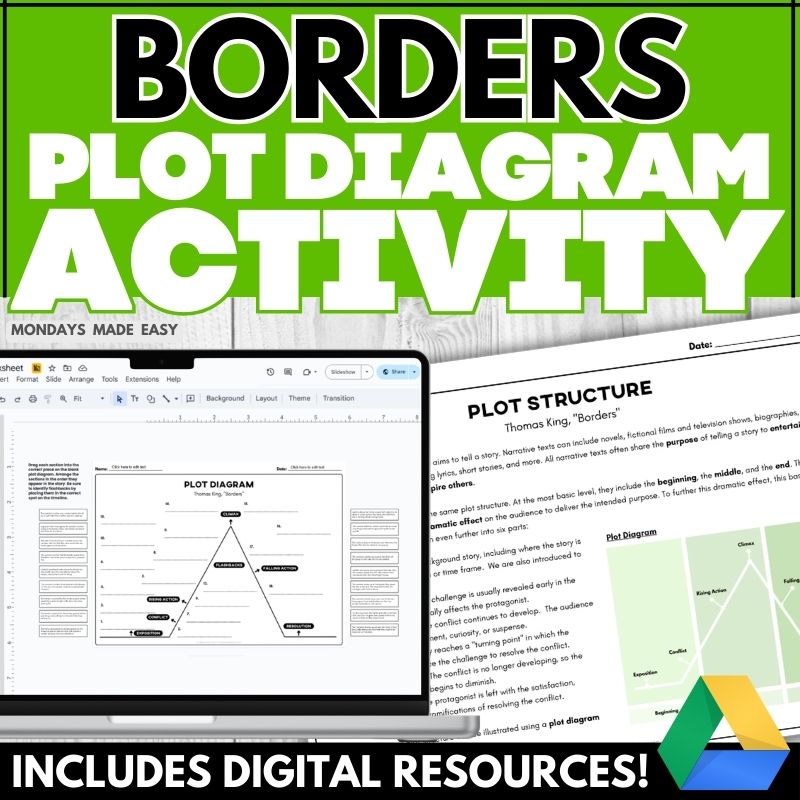
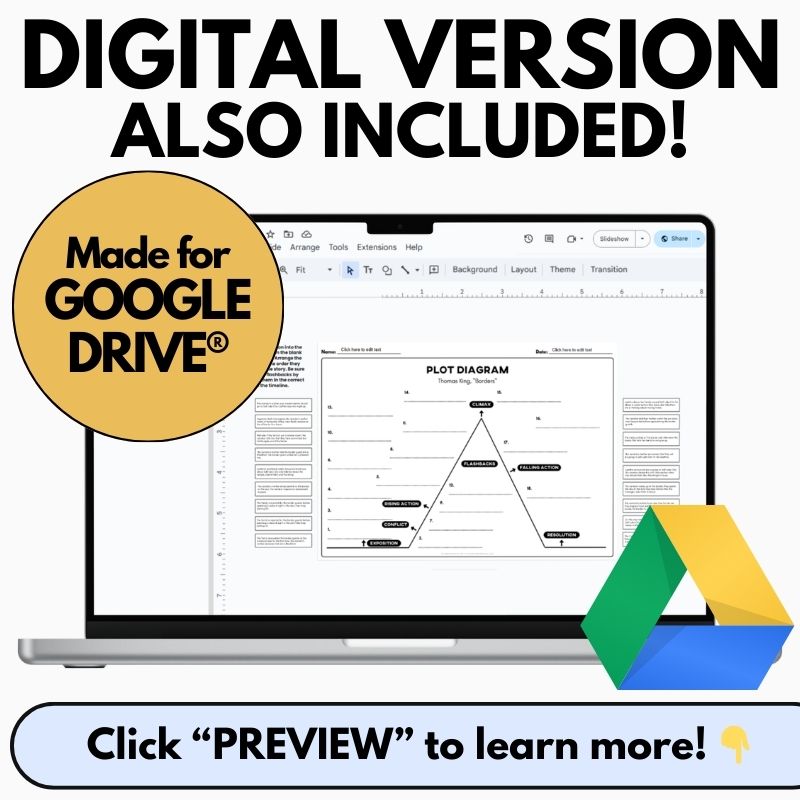
Teach students about plot structure using this plot diagram activity for “Borders” by Thomas King! This activity includes informational handouts and guided worksheets to support students’ independent reading of this short story. Includes digital worksheets for Google Classroom®!
Included with this Plot Diagram Activity for “Borders” by Thomas King:
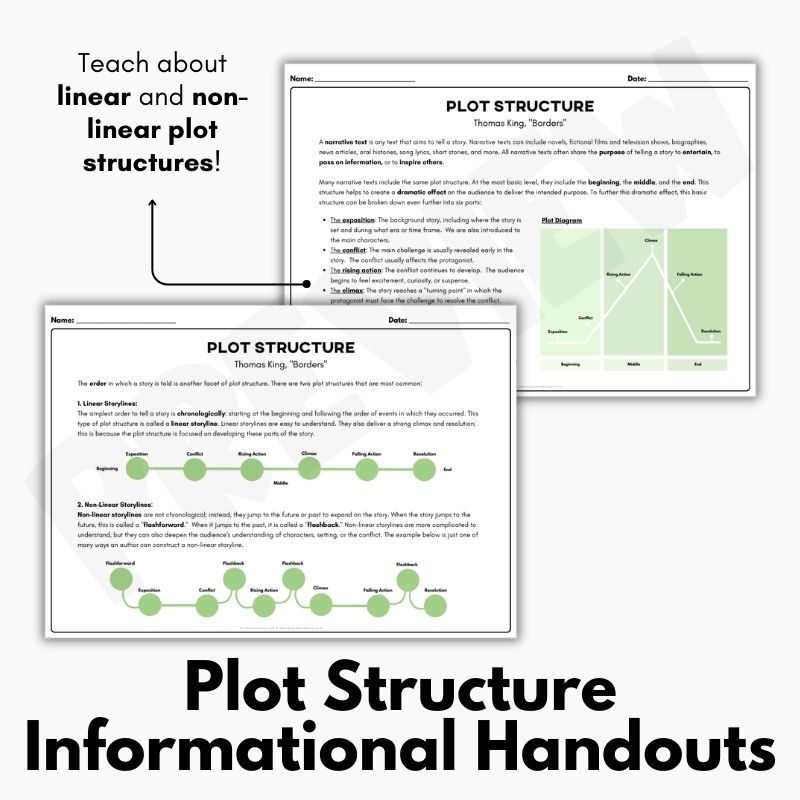
- Plot Structure Informational Handouts
-
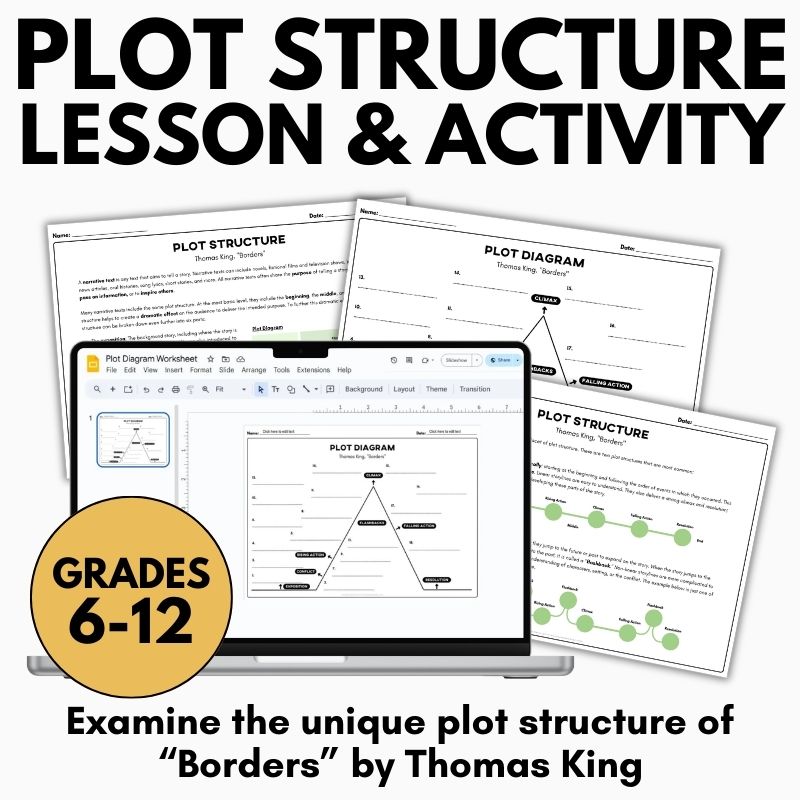
- Explore parts of a plot’s structure (exposition, conflict, rising action, climax, falling action, and resolution) using visual diagrams
- Compare linear storylines to non-linear storylines
- Plot Structure Activity – Digital & Print
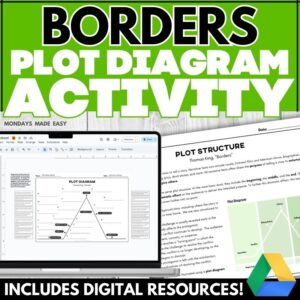
- Plot Diagram Worksheet – Digital & Print
- Answer Key
- Teacher Instructions for using this resource
How to use this Plot Diagram Activity for “Borders” by Thomas King:
“Borders” by Thomas King is a short story that examines Indigenous resilience, identity and citizenship, generational differences, and policing of First Nations people. Examine the unique plot structure of this short story using this plot structure lesson and plot diagram activity. This lesson sequence invites students to look closely at how structure shapes meaning, not just what happens in the story. By centering instruction around a focused Plot Diagram Activity, students begin to see that narrative organization is intentional and purposeful. In “Borders,” tension builds gradually through repeated interactions and moments of quiet resistance, making structural analysis especially important. The Plot Diagram Activity helps students recognize how the pacing of events mirrors the emotional stakes of the story and reinforces its themes of identity and belonging.
Begin with the Plot Structure Informational Handouts. This reference guide introduces students to the classic narrative arc, reviewing exposition, rising action, climax, falling action, and resolution. Use this handout to activate prior knowledge before diving into the short story. These handouts provide essential vocabulary and clear definitions to ensure all students share a common understanding of narrative terms. Before completing the Plot Diagram Activity, students review each component of the narrative arc and discuss familiar examples from other texts. This pre-teaching step builds confidence and ensures that students are prepared to apply structural concepts independently. Teachers may choose to model how a well-known story fits into the classic arc before transitioning to “Borders,” strengthening comprehension and analytical readiness.
Students will also examine linear and non-linear storylines using these informational handouts. This lesson compares the two types of storylines to examine their unique strengths for storytelling. Visual diagrams for linear and non-linear storylines have also been provided.
This comparison deepens students’ understanding of how authors organize events to create meaning. By studying visual representations of both linear and non-linear plots, students learn to identify patterns in sequencing and pacing. The Plot Diagram Activity then becomes an opportunity to apply this knowledge directly to “Borders,” encouraging students to determine how Thomas King structures the narrative and why that structure is effective. The side-by-side comparison fosters critical thinking and strengthens students’ ability to articulate how structure contributes to theme and tone.
Next, assign the Plot Structure Activity to guide students through key events in the story. This worksheet supports comprehension by prompting students to identify and sequence events in the short story. The Plot Diagram Activity begins with careful sequencing, asking students to determine which moments belong in each stage of the narrative arc. This step reinforces cause-and-effect relationships and helps students recognize how tension escalates over time. By identifying pivotal scenes, students deepen their understanding of character motivations and thematic development. Teachers can facilitate discussion as students compare their event selections, fostering collaborative analysis and reinforcing the idea that structure influences interpretation.
Then, students will complete the Plot Diagram Worksheet. Using the story’s major plot events, they map out the narrative arc from exposition to resolution. The visual format helps solidify their understanding of narrative structure and theme. This culminating Plot Diagram Activity transforms abstract literary concepts into a concrete visual representation. As students map events onto the diagram, they reflect on which scene represents the climax and how the falling action leads to resolution. The visual layout makes it easier to see how the central conflict unfolds and resolves, reinforcing comprehension. Additionally, the act of labeling and organizing events strengthens retention of key plot points and supports future writing assignments that require structured analysis.
To consolidate this activity, an answer key has also been included. The inclusion of a detailed answer key ensures clarity and consistency in assessment. Teachers can use it to guide discussion, clarify misconceptions, or provide targeted feedback. After completing the Plot Diagram Activity, reviewing the answer key as a class encourages reflection and allows students to compare their reasoning with a model response. This final step reinforces learning objectives and ensures that students leave the lesson with a confident understanding of narrative structure and its role in shaping meaning within “Borders.”
✨ Kindly note that due to copyright restrictions, this resource is not editable, except for the files specifically labelled as editable. This is a common practice within the online marketplace in order to protect the clip artists and software providers that have authorized their intellectual property for the development of this resource.
See what other teachers are saying about this Plot Diagram Activity:
“Our world literature textbook contains Thomas King’s short story “Borders;” however, its instructional resources are limited, so this material helped review the story’s nonlinear plot well.” – Kari C.
⭒ For classrooms utilizing Google Classroom® ⭒
To access the digital version of these worksheets, simply follow the instructions within the resource to copy the files directly to your Google Drive®.