


Description
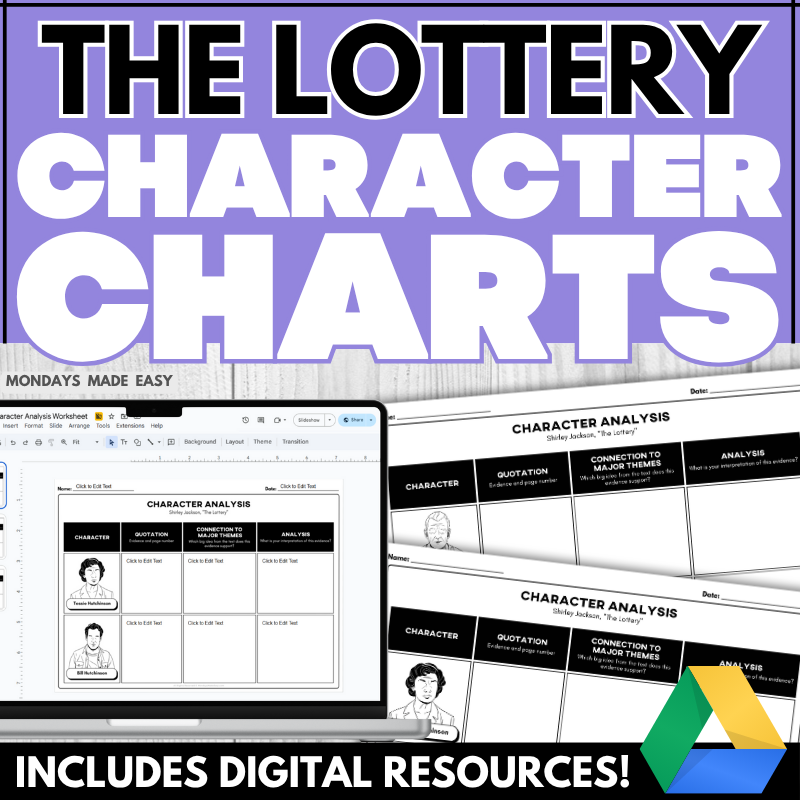
Support character analysis in “The Lottery” by Shirley Jackson with these characterization graphic organizers! Students will examine quotations, make thematic connections, and deepen their understanding of both major and minor characters in this classic short story. Suitable for online learning with digital worksheets for Google Classroom®.
Included with this Character Analysis Activity for “The Lottery”:
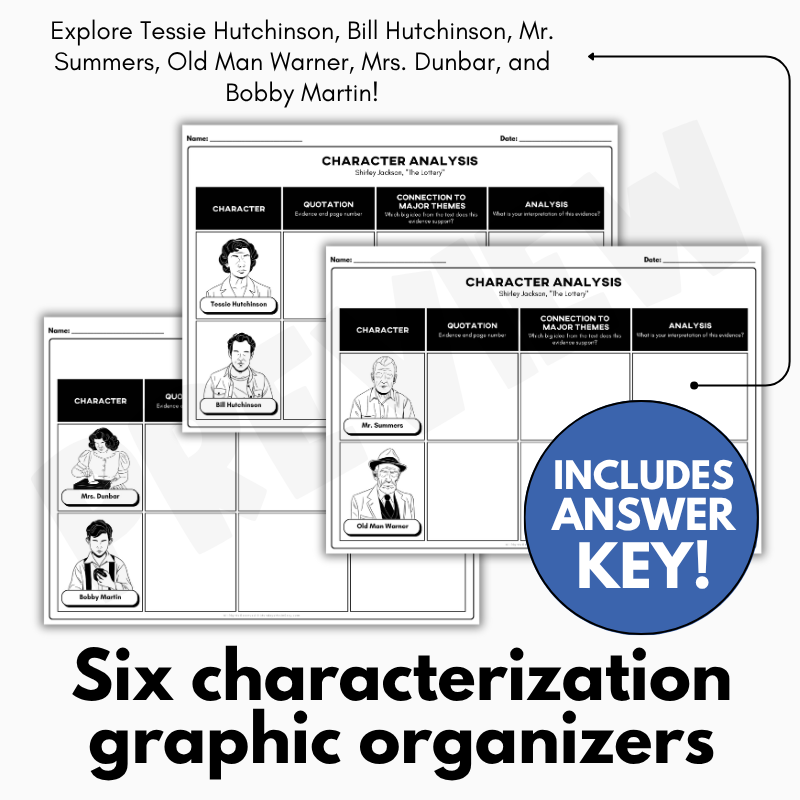
- Character Analysis Graphic Organizers – Digital & Print
-
- Explore Tessie Hutchinson, Bill Hutchinson, Mr. Summers, Old Man Warner, Mrs. Dunbar, and Bobby Martin
- Examine text evidence and connections to major themes
- Character Analysis Answer Key
- Teacher Instructions for using this resource
How to Use These Character Analysis Graphic Organizers for “The Lottery”:
These character charts prompt students to use text evidence to explore characterization in “The Lottery.” Students will identify and record meaningful quotations for each character and explain the significance of the quotation in relation to theme and characterization. This type of Character Analysis activity encourages students to go beyond surface-level comprehension, prompting them to think critically about why characters behave the way they do and how these behaviors contribute to the overall meaning of the story. By directly engaging with the text, students strengthen their analytical reading skills, learn how to cite relevant evidence, and develop the ability to connect character details to broader literary themes. The structured format of the charts also ensures that students can organize their thoughts clearly, making it easier for them to discuss and write about the text.
The characters in these worksheets explore major and minor characters, including:
- Tessie Hutchinson
- Bill Hutchinson
- Mr. Summers
- Old Man Warner
- Mrs. Dunbar
- Bobby Martin
By examining both major and minor characters, students gain a more complete understanding of how the entire cast contributes to the story’s impact. For example, in a Character Analysis of Tessie Hutchinson, students can explore how her transformation from an unbothered participant to a desperate protester reveals the power of self-interest when survival is at stake. Bill Hutchinson’s compliance, even when his own family is targeted, provides insight into the social pressures of conformity. Similarly, Mr. Summers’ role as the organizer of the lottery invites students to question how authority figures can normalize harmful traditions. Old Man Warner’s steadfast defense of the ritual serves as a lens to discuss generational beliefs and resistance to change. Mrs. Dunbar and Bobby Martin, while less central to the plot, still provide important symbolic and thematic contributions that add richness to the Character Analysis process.
To complete this activity, you can begin by having students annotate their texts during a second close-read. Instruct them to highlight passages that reveal the characters’ motivation, social role, or symbolism. This step ensures that students are reading with purpose, actively seeking out textual clues that will later inform their Character Analysis. By marking the text in real time, they build a bank of evidence they can draw from without having to re-read the entire story later. You might also encourage them to note moments of contrast between a character’s public behavior and private thoughts, as these can reveal hidden conflicts or hypocrisies. The process of annotation not only supports literary analysis but also improves overall reading comprehension and retention.
Be sure to mention that passages do not need to be dialogue spoken by a character; students may also select narration or description related to a character’s actions, thoughts, or role in the story. This reminder is especially important for Character Analysis because it helps students recognize that characterization happens in multiple ways—not just through what characters say, but also through what they do, what others say about them, and how the narrator frames their actions. For instance, a description of Old Man Warner’s physical appearance or tone of voice may reveal as much about his character as his spoken words. By considering both direct and indirect characterization, students will develop a more nuanced interpretation of the story. To model this, you may wish to complete the first character chart together, guiding the class through the process of selecting evidence and explaining its relevance.
Students can then complete the charts by using their annotations to fill in the quotations for each character. They can then consider how each character’s actions reinforce or challenge the story’s key themes, such as blind tradition, conformity, and resistance. This reflection is the heart of Character Analysis, as it asks students to connect specific character traits or actions to the story’s larger messages. For example, Tessie’s sudden objection to the lottery only when she is chosen can lead to discussions about selective morality, while Old Man Warner’s dismissive attitude toward change highlights the dangers of unquestioned customs. These connections encourage students to think critically about the text’s relevance to real-world social dynamics.
To consolidate this activity, a completed answer key has been provided. This resource serves as a guide for teachers and a self-check for students, ensuring that their Character Analysis aligns with the intended learning outcomes. It can also be used as a discussion tool, allowing students to compare their interpretations with the model responses and defend their own reasoning with textual evidence. Beyond its immediate use for “The Lottery,” this Character Analysis approach can be adapted for other literary works, helping students develop transferable analytical skills. By consistently practicing these steps—annotating, selecting meaningful evidence, and linking character details to theme—students become more confident and independent literary thinkers.
✨ Kindly note that due to copyright restrictions, this resource is not editable, except for the files specifically labelled as editable. This is a common practice within the online marketplace in order to protect the clip artists and software providers that have authorized their intellectual property for the development of this resource.
⭒ For classrooms utilizing Google Classroom® ⭒
To access the digital version of these worksheets, simply follow the instructions within the resource to copy the files directly to your Google Drive®.



Reviews
There are no reviews yet.